Peas, Alpaca, and a Valley That Doesn't Feel Real
Peru | Sacred Valley + Ollantaytambo | June 2010
South America. Our first time crossing the equator, and we were giddy about it in the way you only get when a place has been on a list in your head for a long time. We took the overnight flight from JFK to Lima, managed to actually sleep reasonably well for once, and landed in Peru feeling functional. A quick layover in Lima, a last Starbucks because we had no idea when we'd see another one, and then a 55-minute flight to Cusco.
Landing in Cusco is one of the stranger aviation experiences you'll have. You go up in the plane but you never really feel like you descend. You're flying alongside mountains, level with their peaks, and then suddenly you're touching down. The altitude is immediately, personally apparent at 11,152 feet. The prescription medication we'd gotten before leaving helped, but nothing fully prepares your lungs for the realization that air is doing less work up here than you're accustomed to asking of it.
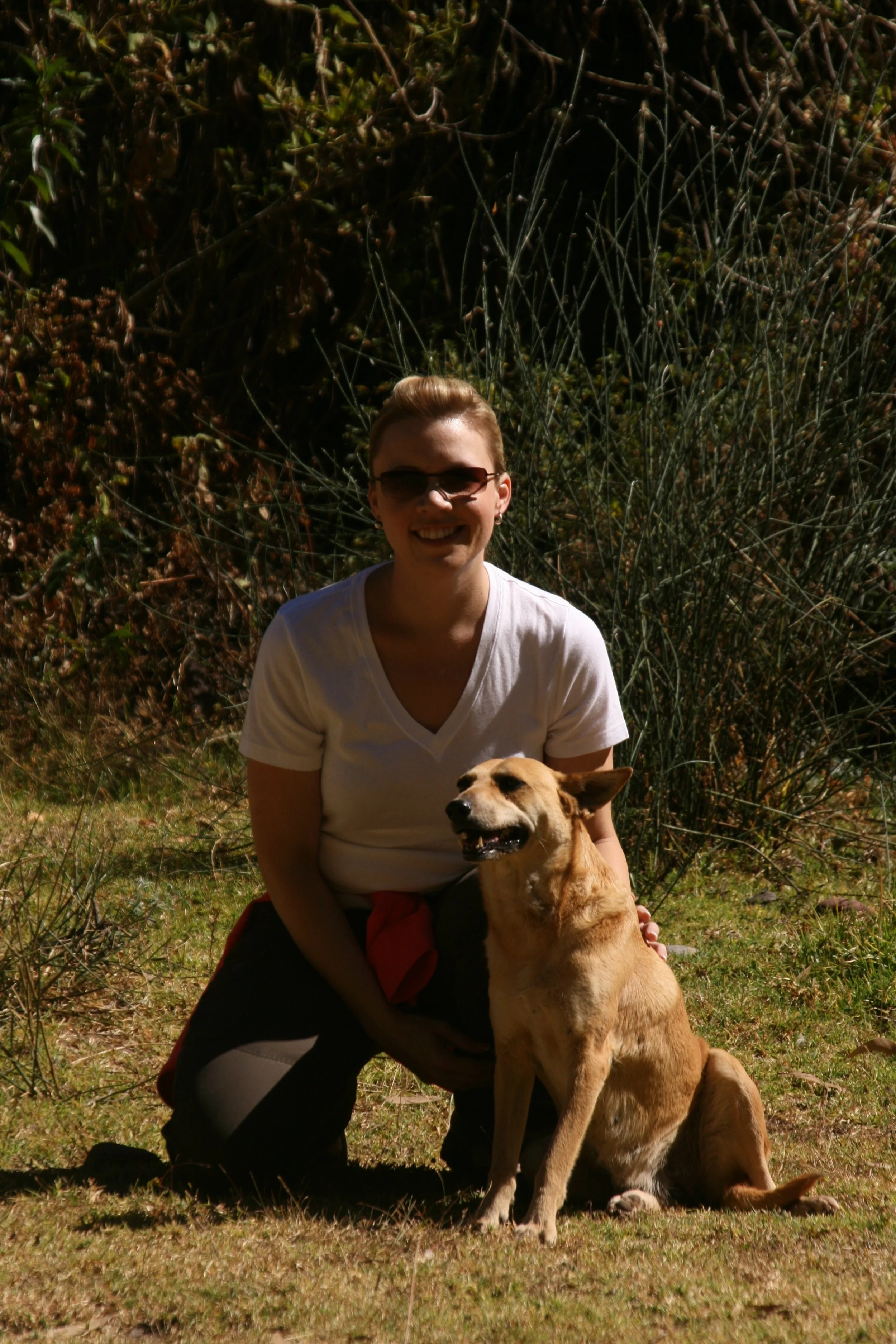
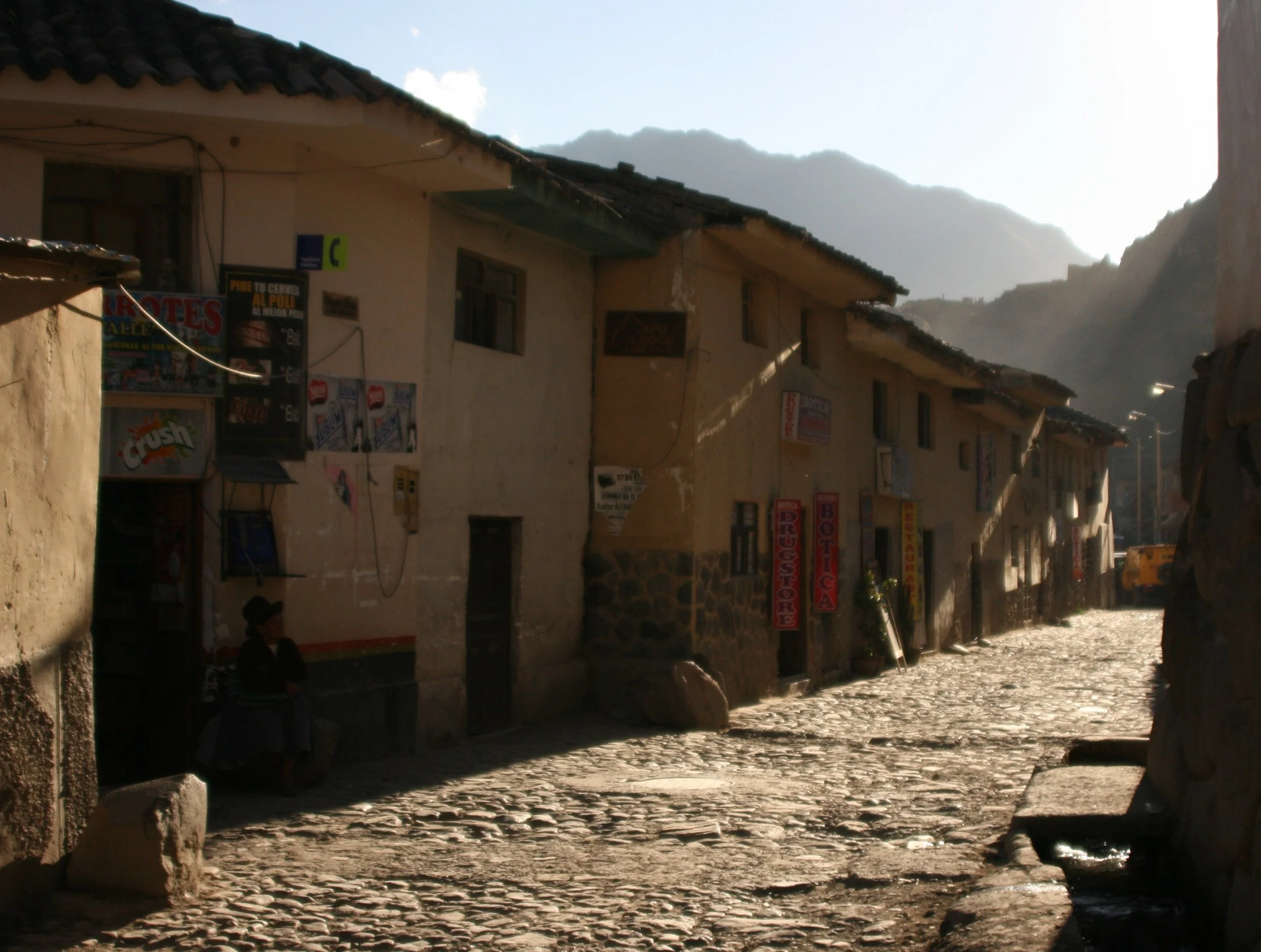
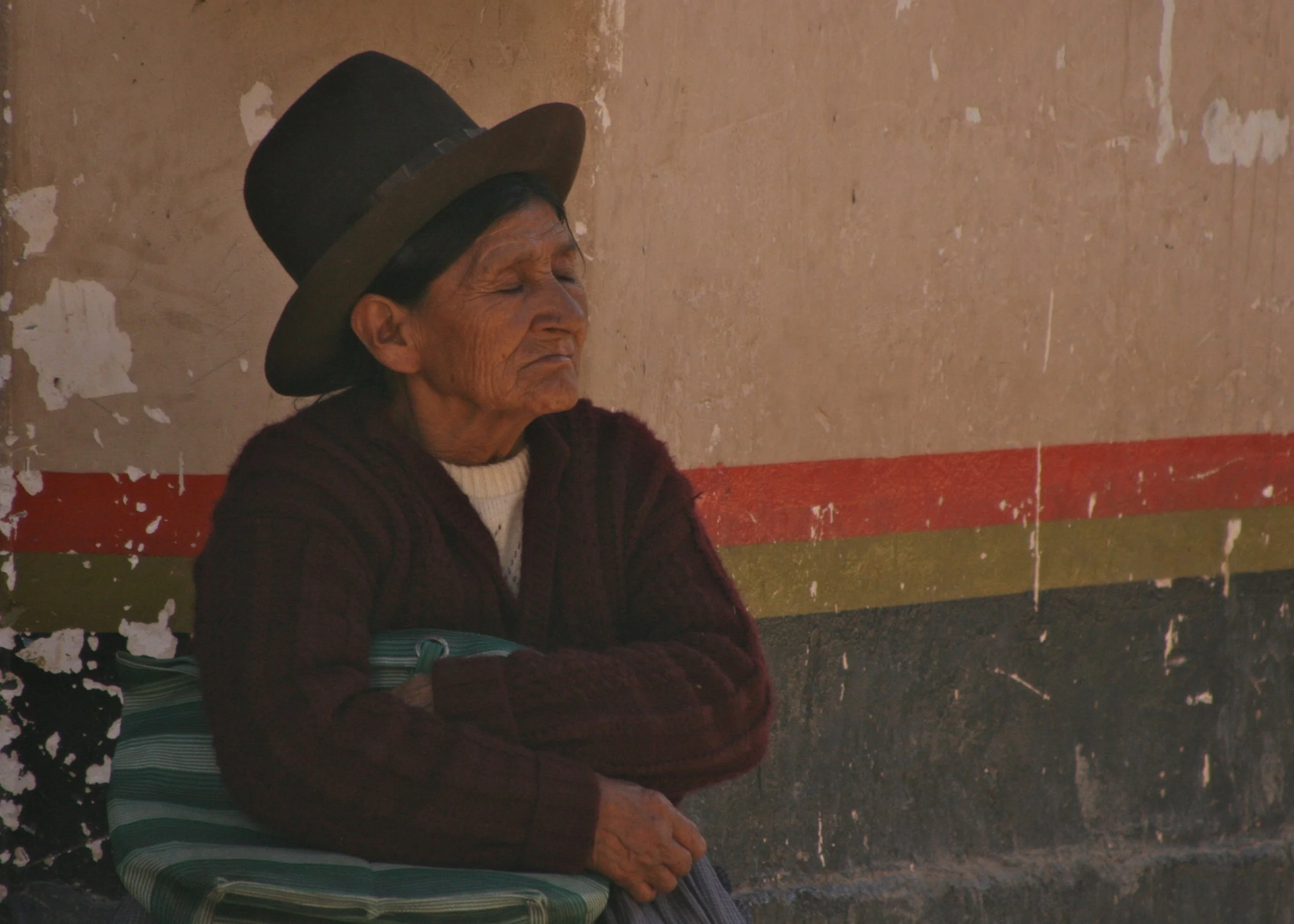
Our taxi driver Raul was waiting with a nicely printed sign and Winnie-the-Pooh stickers decorating the dashboard, which we found immediately charming. The cab had several broken parts and seatbelts that didn't function, which by this point in our traveling lives we had stopped questioning. We looked out the side windows, as is “our policy,”and took in our first impressions of Cusco. More third world than we'd expected: impoverished in a way that reminded us of Egypt and China, with dilapidated buildings, unpaved streets, and plenty of dust and dogs. The dogs especially. They were everywhere, every breed and size, wandering freely. Our instinct was that they were all strays, but our B&B host Brian told us later that almost every house in Peru has a dog. Everyone here likes to feel protected. The dogs looked healthy, just dusty, the same way the people looked: not starving, just living at a different economic register than we were used to.
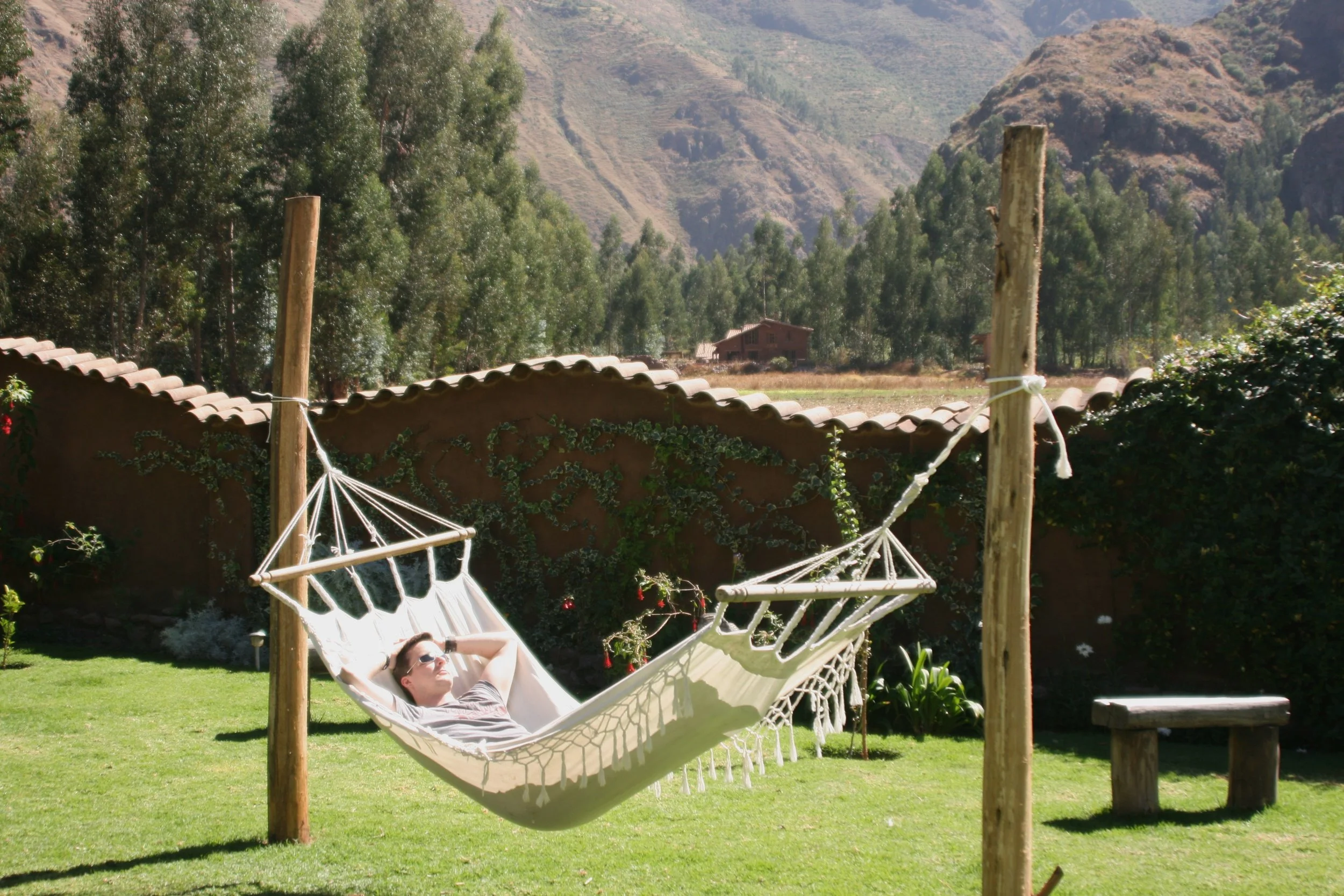
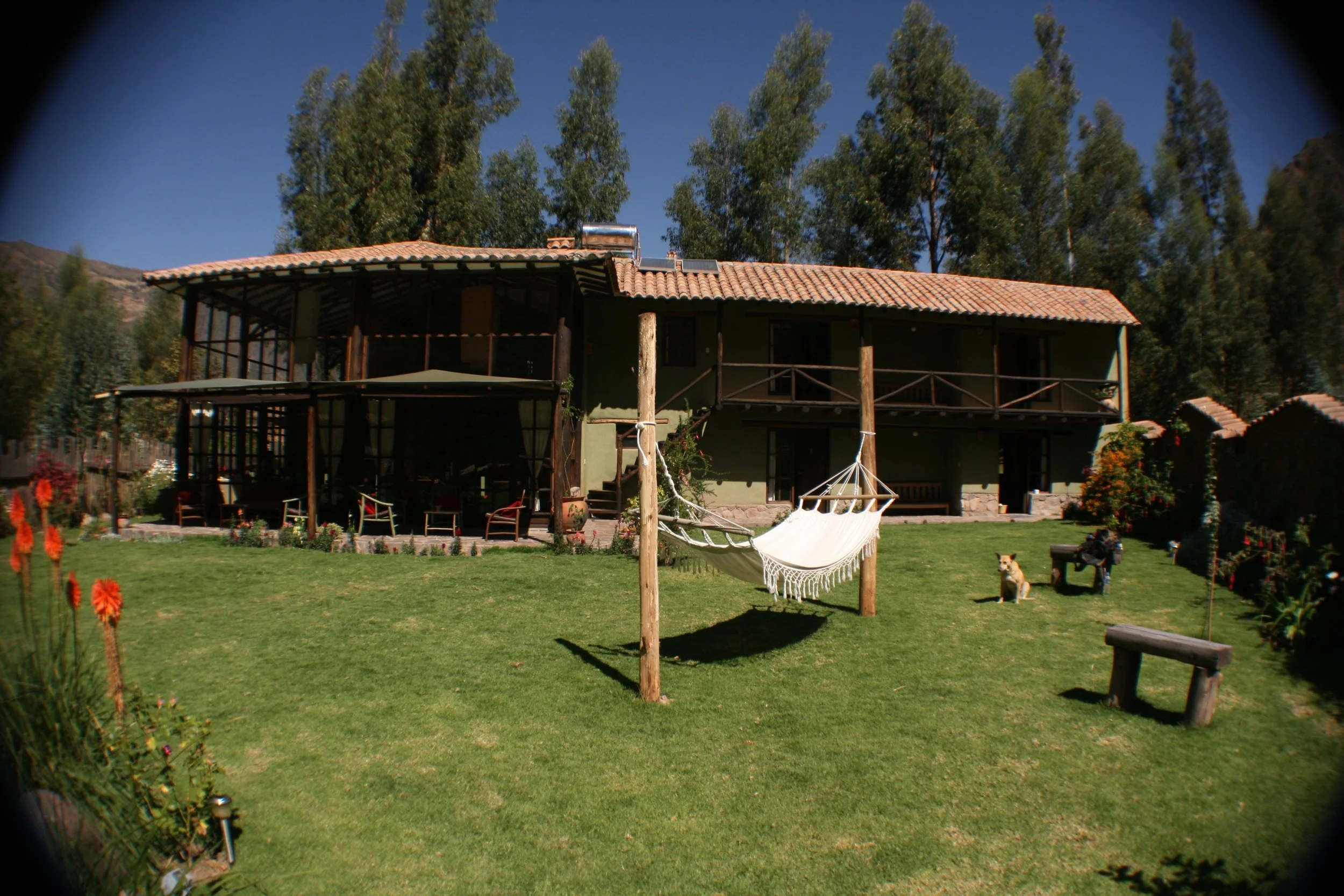
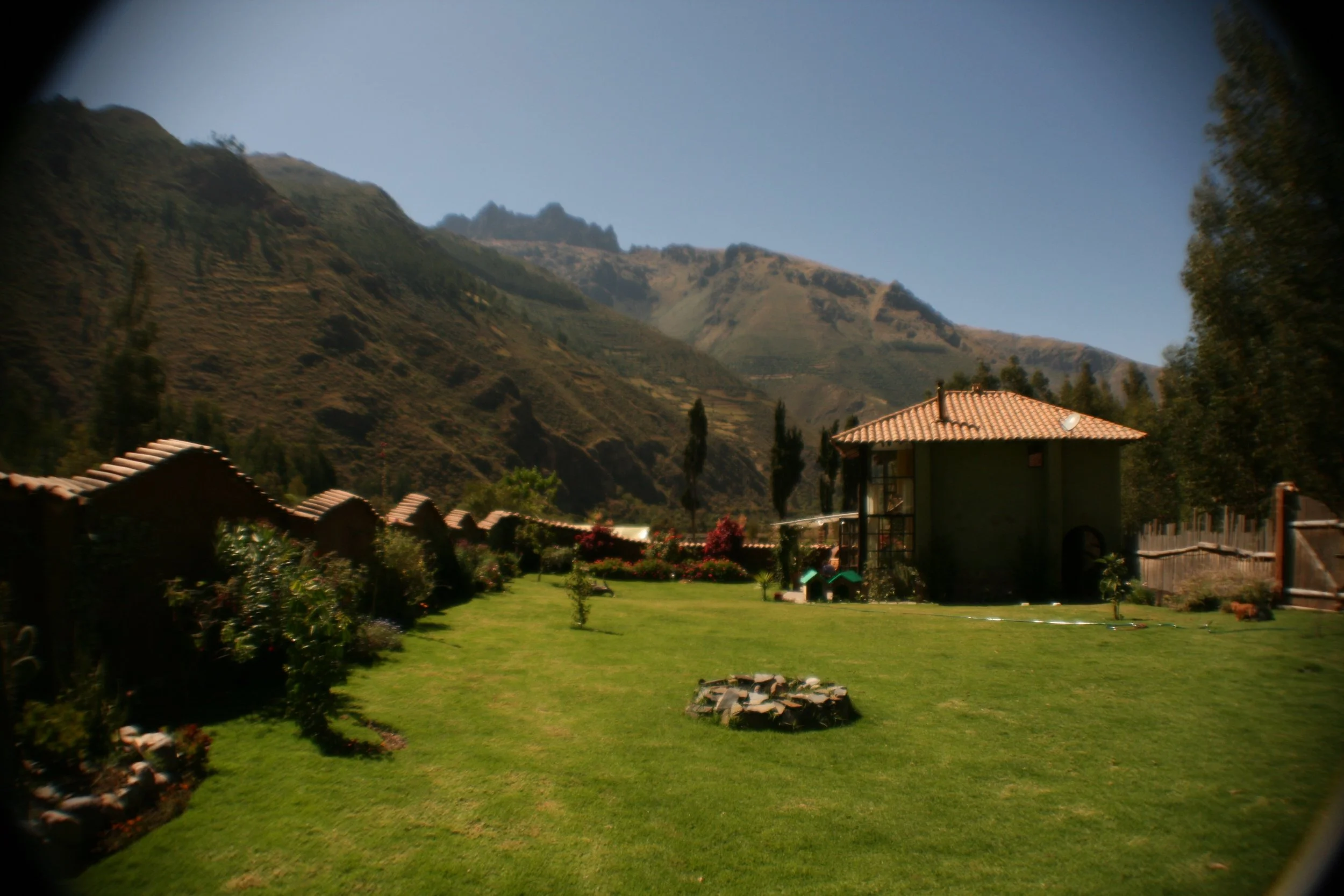
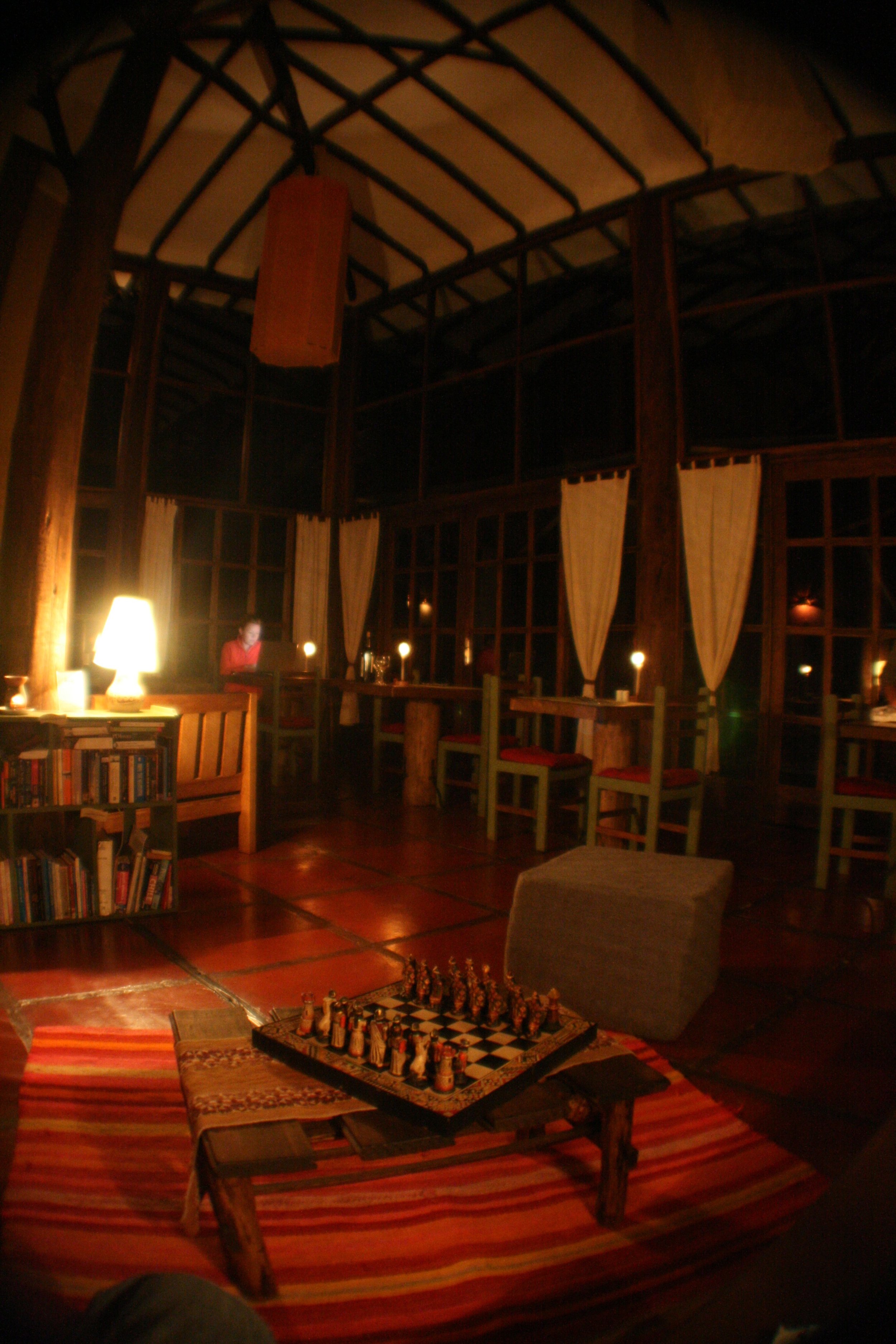
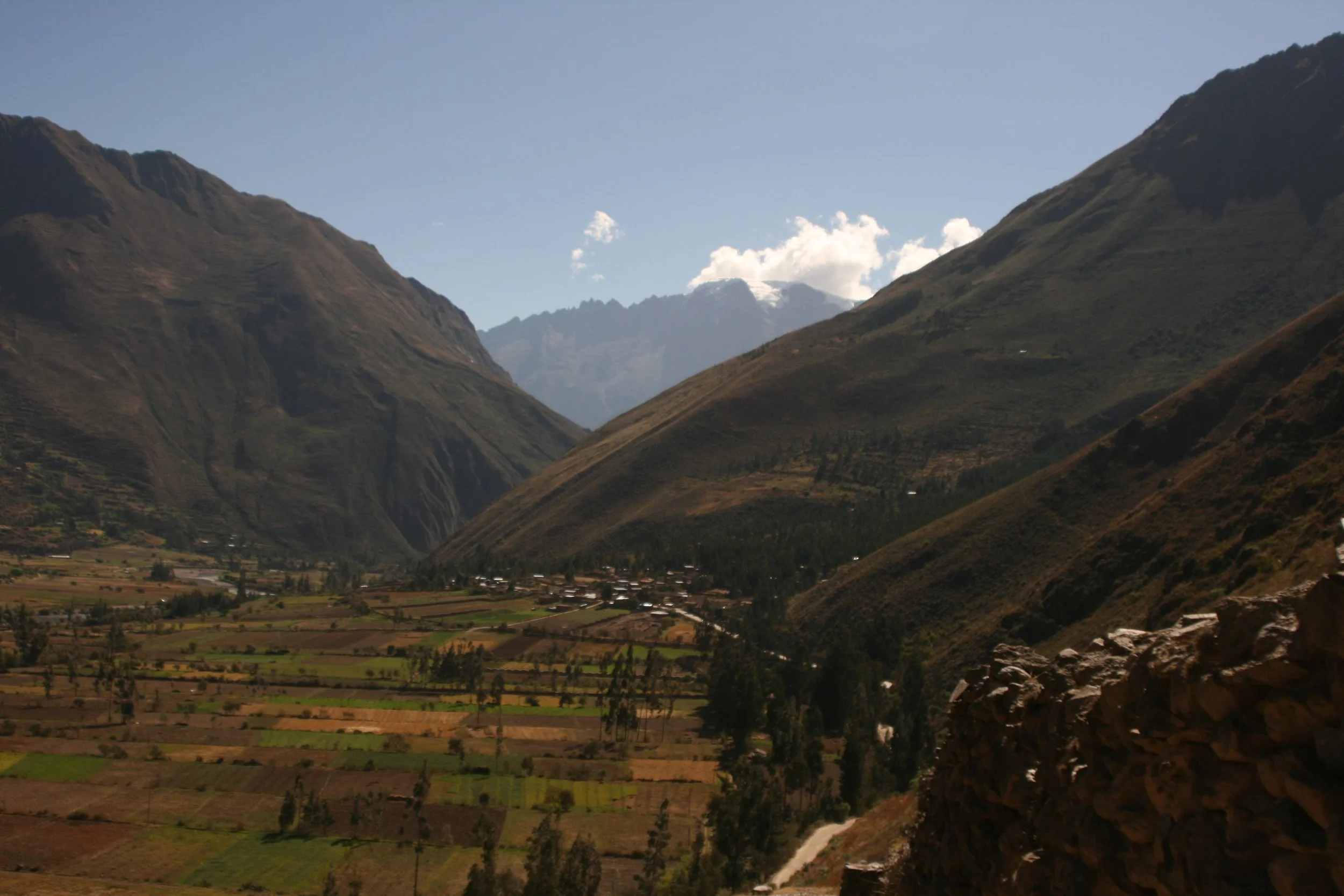
We were staying in the Sacred Valley about an hour outside of Cusco, at a place called The Green House in the village of Huaran. Trip Advisor led us there and Trip Advisor was absolutely correct about it. The Green House sits in what feels like the middle of nowhere, surrounded by mountains on every side with a small river rushing past it and gardens and lawn that seem improbable given the surrounding landscape. Think of a meditation retreat tucked into the Andes. Our room had wood-beam ceilings and an authentically rustic feel with a completely modern bathroom, which is exactly the combination you want. Hosts Gabriel and Brian have three dogs named Paco, Leica, and Yana who treated us immediately as part of the household.
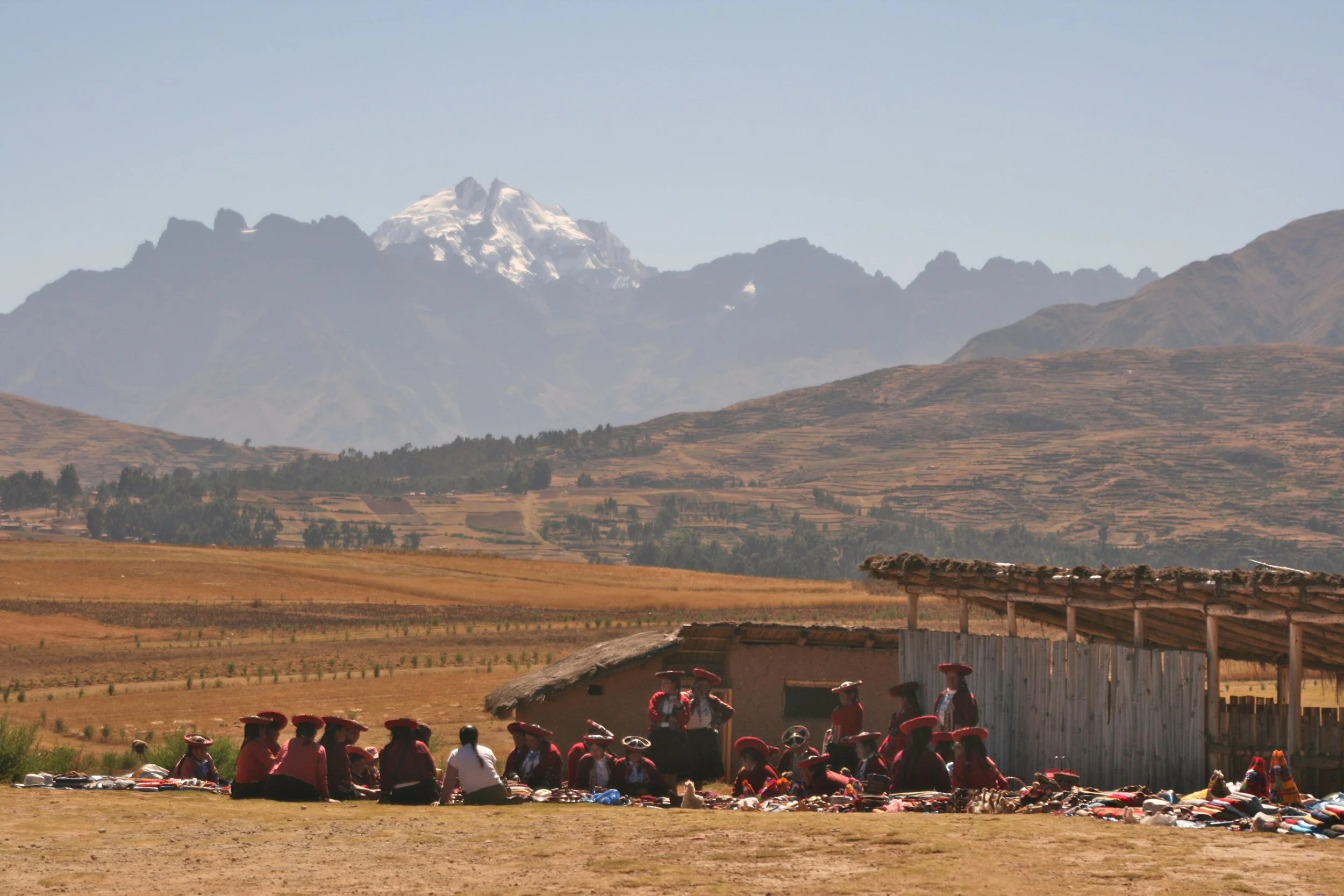
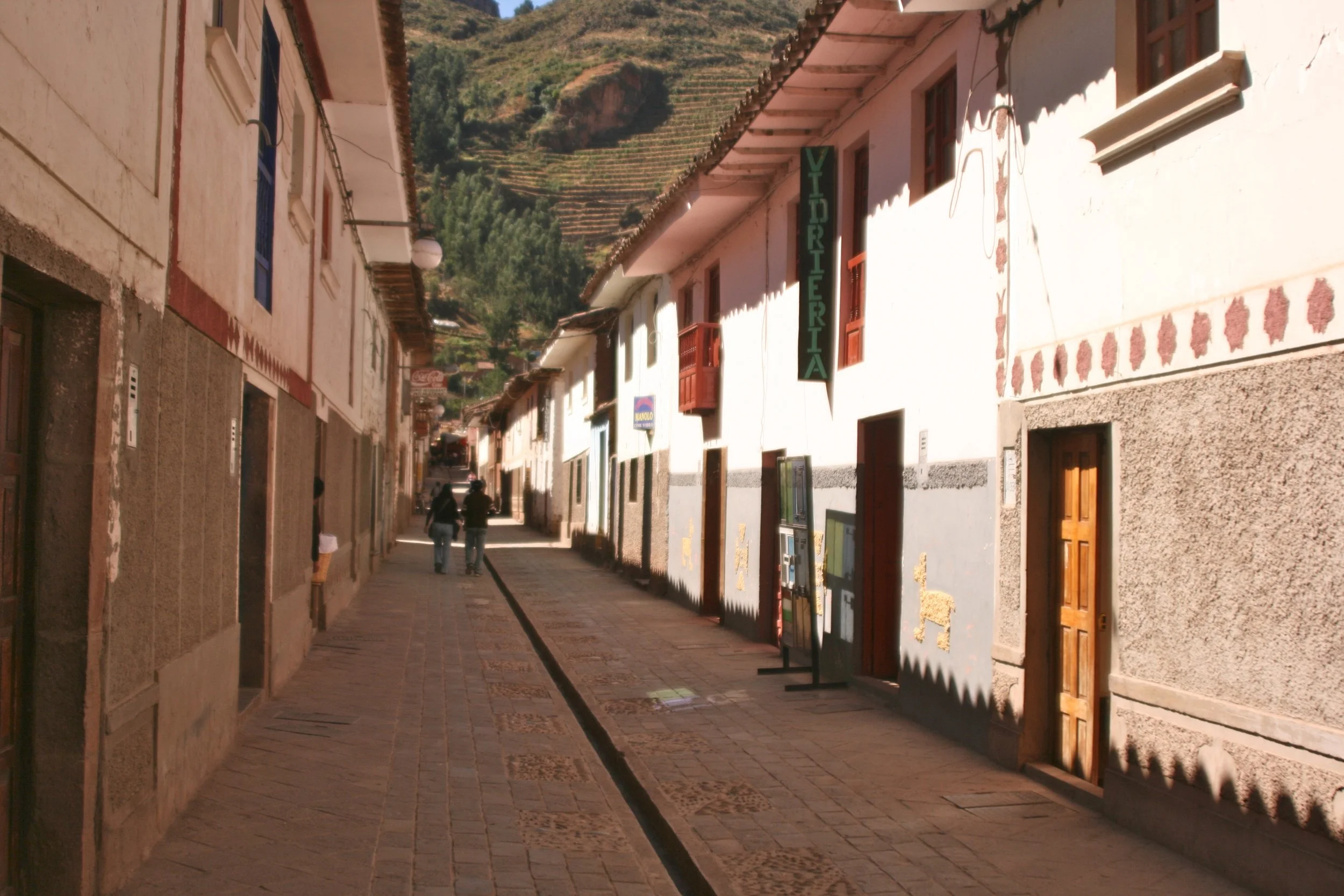
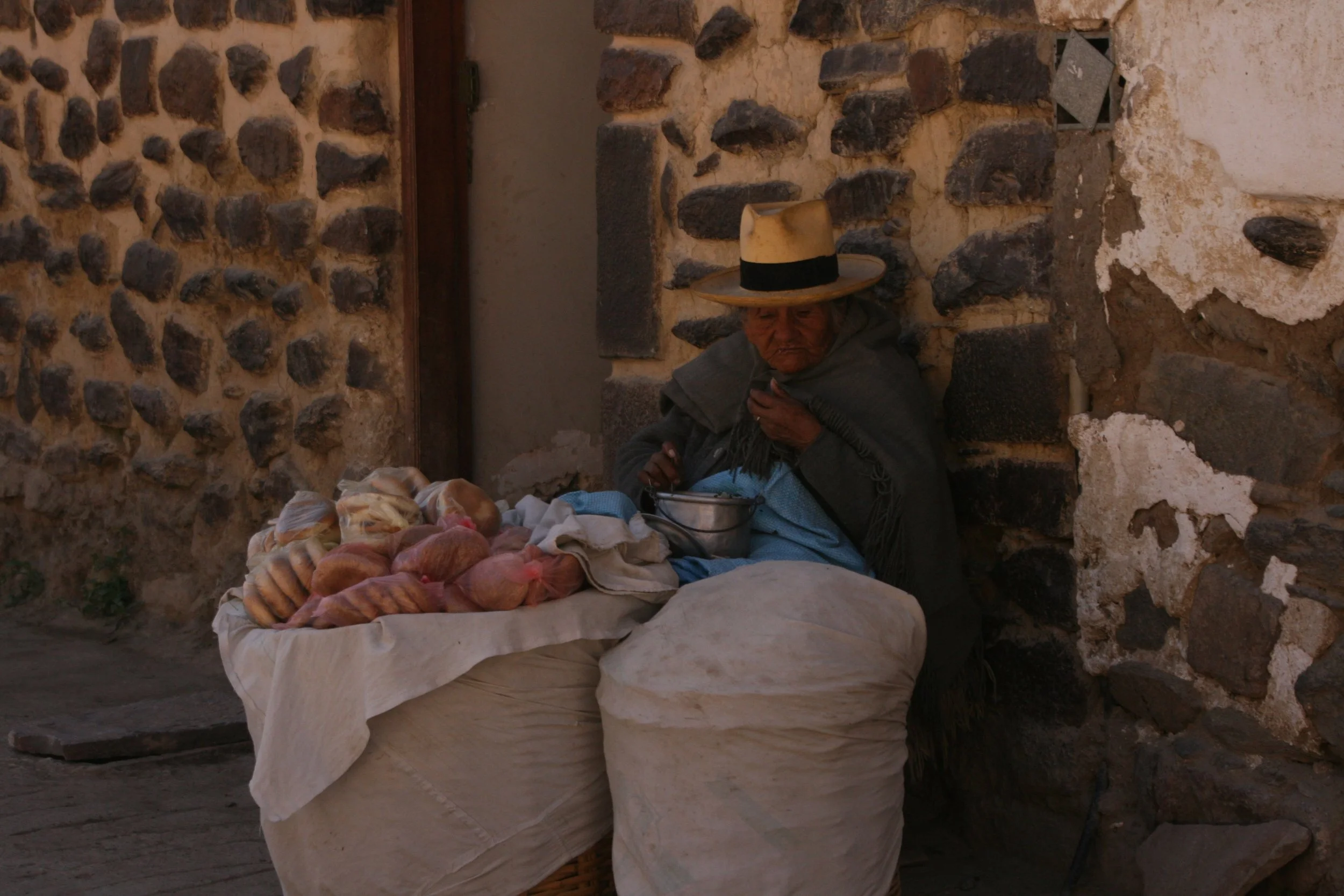
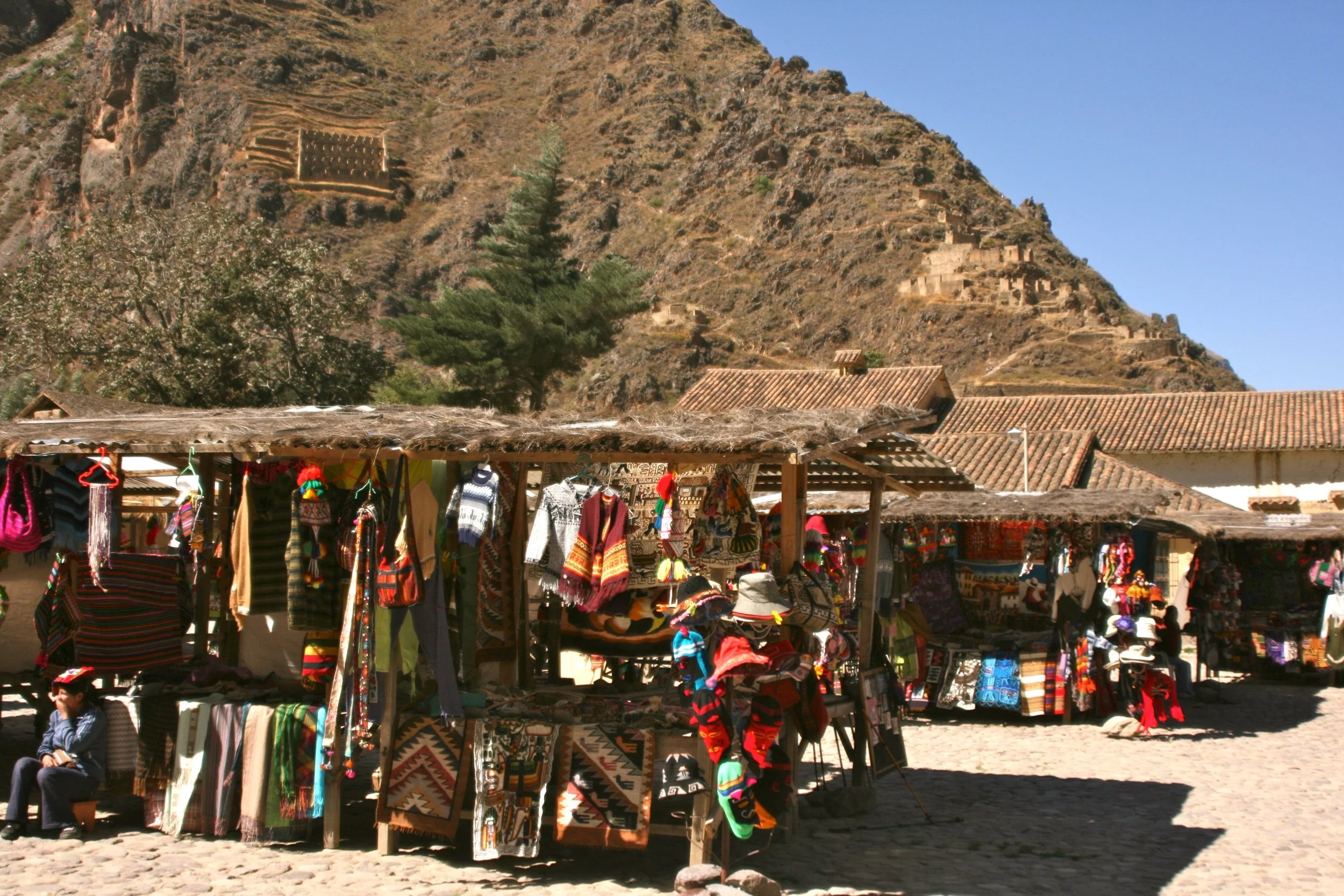
That first afternoon we took the local bus to Pisac, which on a Sunday holds one of the biggest markets in the Sacred Valley. One dollar for the thirty-minute ride. The market is wonderful: alpacas are a serious business in Peru, which means alpaca products are everywhere you look. Sweaters, scarves, wraps, blankets. And baby clothes.
Lunch in a Pisac cafe was a proper three-course meal for sixteen soles, which works out to four dollars. We started with a salad inside a half avocado, moved to a traditional Peruvian corn and potato soup, had our mains, and were given a small glass of something at the end that tasted like warm wassail.
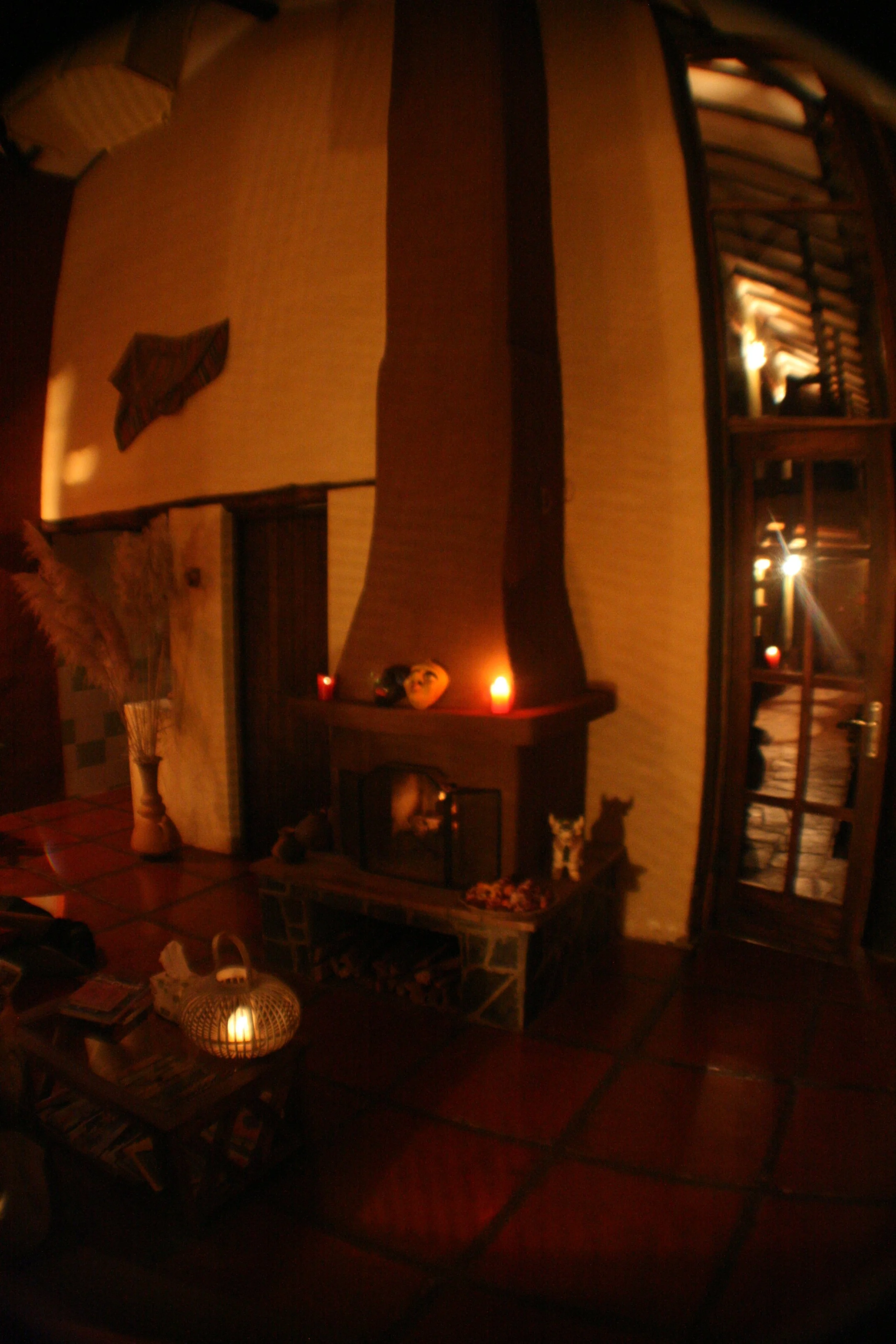
Back at the Green House by five, when the sun drops and the temperature drops with it quite suddenly, we settled into the common room where Gabriel had lit candles and a fire and put out wine and was playing good music. He cooks a three-course dinner every evening for the guests. It was the kind of evening that makes you want to stay longer than you planned. And when we finally climbed into bed, we discovered that Gabriel had tucked hot water bottles under the covers. There is no heat in the rooms. It was cold. Those hot water bottles were perhaps the single greatest hospitality gesture of any trip we have ever taken. We were asleep within thirty seconds and slept eleven hours straight.
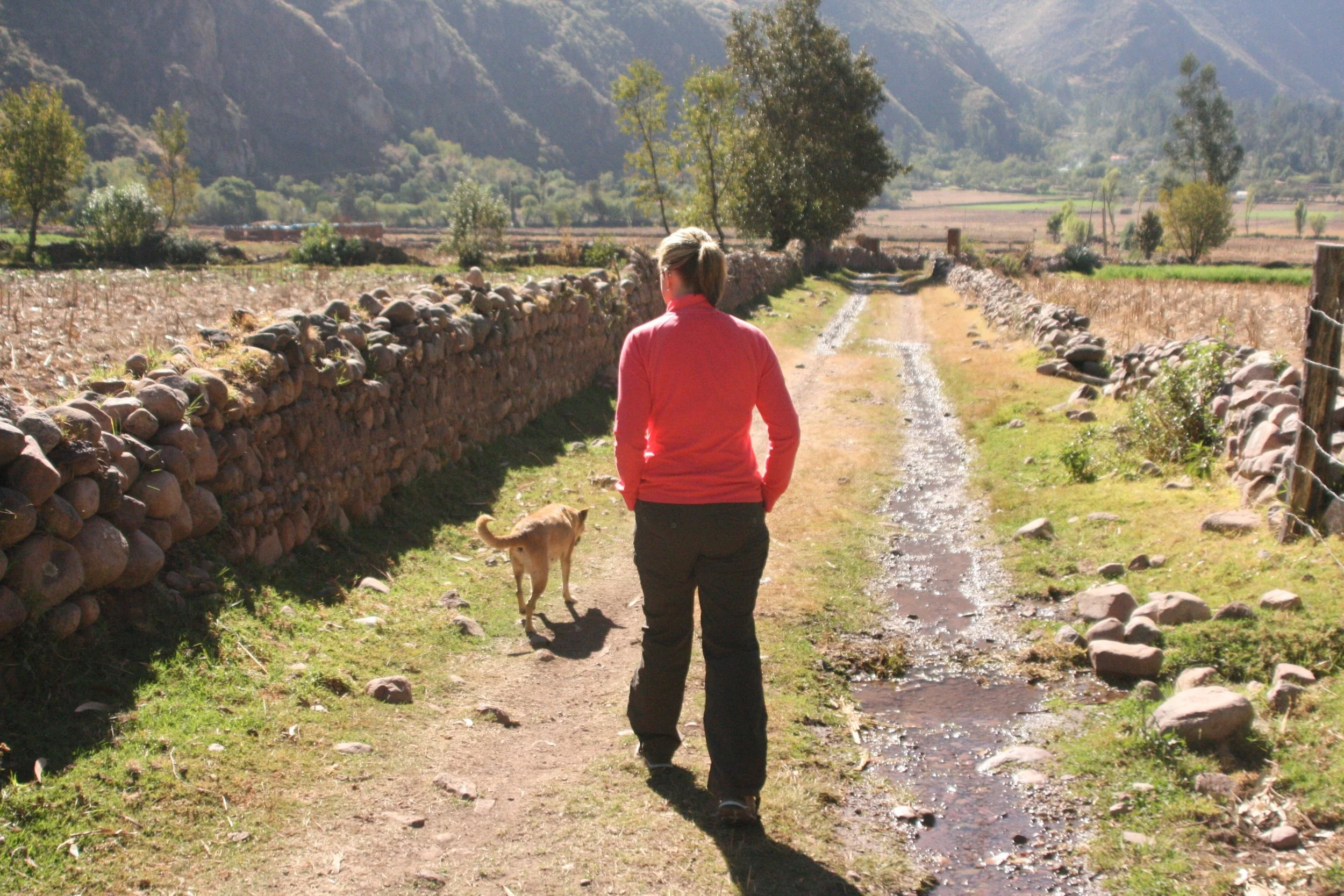
Day two started with Gabriel's breakfast: fruit salad, scrambled eggs, bread with homemade local jam, fresh squeezed orange juice, and French pressed coffee. Then a hike to the nearby waterfall with Leica as our guide, a forty-minute walk each way through countryside where you cannot pass a single person without them saying "Buenos dias." Leica got distracted by other dogs a couple of times but overall kept us on track admirably.
The altitude made itself known on that hike in a very direct way. We had prescriptions that were helping, but even so: what should have been a gentle stroll produced an embarrassing amount of huffing and puffing. You stop for no apparent reason. You are just out of breath standing on a path. The air simply contains less of what your lungs are looking for and they let you know about it constantly.
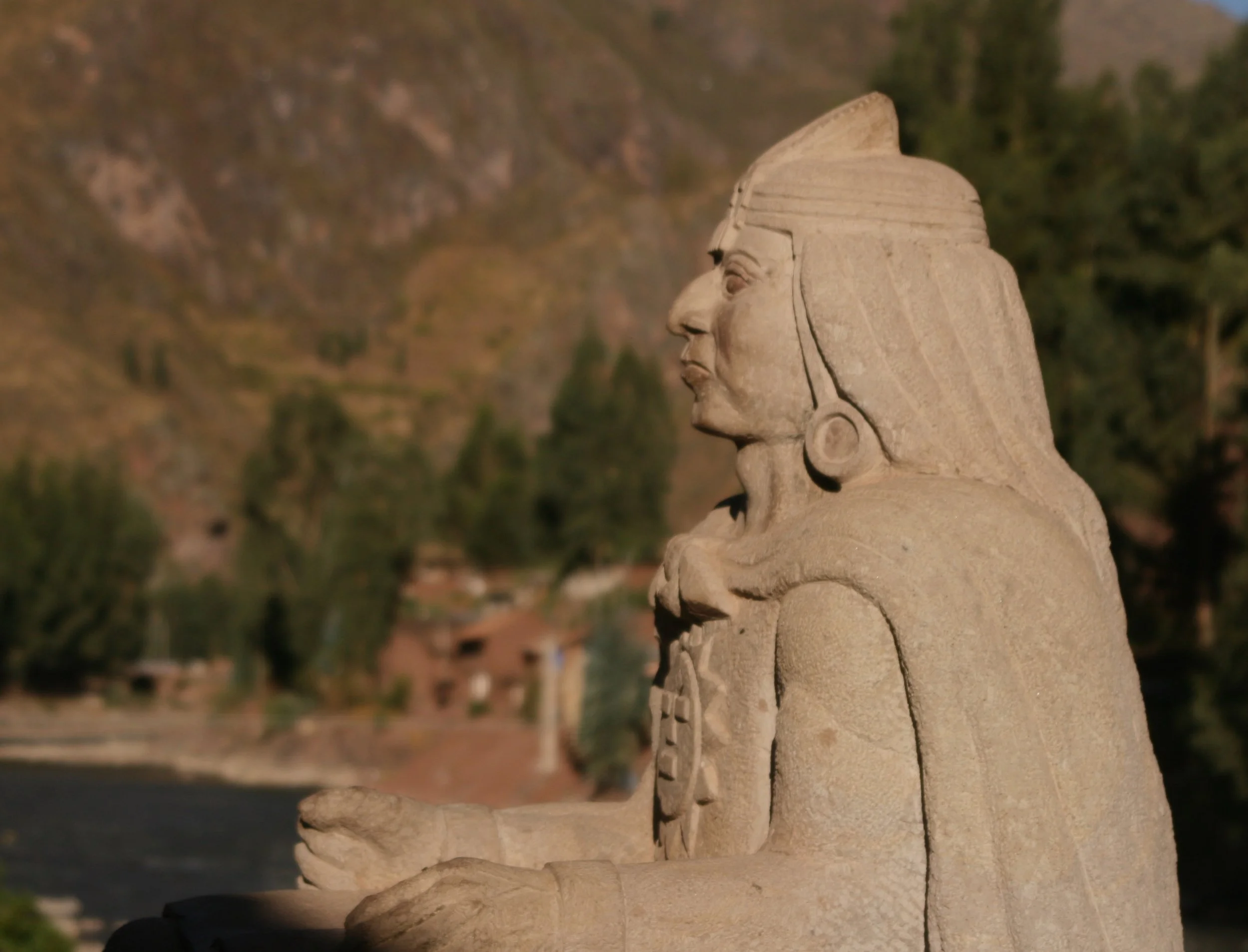
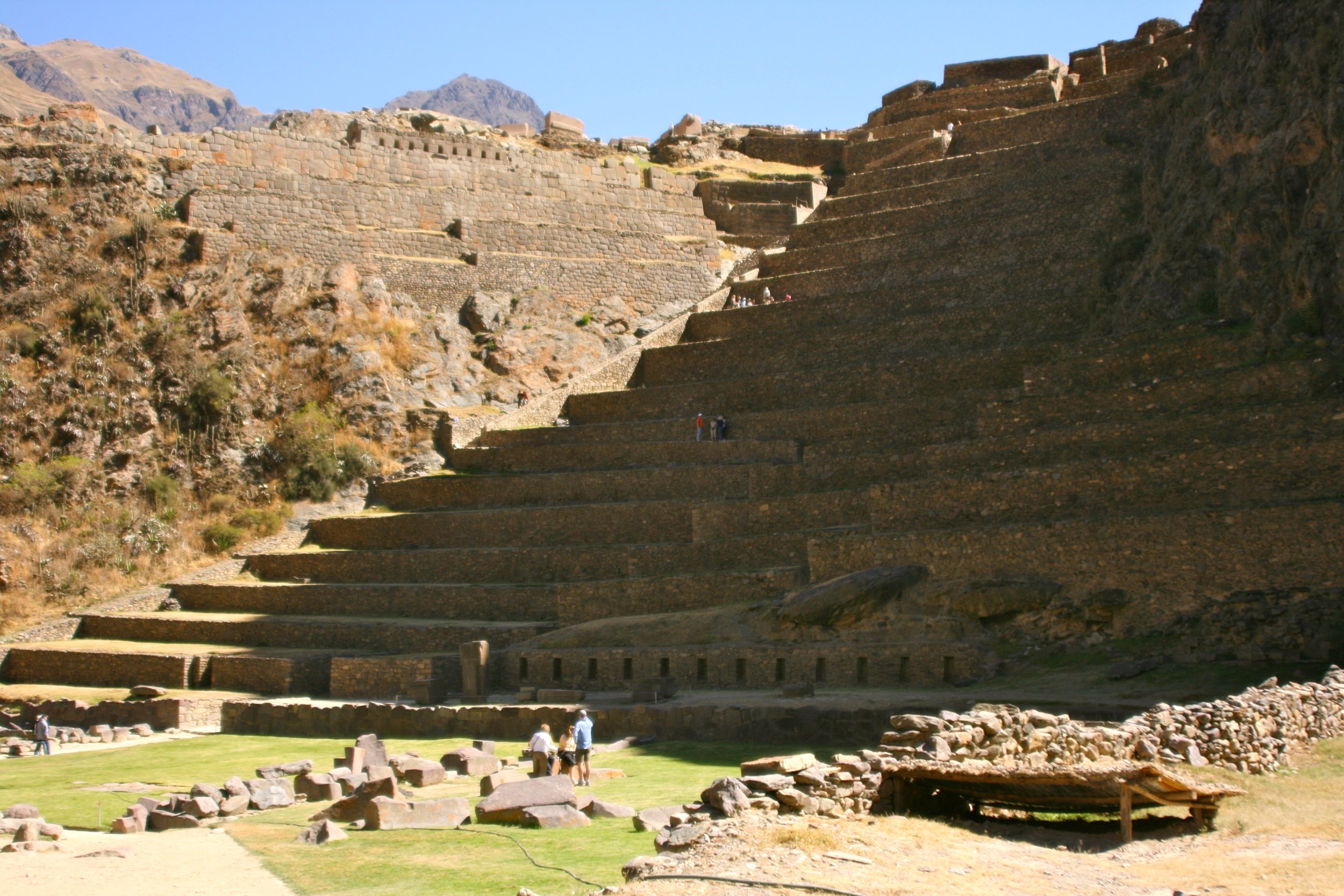
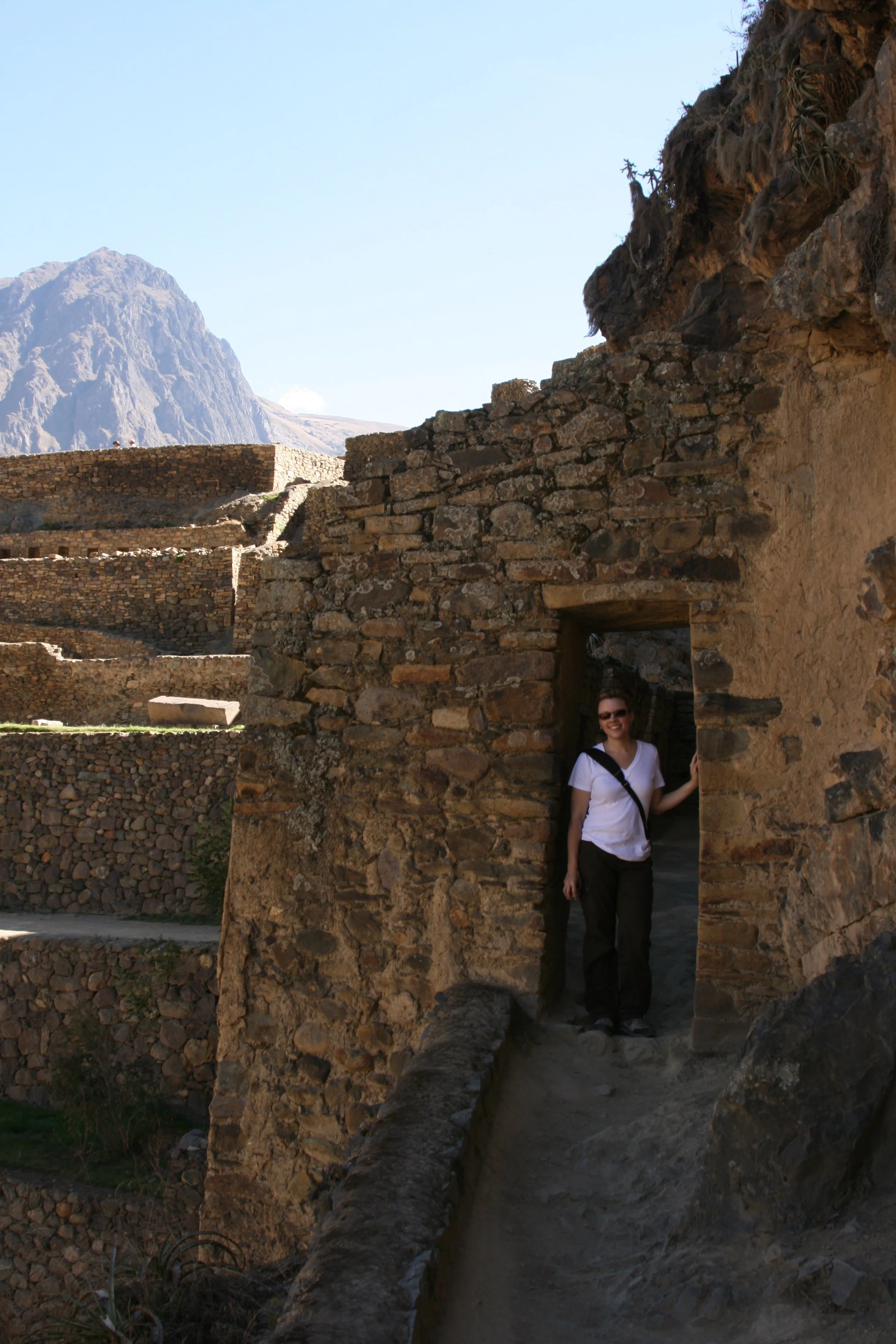
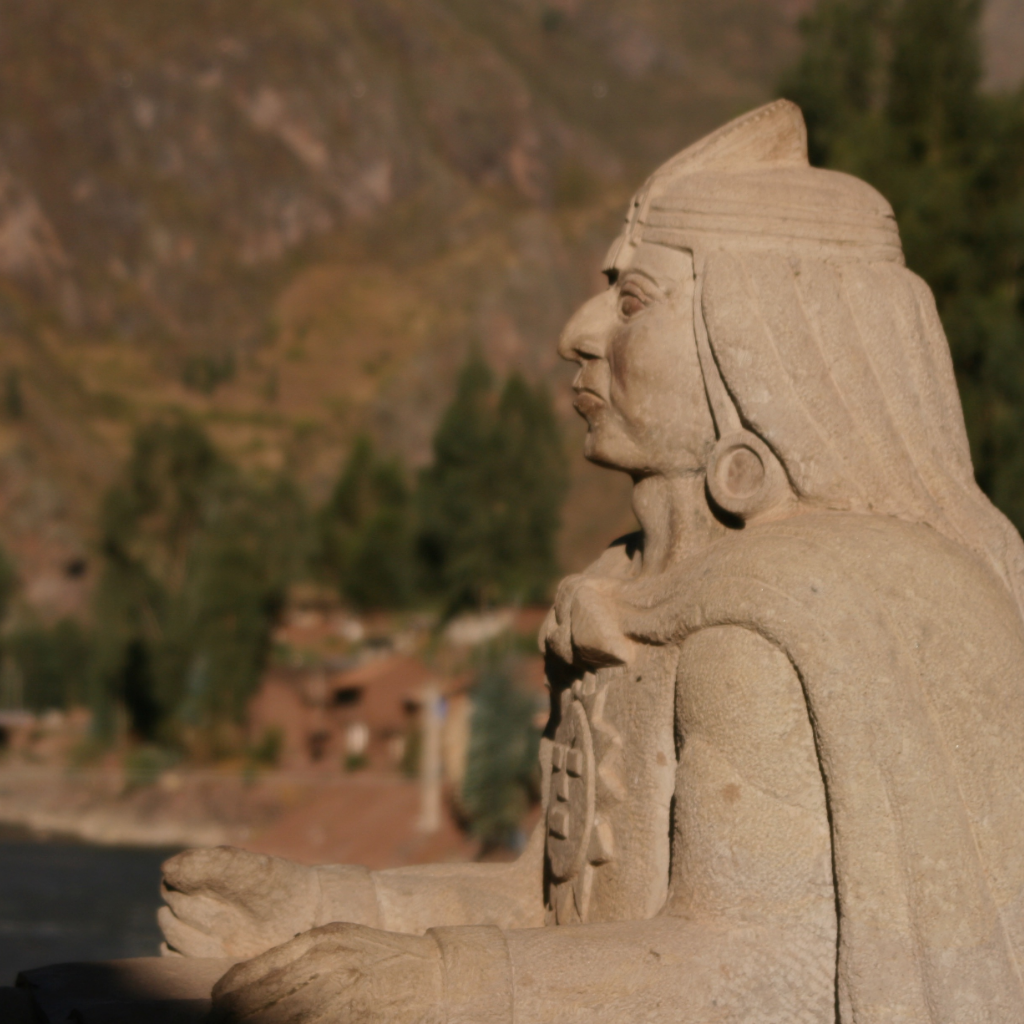
After the waterfall we took a taxi to Ollantaytambo, which is genuinely fun to say out loud and even more fun to try to say quickly. It is the only original intact Incan city still in existence: the original roads, the original layout, many of the original buildings now occupied by families and small businesses going about their daily lives. It is, in the most literal sense, a living ruin.
The site above the town features enormous terraces that once guarded the Incan complex, one of the very few places where the conquistadors lost a significant battle. In 1536 the Incans held them off with arrows, spears, boulders, and then flooded the plain below. Standing on those terraces and understanding what happened there gives the stones a weight that history books can't quite replicate.
We climbed to the top, stopping more times than we would have liked to admit to simply breathe. The view from the top was worth every undignified pause. We had lunch in a local cafe and ordered Alpaca, which is served here the way chicken is served elsewhere: it's just the protein on the menu. Ours was a little tough but came with a good sauce and proper vegetables, and the Peruvian beer was genuinely excellent. Our taxi driver back to Huaran spoke limited English and I relied entirely on my high school Spanish, which is somewhere between "functional" and "optimistic." We had what I can only describe as the general shape of a conversation, and he was kind enough to slow down and meet me where I was. It felt like a small victory.
That evening, another fire and another of Gabriel's dinners. Tomorrow: the train to Machu Picchu.