The Dream I Had at Thirteen & One Less Lifetime Pity
Peru | Aguas Calientes + Machu Picchu | June 2010
I was in seventh-grade Spanish class when my teacher Ms. Flynn showed us slides from her trip to Machu Picchu. She talked about the magic of it, the wonder, all while teaching us about the Inkas. I remember sitting at my desk and thinking, clearly and with complete conviction: I am going to go there someday.
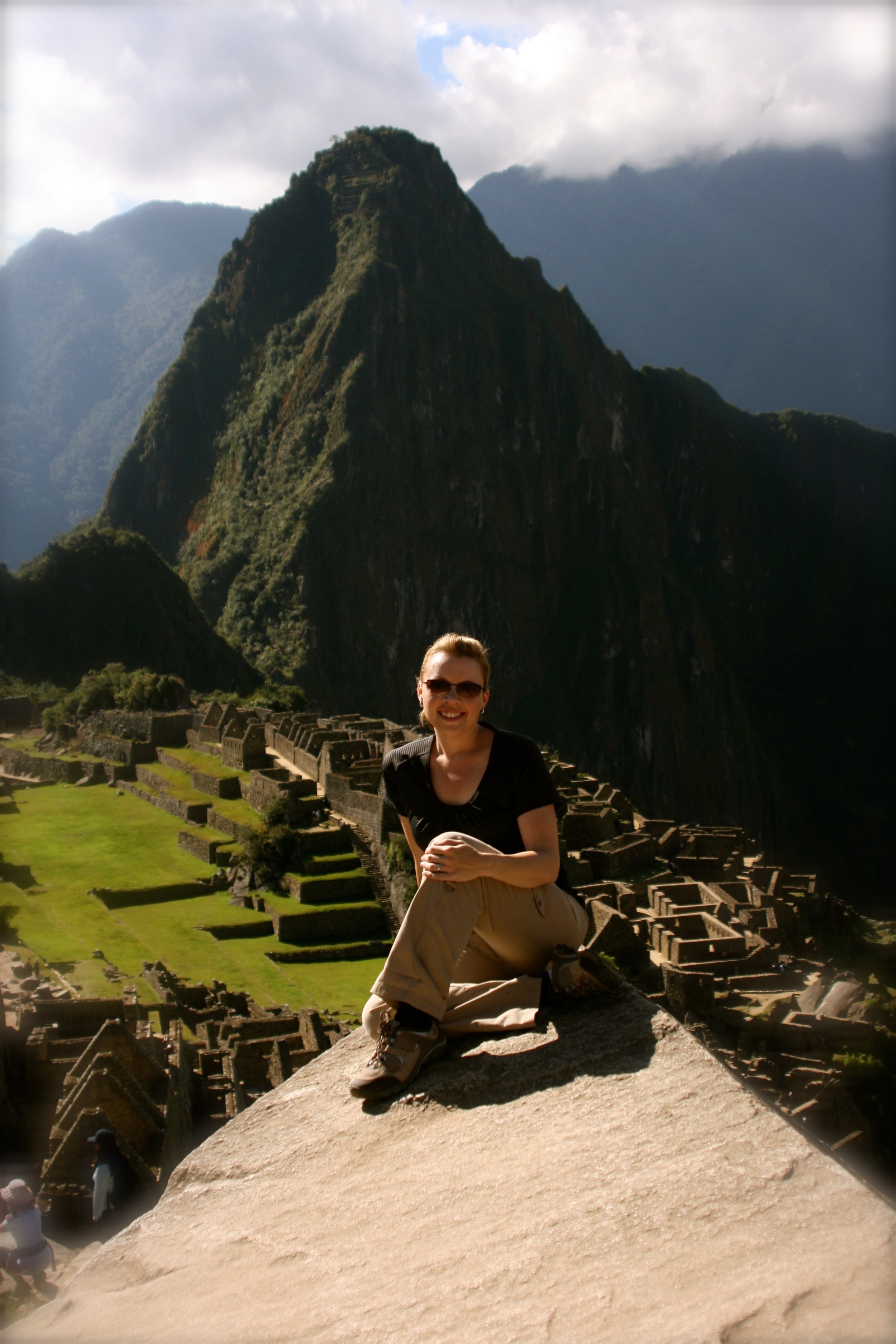
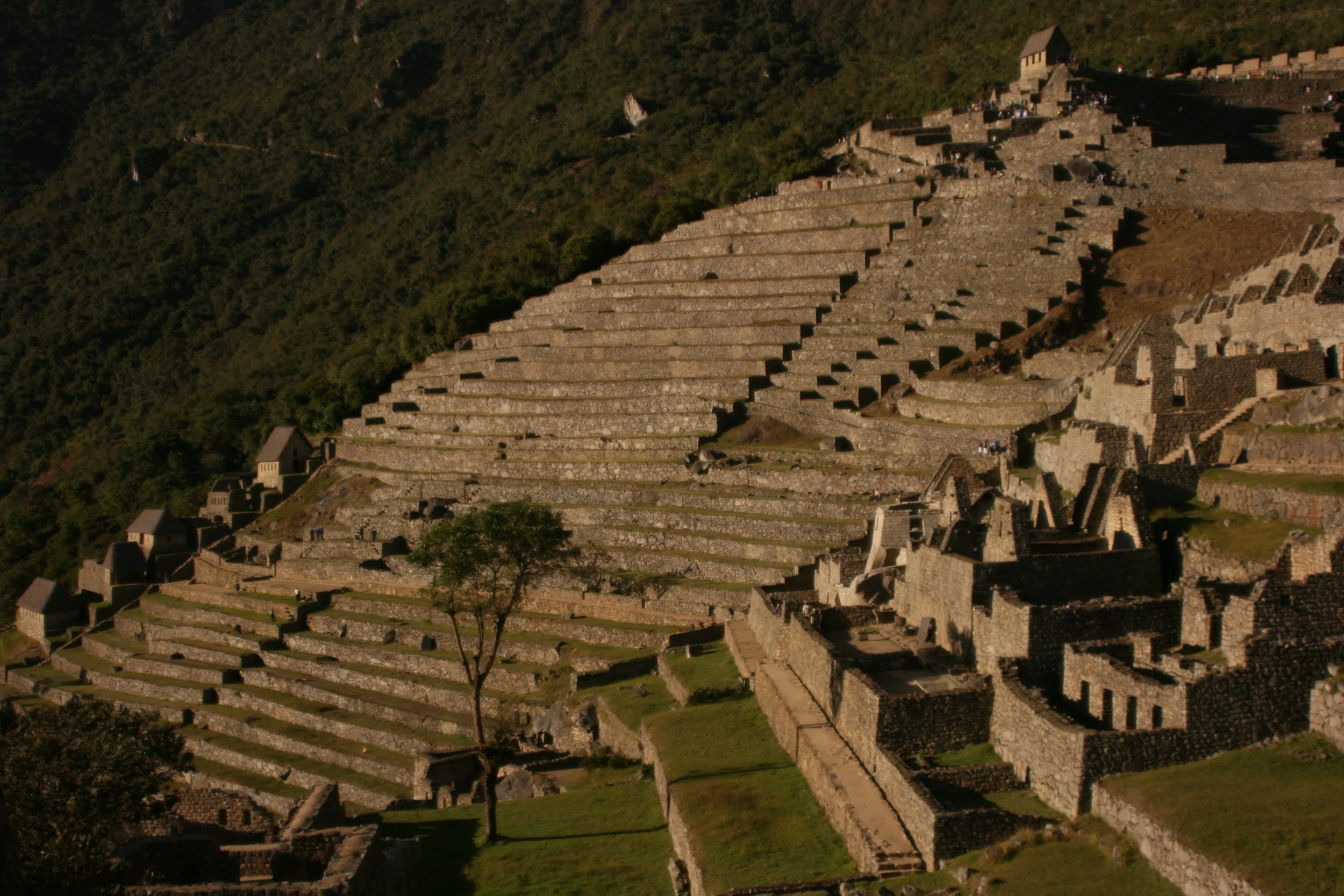
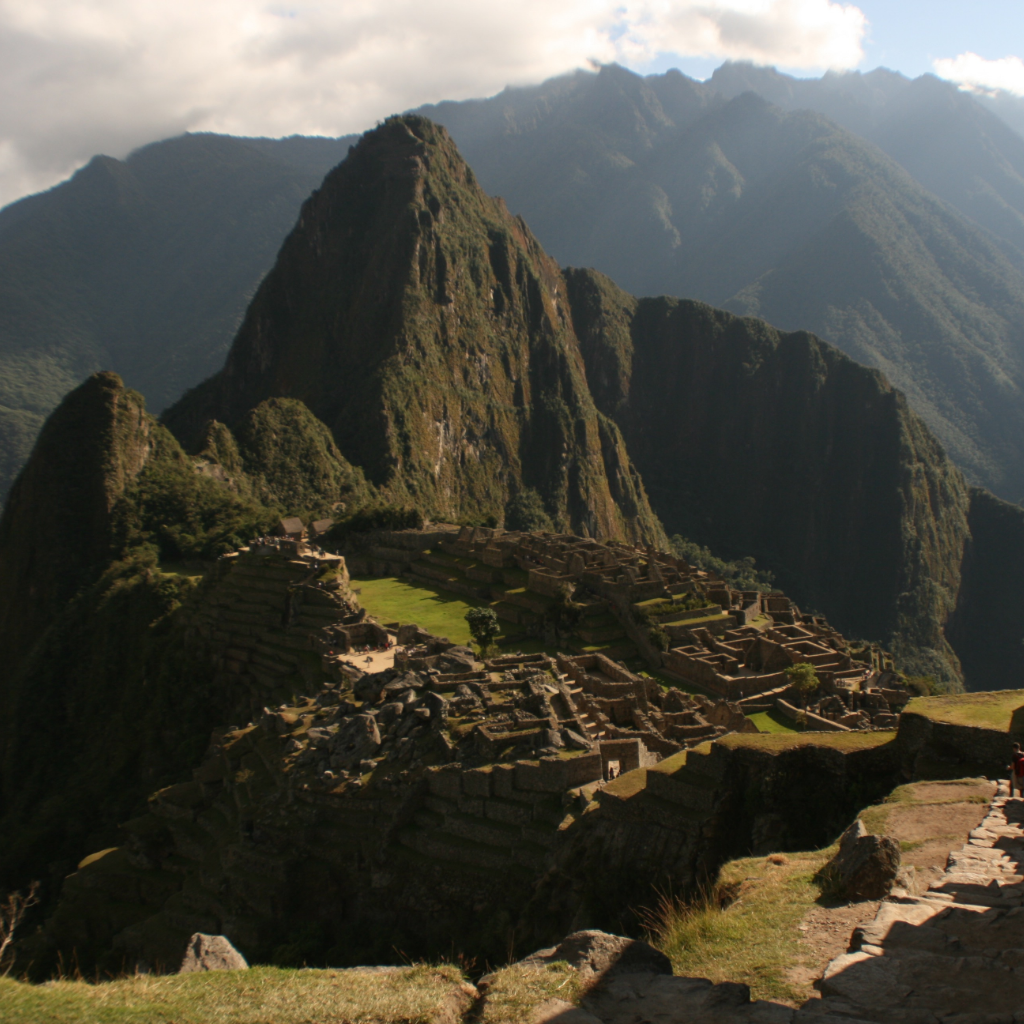
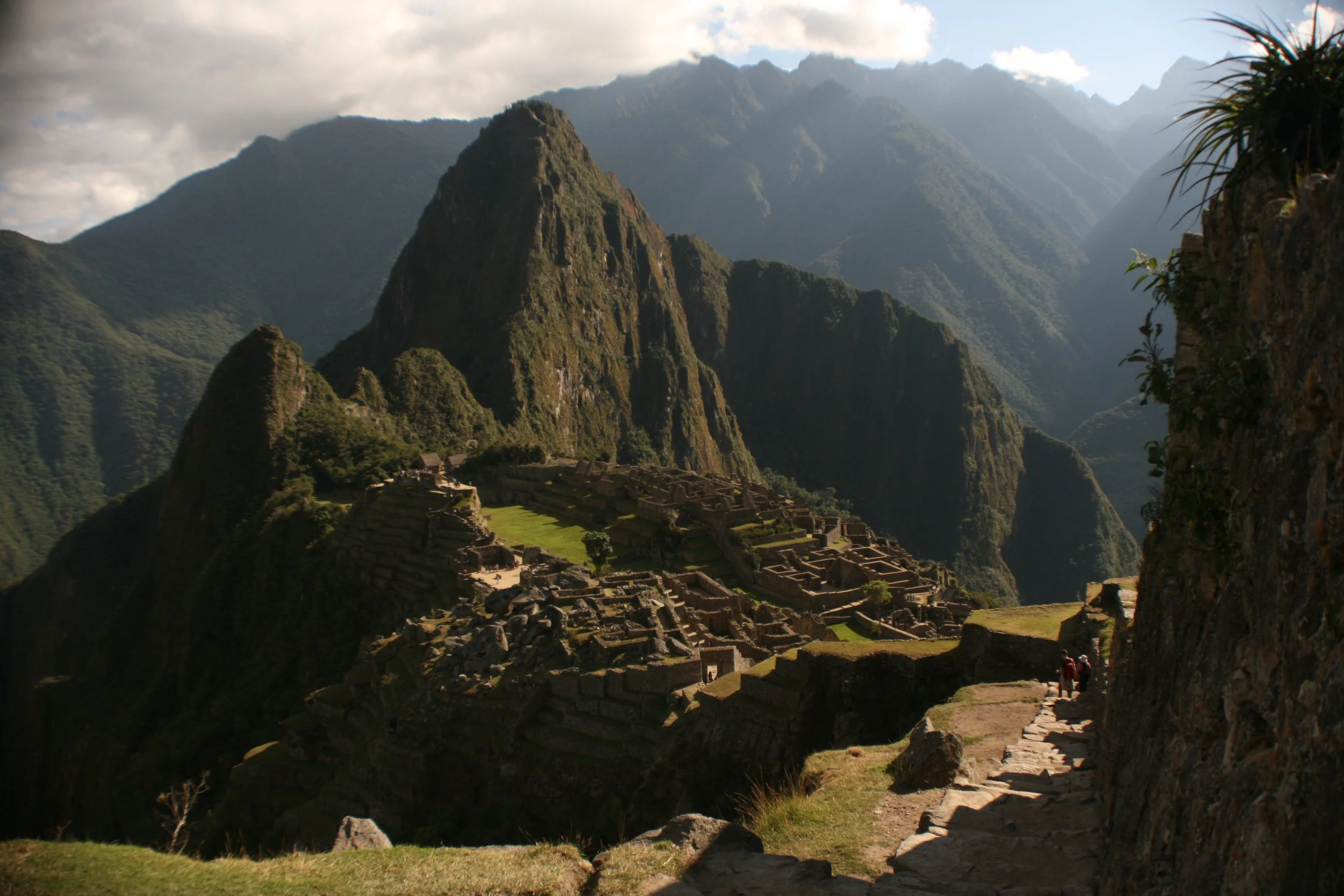
That was age thirteen. I was thirty-two when I stepped off a bus at the entrance to Machu Picchu and started climbing. Nineteen years in the making. And within five minutes of climbing, through the lack of oxygen and the burning in my legs, there it was. As magnificent as I had always imagined it to be.
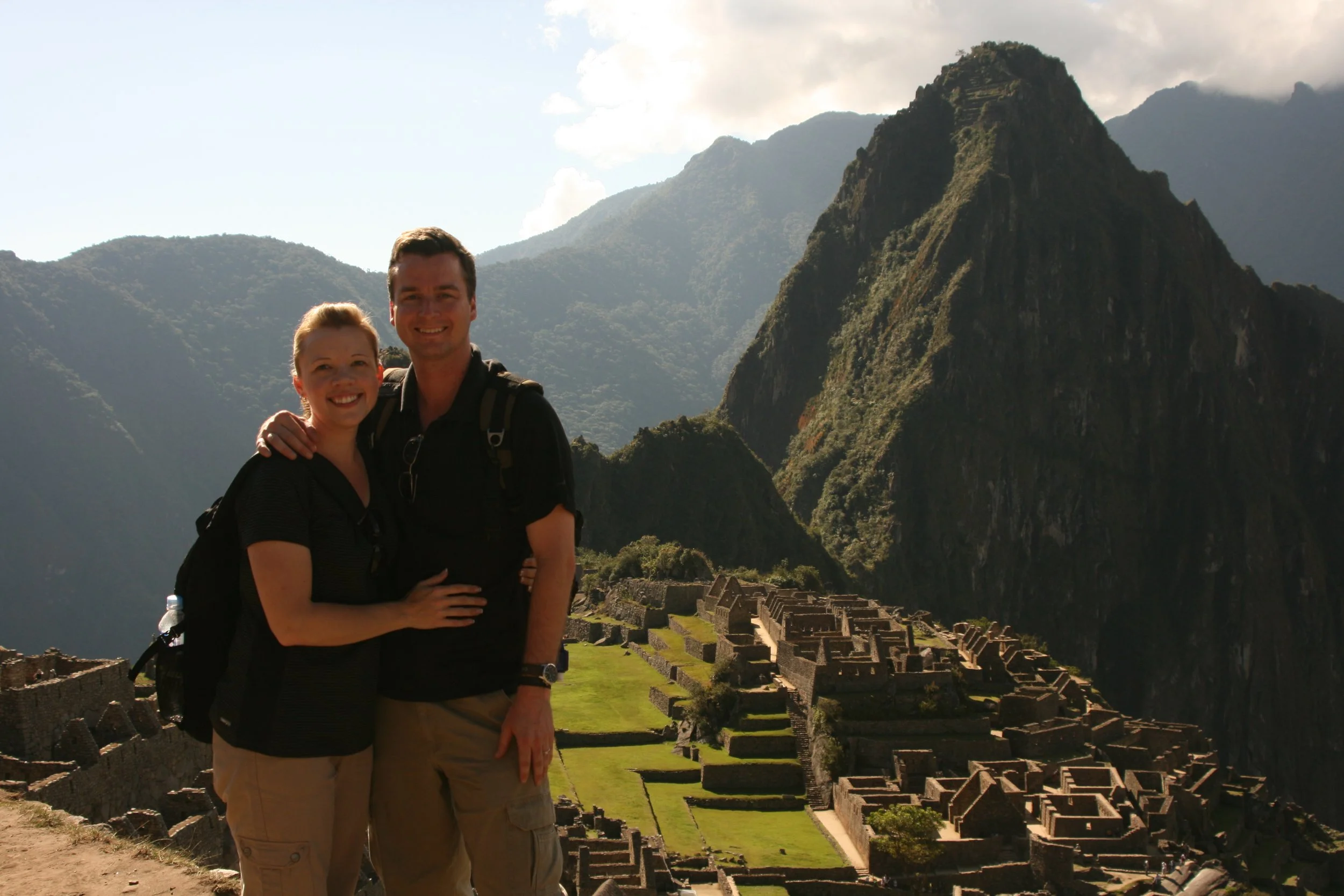
I got emotional. I did not expect to get emotional, but there it is. Nineteen years is a long time to carry a dream around, and some dreams deserve a little crying when they come true.
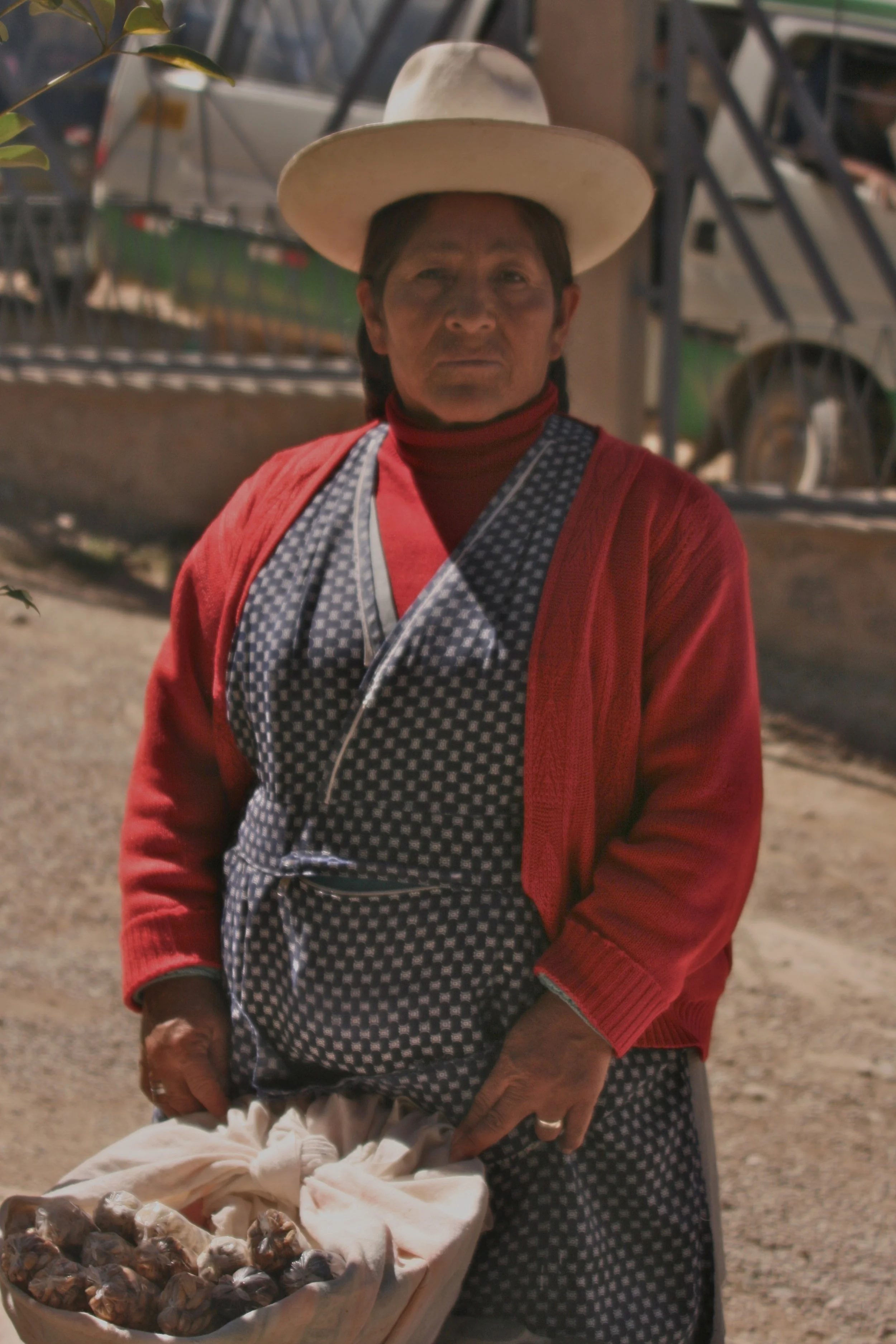
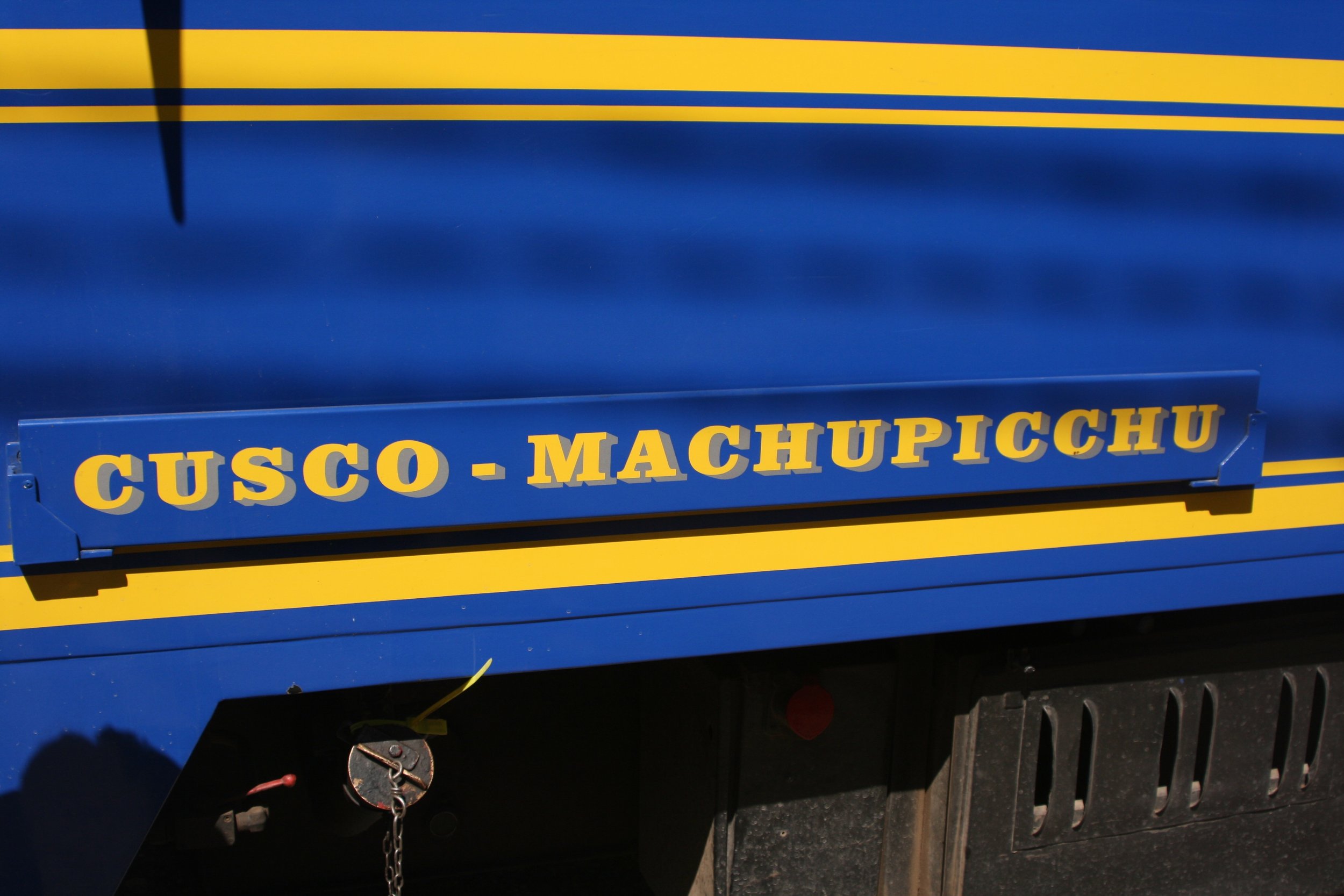
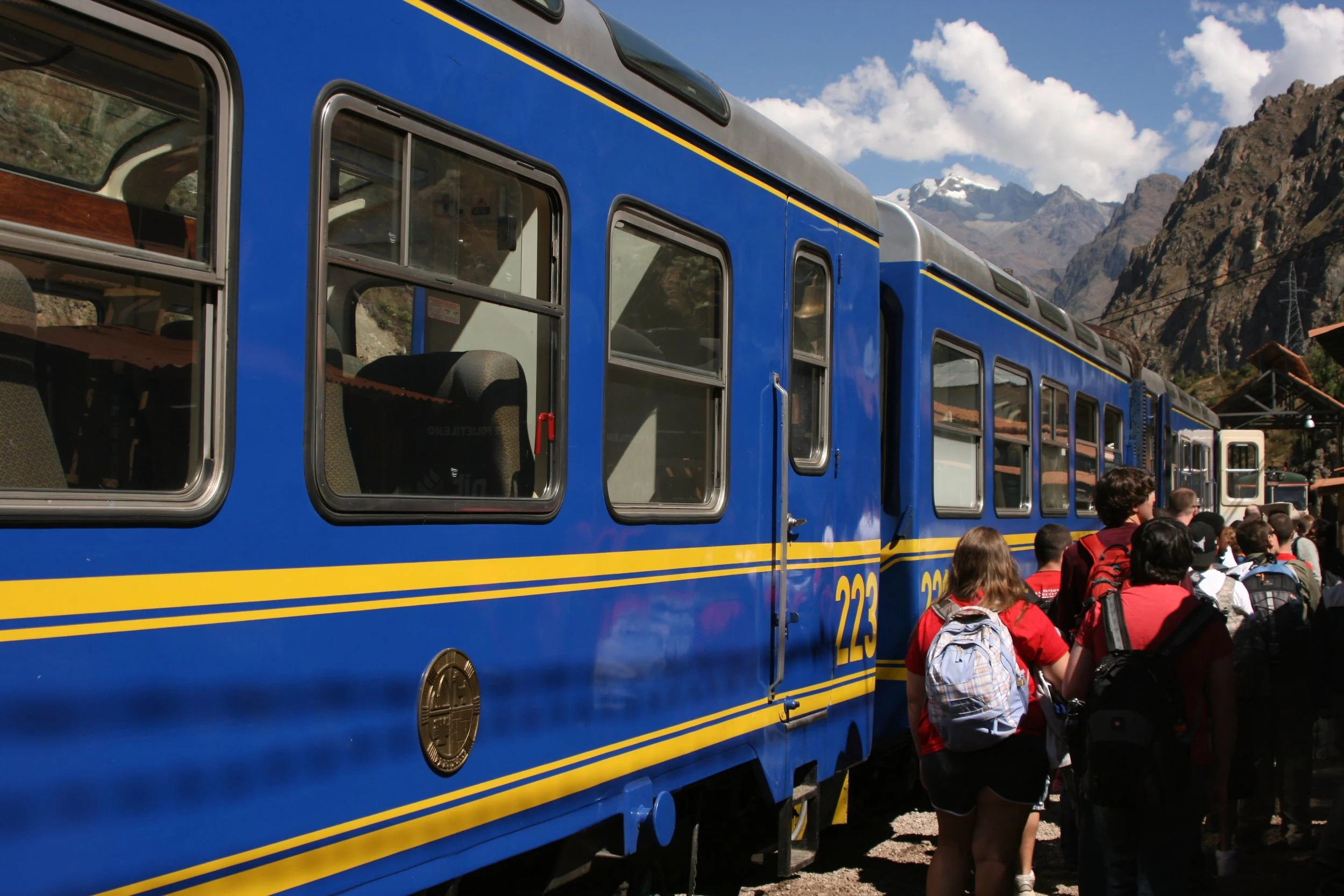
Getting there was its own adventure. Peru Rail had just resumed operating after devastating floods the previous year wiped out large sections of the railway. We boarded buses from Ollantaytambo and drove for an hour on actual train tracks in some sections, through farmland, and along bumpy roads until we reached a station where the train was waiting. While we waited to depart, an older woman on the platform was selling toasted corn for one sole per bag. We bought one and ate it on the train. We wished we had bought ten.
The train itself was wonderful, a class called the Vistadome with windows that curve up into the ceiling so you can watch the mountains rise around you as you descend into the cloud forest. Our boxed lunch arrived and our attendant opened it with great ceremony to explain its contents: "We have a ham and cheese sandwich, and the ham is turkey." We looked at each other. Perfect.
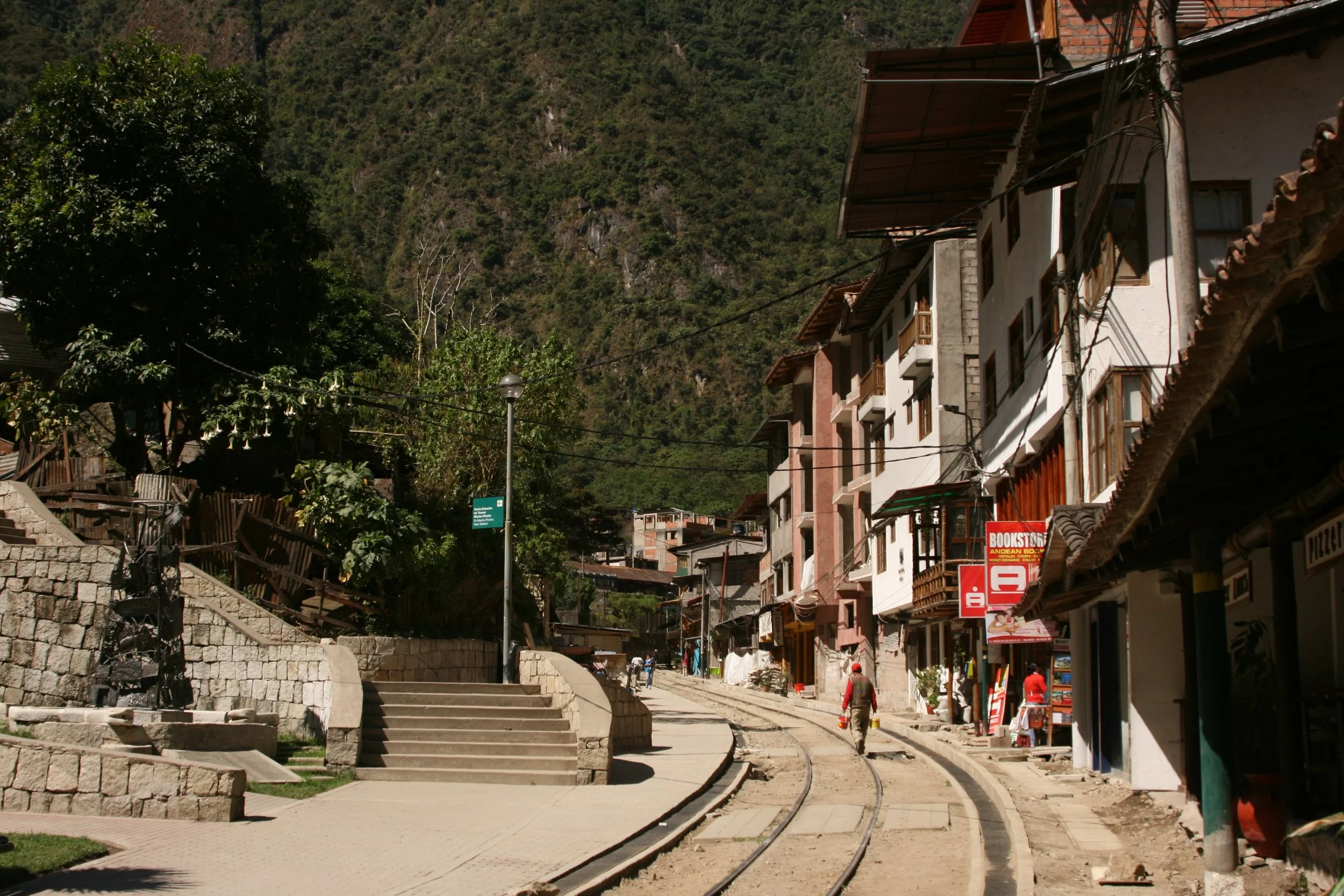
The journey took about an hour and twenty-five minutes to reach Aguas Calientes, the town at the base of Machu Picchu where almost everyone stays overnight. We checked in fast, dropped our bags, and headed straight for the bus that spirals up the mountain. And I do mean up. The road is a series of aggressive switchbacks carved into the face of the mountain, and the bus takes them with confidence.
Then you climb the final stretch on foot, and then there it is.
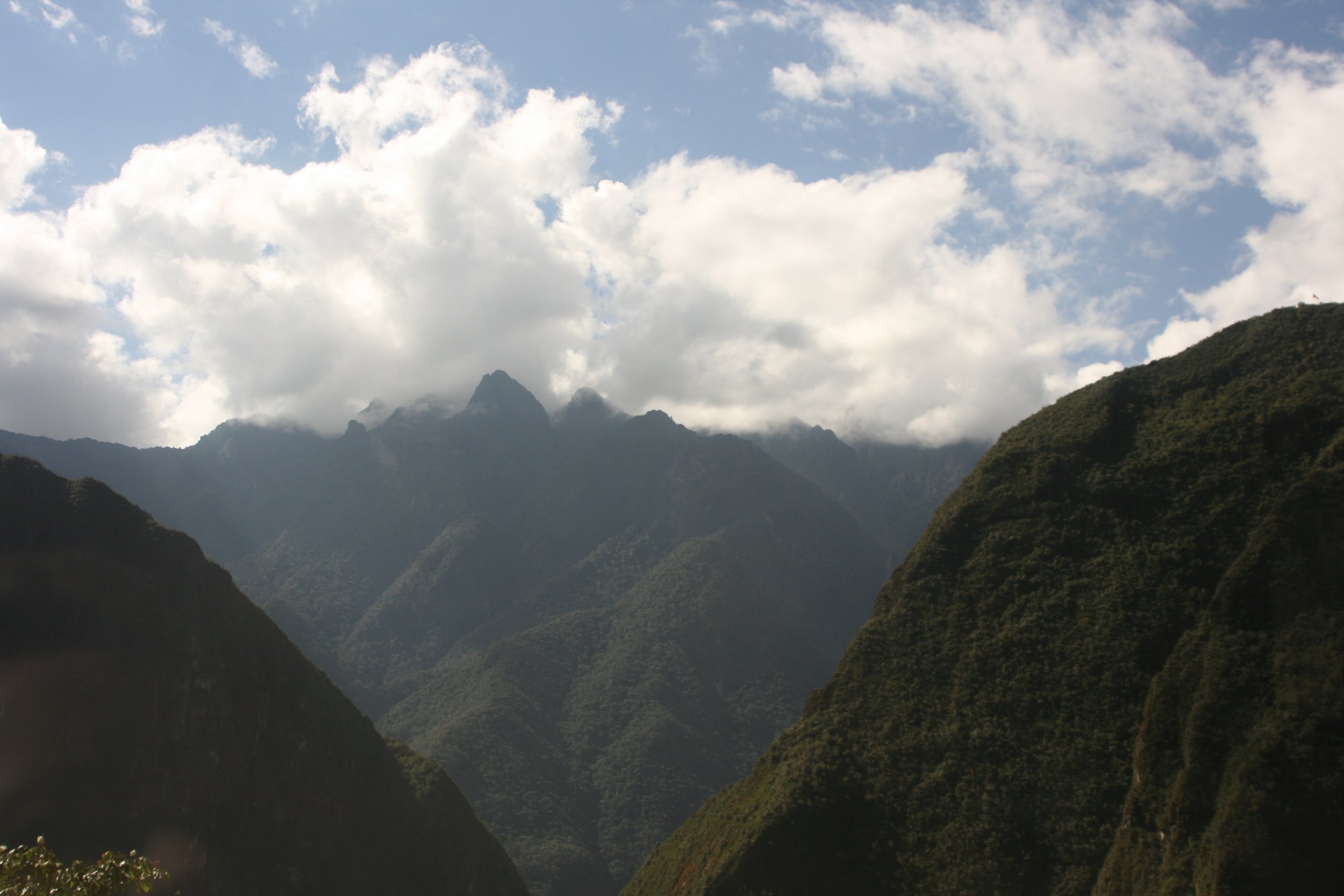
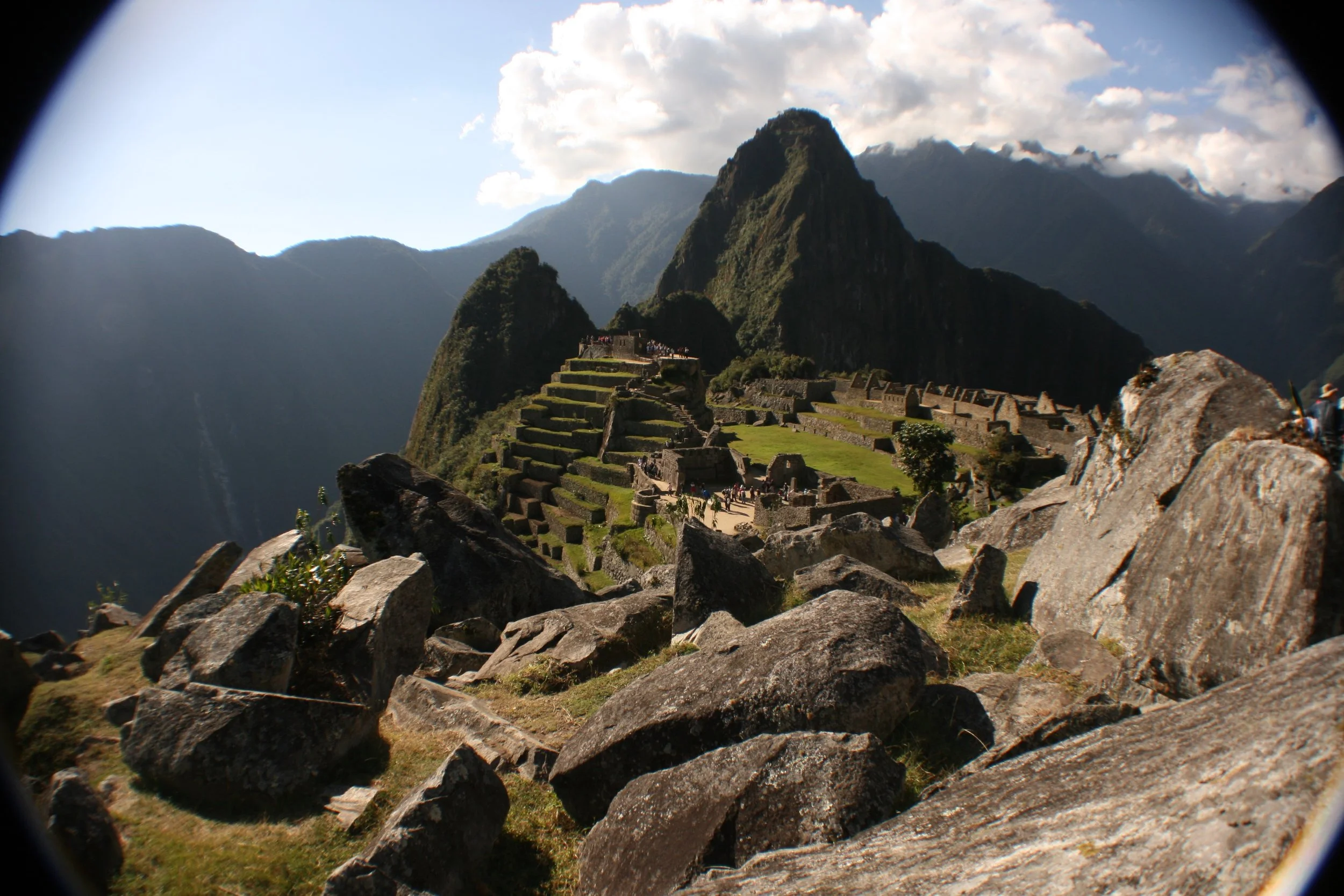
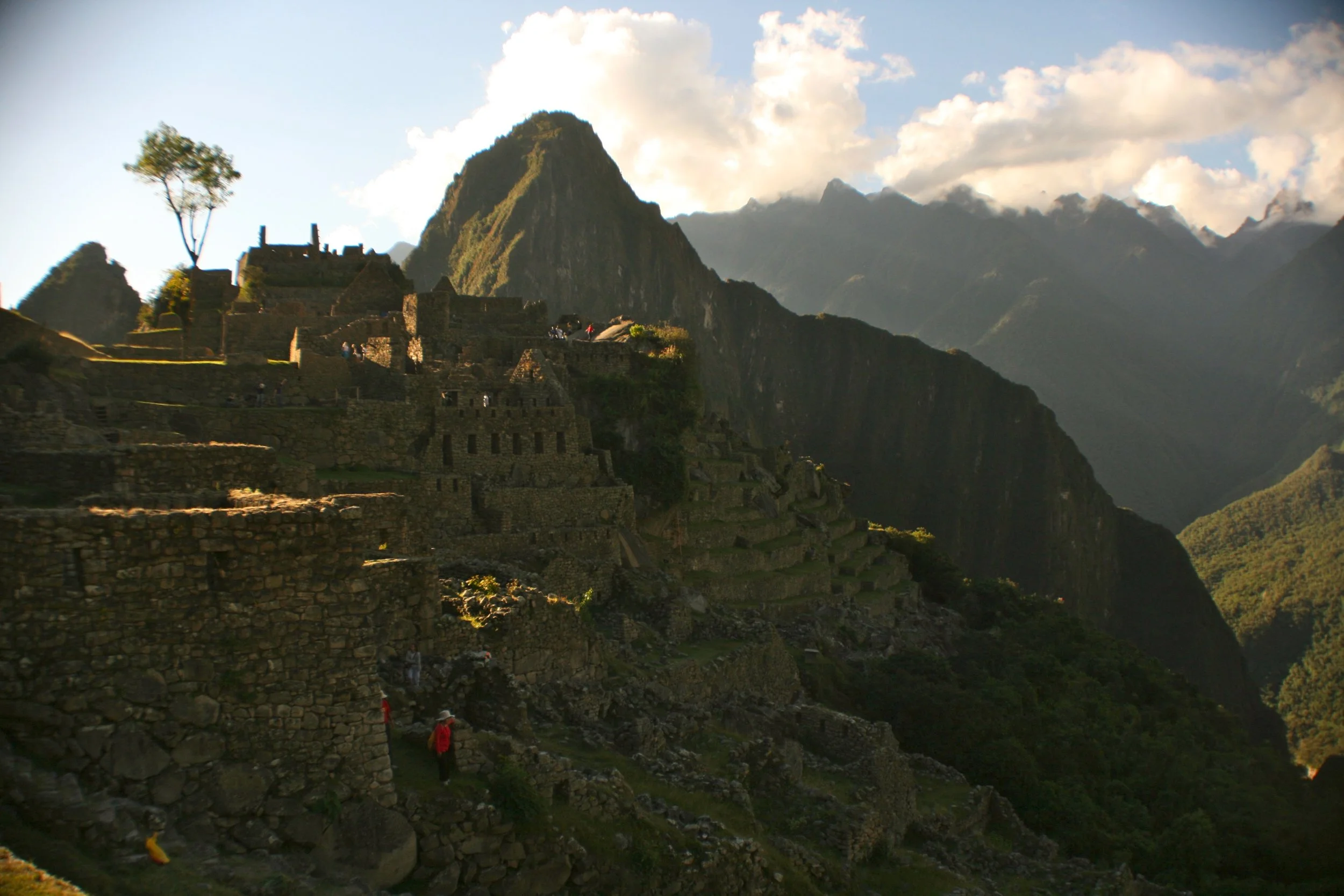
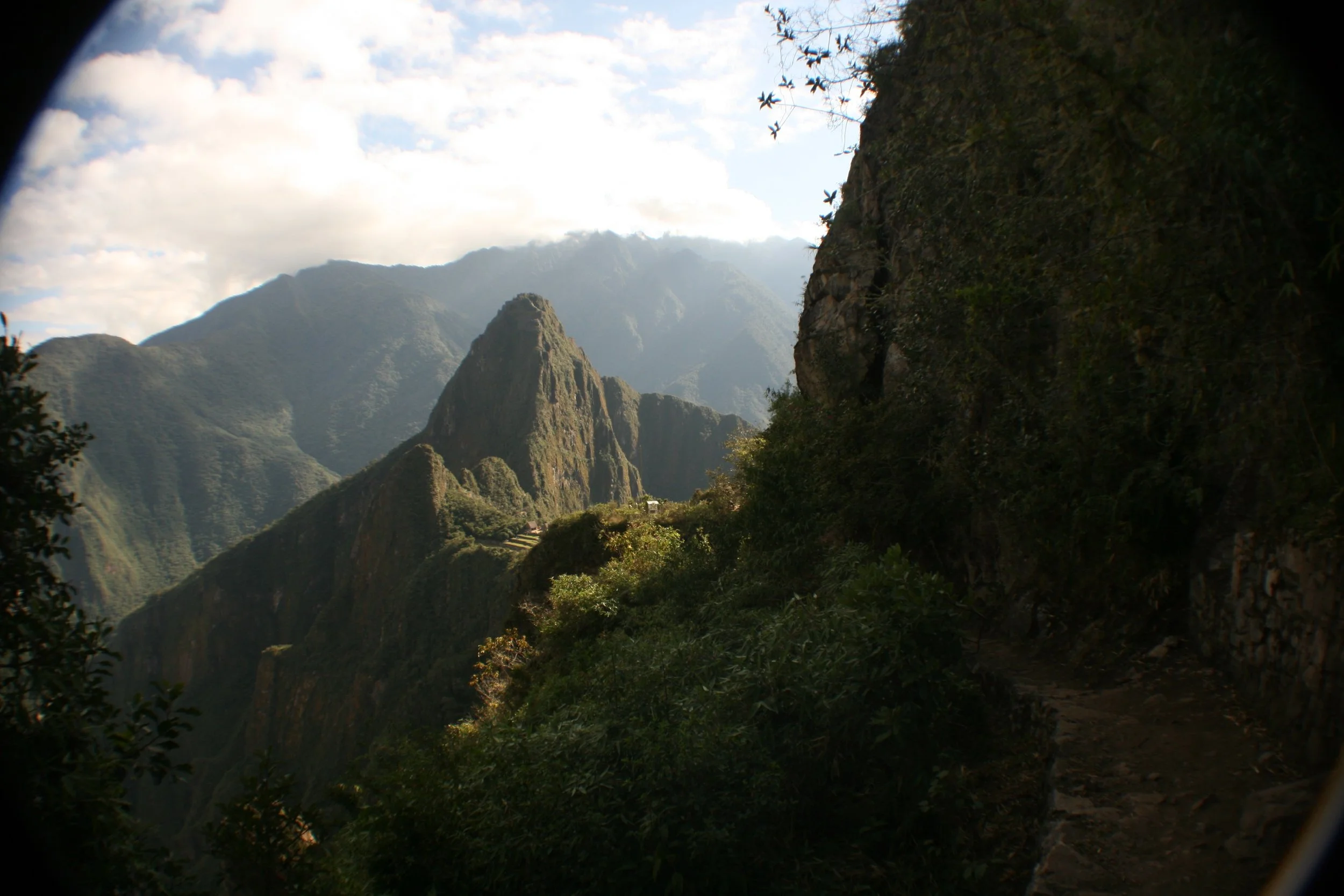
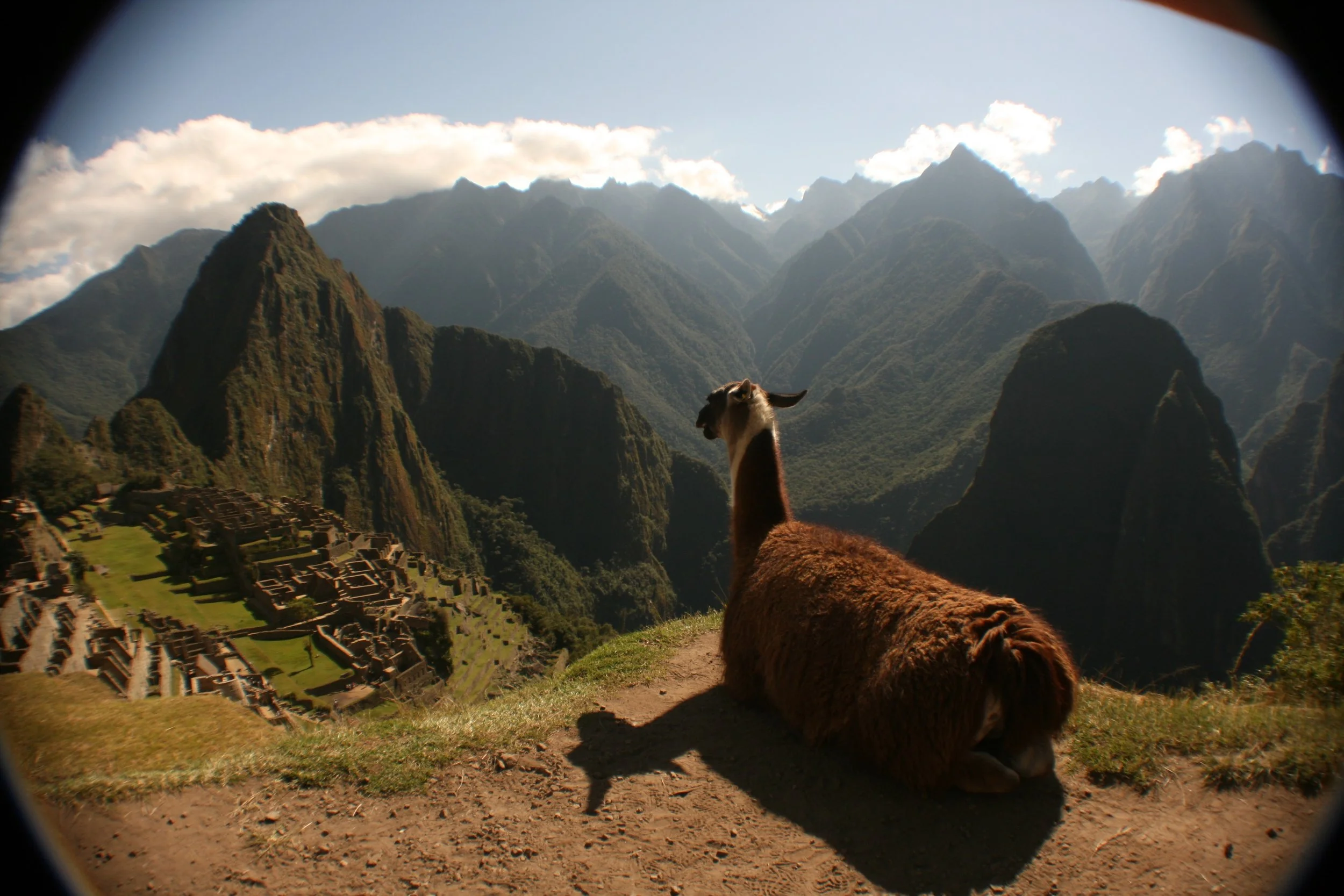
Machu Picchu is set among a mountain range in a way that seems almost too perfect, steep green slopes dropping away on every side, the ruins perched on their ridge like they grew there. The views rival Guilin, China for us, and Guilin is extraordinary. We spent the afternoon exploring, intentionally leaving sections for the next morning. That evening in Aguas Calientes we sat outside a small cafe, me with a cappuccino (Peru makes surprisingly excellent cappuccinos), Matt with a Peruvian beer, listening to traditional music from somewhere down the street. Then dinner at a restaurant called The Tree House for our anniversary: Matt had Alpaca tornadoes, I had a quinoa risotto with chicken that we had first encountered as a side dish in Ollantaytambo and loved enough to order as a full plate. Then we sat in an internet cafe watching a man do a note-perfect Michael Jackson moonwalk on the street outside in full Thriller jacket and hair. Not something we expected from Aguas Calientes, Peru, but travel keeps surprising you.
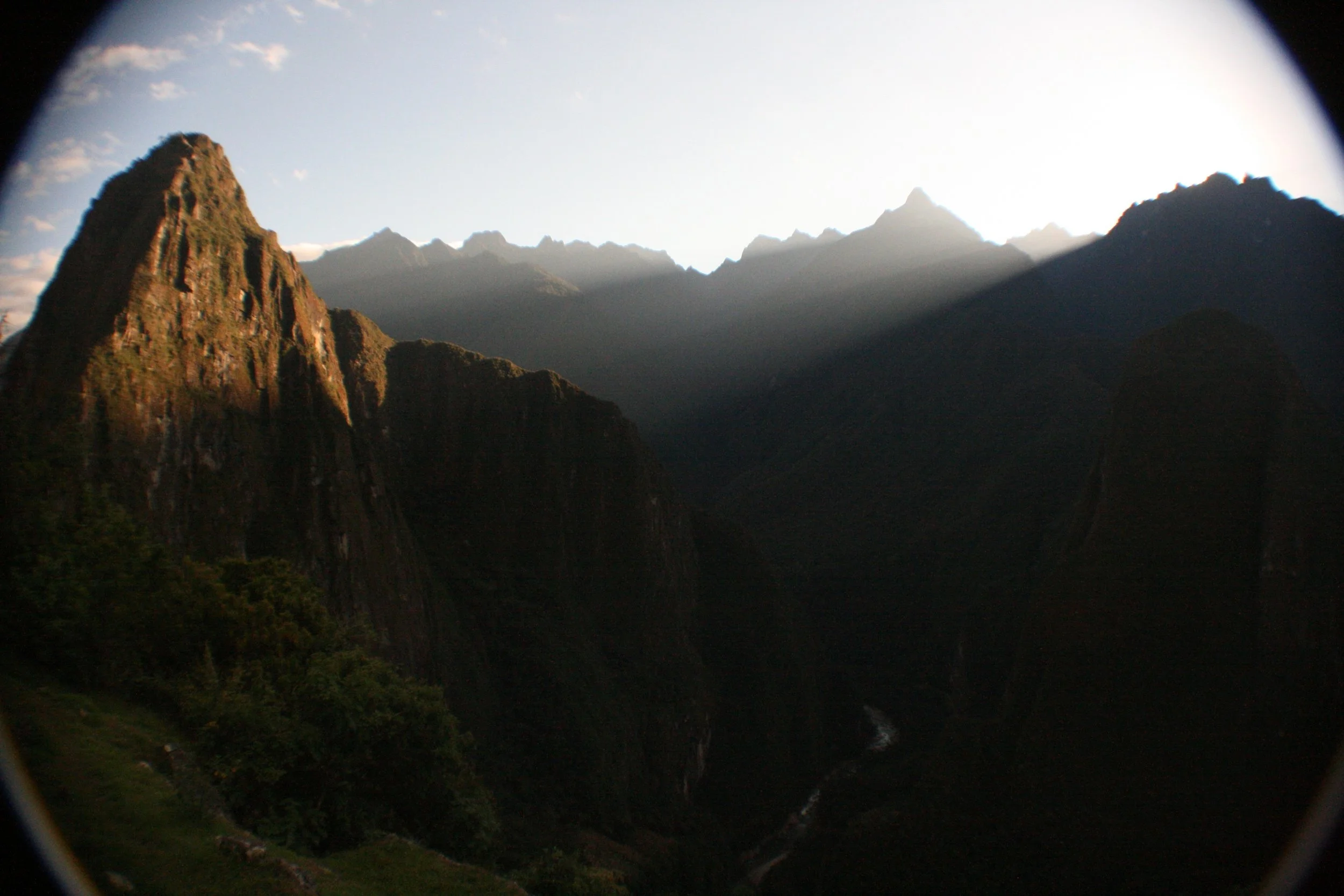
Day two at Machu Picchu started at 4:30 in the morning because we wanted to be there at opening, which is 6am, and the entire town apparently had the same idea. The bus line at that hour was impressively long. We made it. Sunrise was honest but not dramatic, no spectacular color variation, just dark and then lighter and then blue, but there is something genuinely worth doing about watching that happen while you're already inside Machu Picchu with almost no one else around yet.
We started from the bottom that morning, exploring ruins we had skipped the day before while most of the early crowd gathered at the top for photos. By the time we were ready to go up for the overview, they were all coming down. This is the move. Come early, start low, work against the crowd. You'll have large sections nearly to yourself.
We hiked out to an original Incan bridge, which is on the side of the mountain and approximately three feet wide with nothing between you and a very long drop. The Incan civilization was, to put it mildly, not afraid of heights. We stood there and looked at it and agreed that nobody from our era designed this.
One thing nobody tells you quite enough about Machu Picchu is how physically demanding it is. You are not strolling on maintained pathways with handrails. You are scrambling up and down stairs from the fifteenth century that range from six inches to two feet high in the same flight. Uneven rocks, gravel surfaces, paths along edges with absolutely nothing between you and a thousand-foot drop. No ropes, no rails, no safety infrastructure of any kind. We loved it. It also means every single step requires your full attention, which is a surprisingly meditative way to spend a morning.
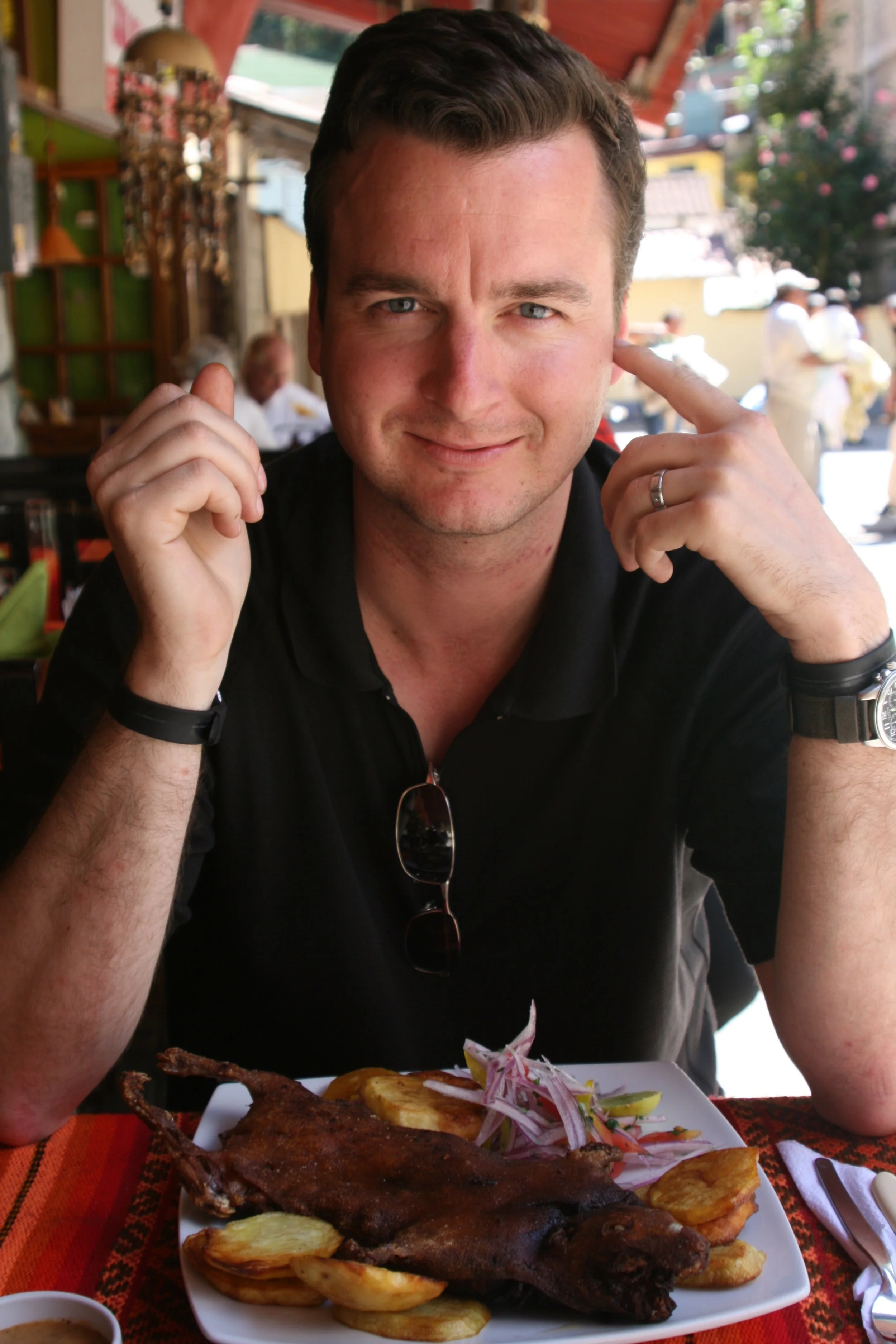
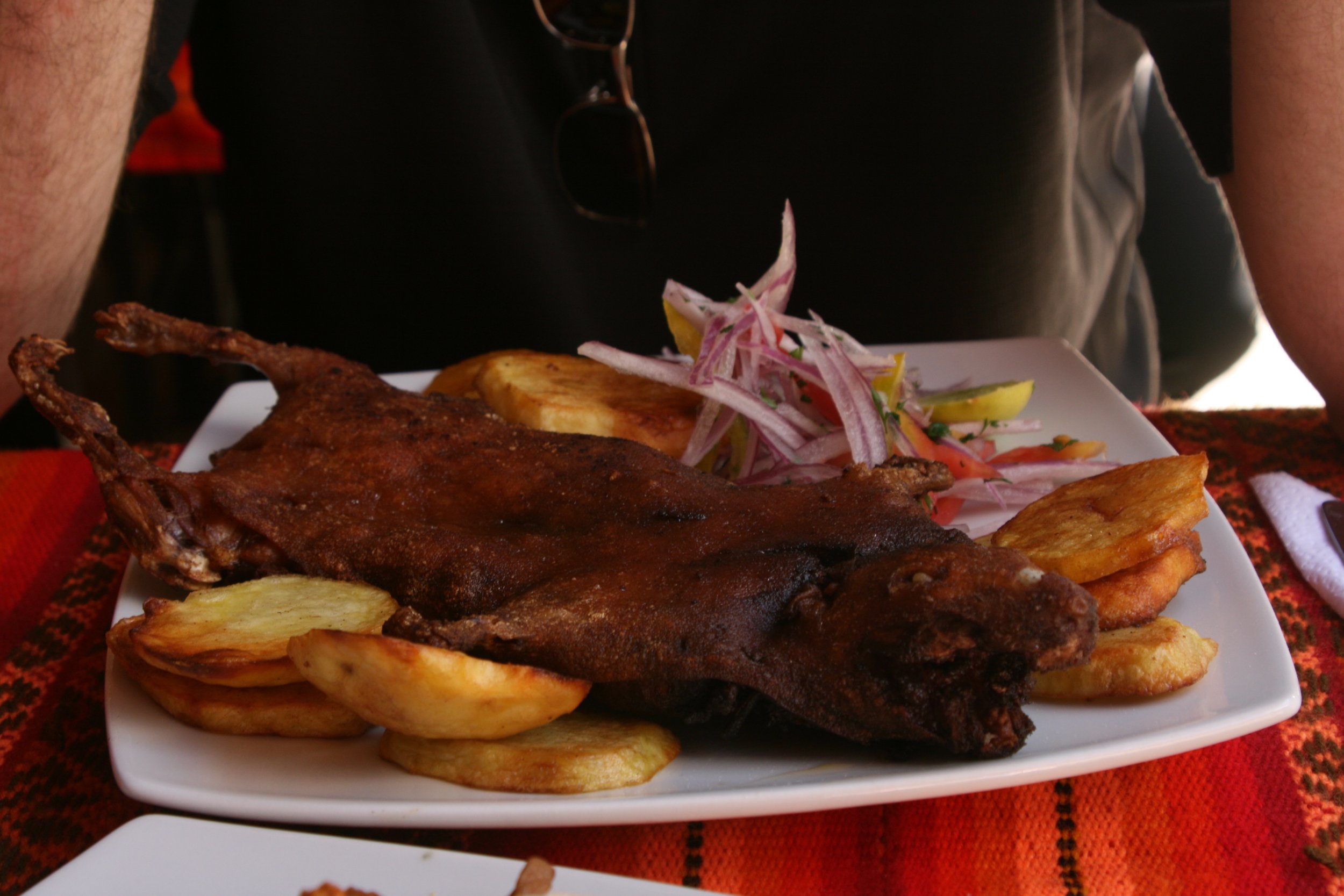
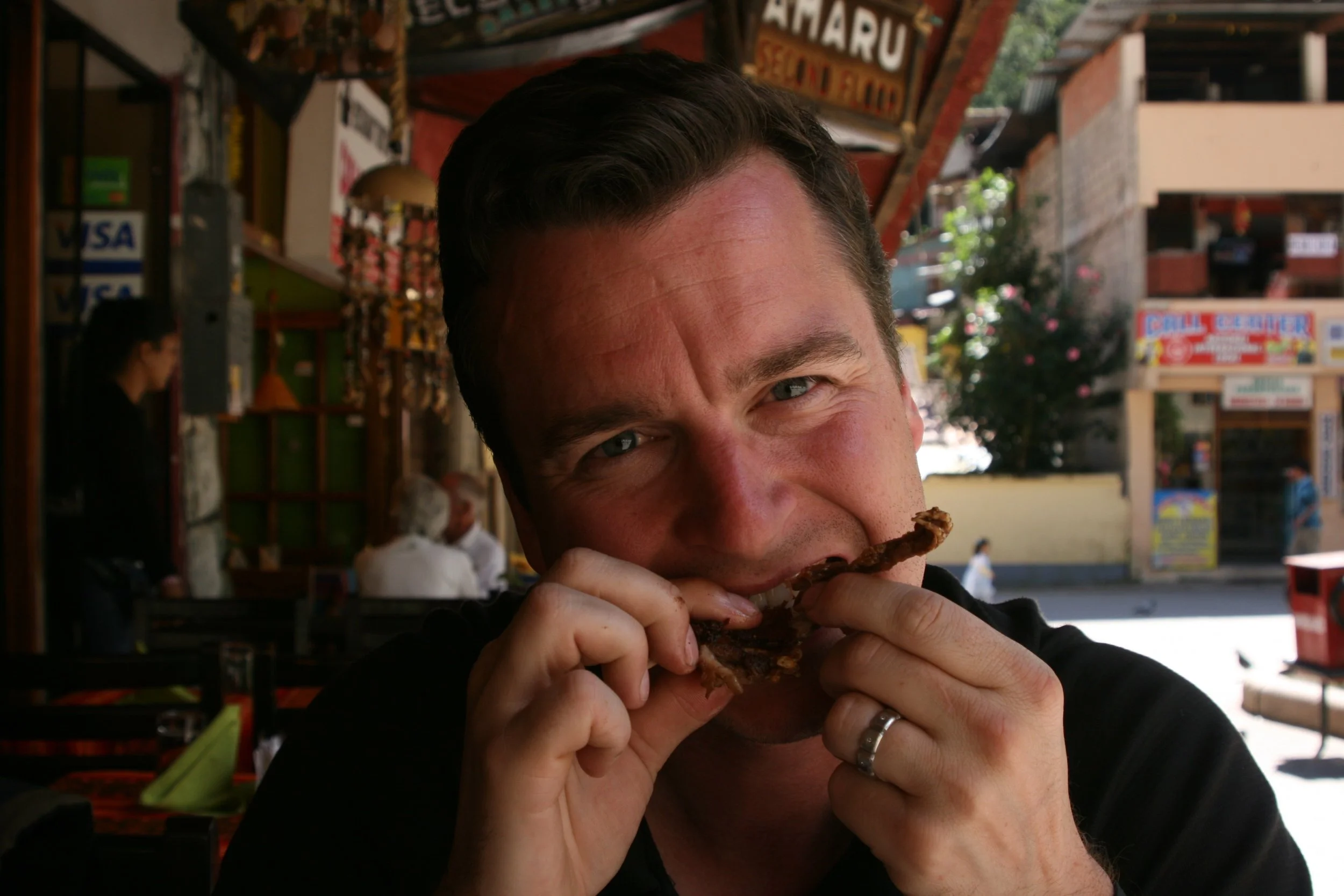
We were finished by ten-thirty, took the bouncy switchback bus back down, and had lunch in town. And this is when Matt finally got his Cuy. Guinea pig. A Peruvian delicacy. He had been talking about ordering it since we arrived in the country and here was his moment. The photos document the experience thoroughly. Not a lot of meat on a guinea pig, it turns out. He liked it. I respected his commitment.
Machu Picchu is one of the wonders of the world, and I want to say something about that word: wonder. It can be used carelessly in travel writing, as a synonym for "impressive" or "beautiful." Machu Picchu earns it in the original sense of the word. You wonder how. You wonder why. Its purpose and history remain genuinely unknown: most of what guides and books tell you is speculation based on what we already know of Incan civilization broadly. A place the size of Machu Picchu, at that altitude, with that level of construction and engineering, abandoned and lost for centuries and then rediscovered in 1911, and we still do not really know what it was for. That not-knowing makes it more remarkable, not less.
That dream I had at thirteen was worth every year of waiting.