
The Hills Are Alive (And So Is Hitler's Eagle's Nest)
Austria + Germany | Salzburg + Berchtesgaden + Rothenburg + Munich | October 2011
I had a cold going into Salzburg. I'd felt it coming the day before we left, dosed myself on Zicam, thought I'd won that particular battle on Saturday and Sunday, and woke up in Mittenwald knowing I had lost. Very sniffly. Sneezing constantly. Not slowing down even slightly.
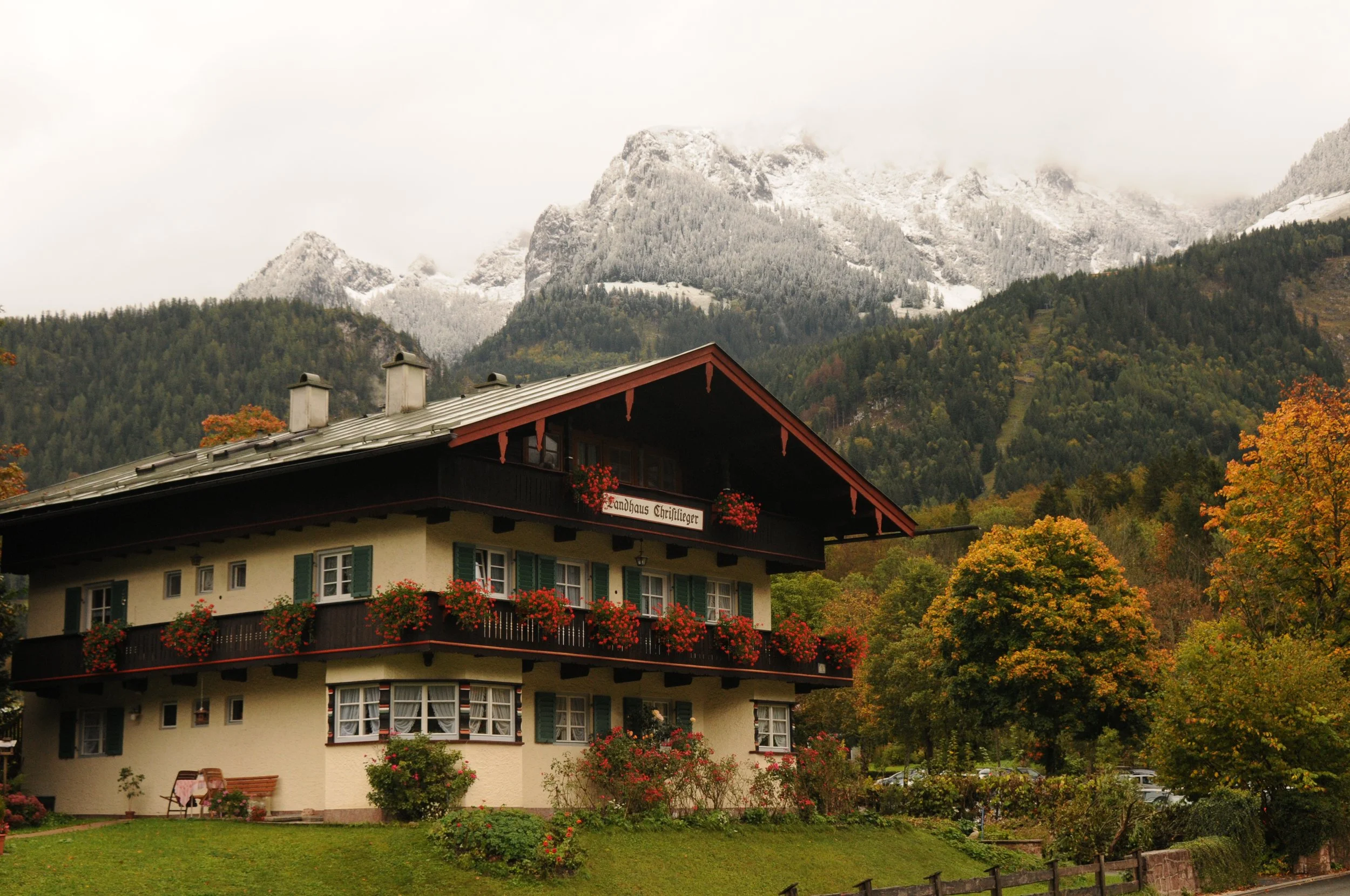
We had a wonderful breakfast at our Mittenwald guesthouse, where the owner brought out soft-boiled eggs wearing tiny knitted covers: Matt's was a ski hat and mine was a chicken. I am telling you this because it was the most charming thing and deserves to be in a permanent record somewhere. We spent a pleasant morning walking the town, which is quintessentially the German village of your imagination: neat shops, flower boxes, cappuccinos outside in the cool air. The pharmacy was a highlight of the day from a purely personal health standpoint.
The drive to Salzburg was mostly Autobahn through Austria, beautiful the whole way. Matt had figured out the in-car GPS by this point, which worked better than the Garmin they'd given us because the Garmin narrated every instruction and constantly announced "recalculating" in a tone that I would equate to nails on a chalkbord. We turned on the radio for the drive and discovered that Austria has a profound love of Elton John and the Lion King soundtrack. Both were on multiple stations multiple times in one trip. Also: "Born to Run" covered in German. Go Jersey.
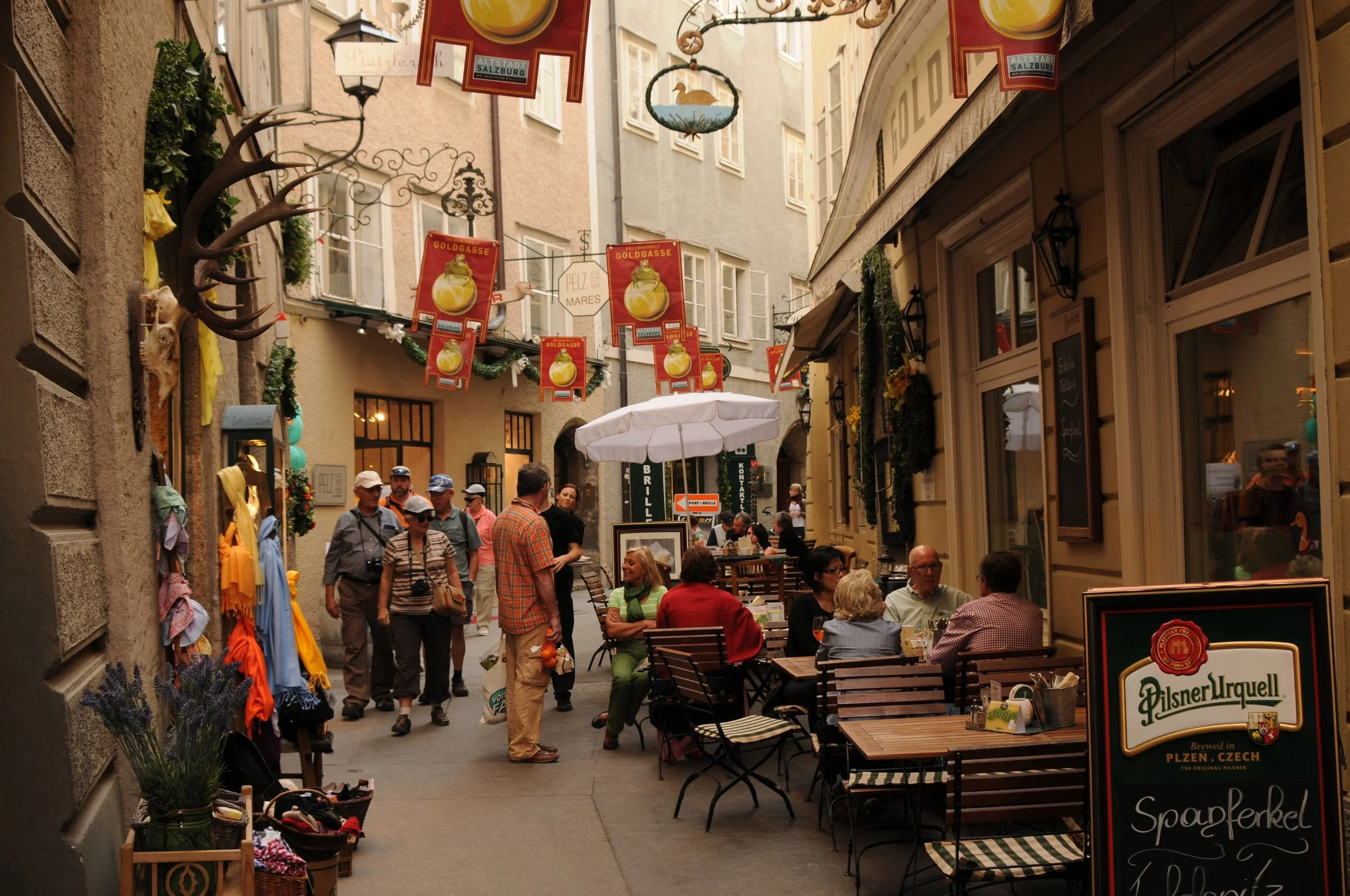
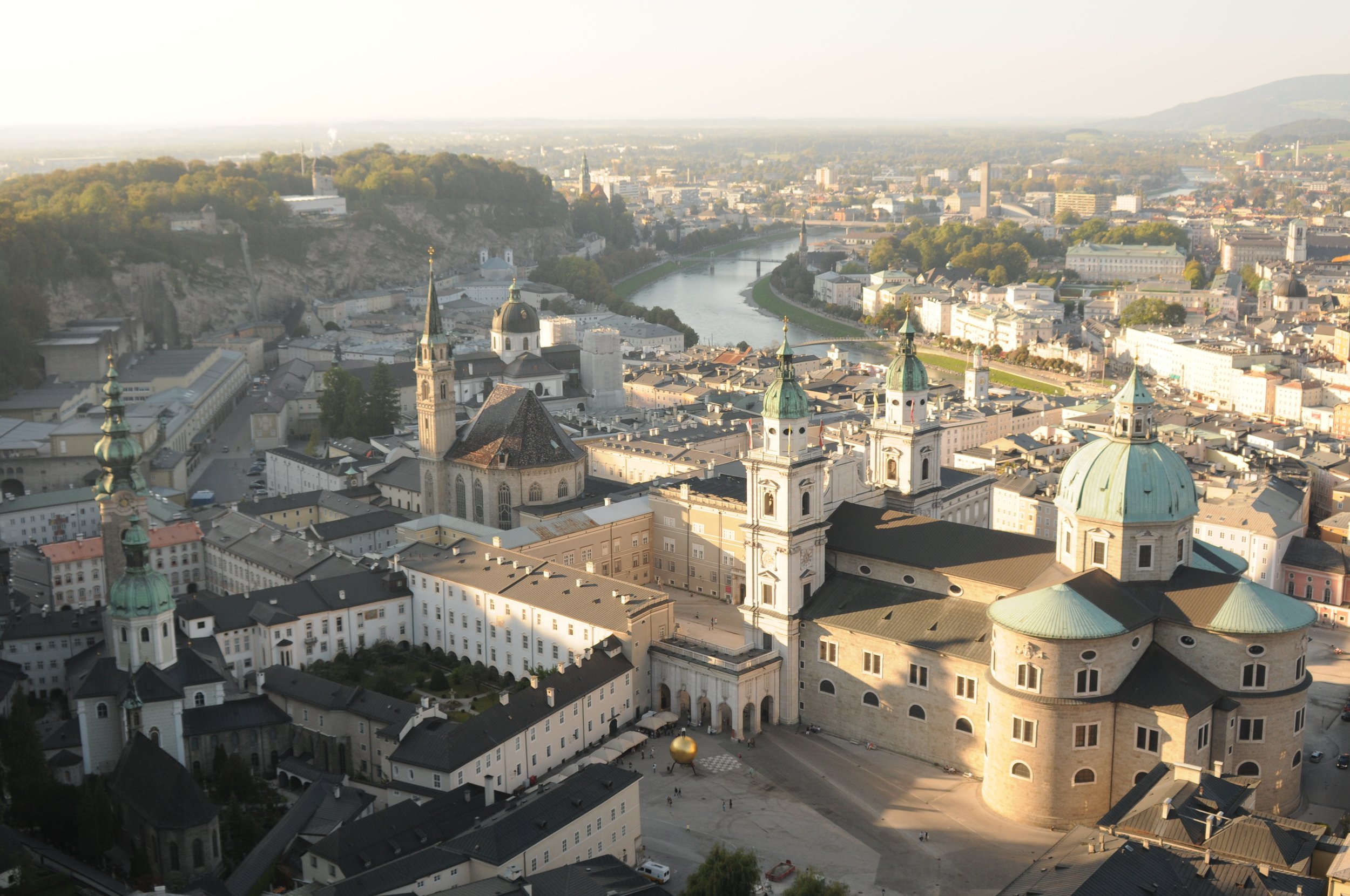
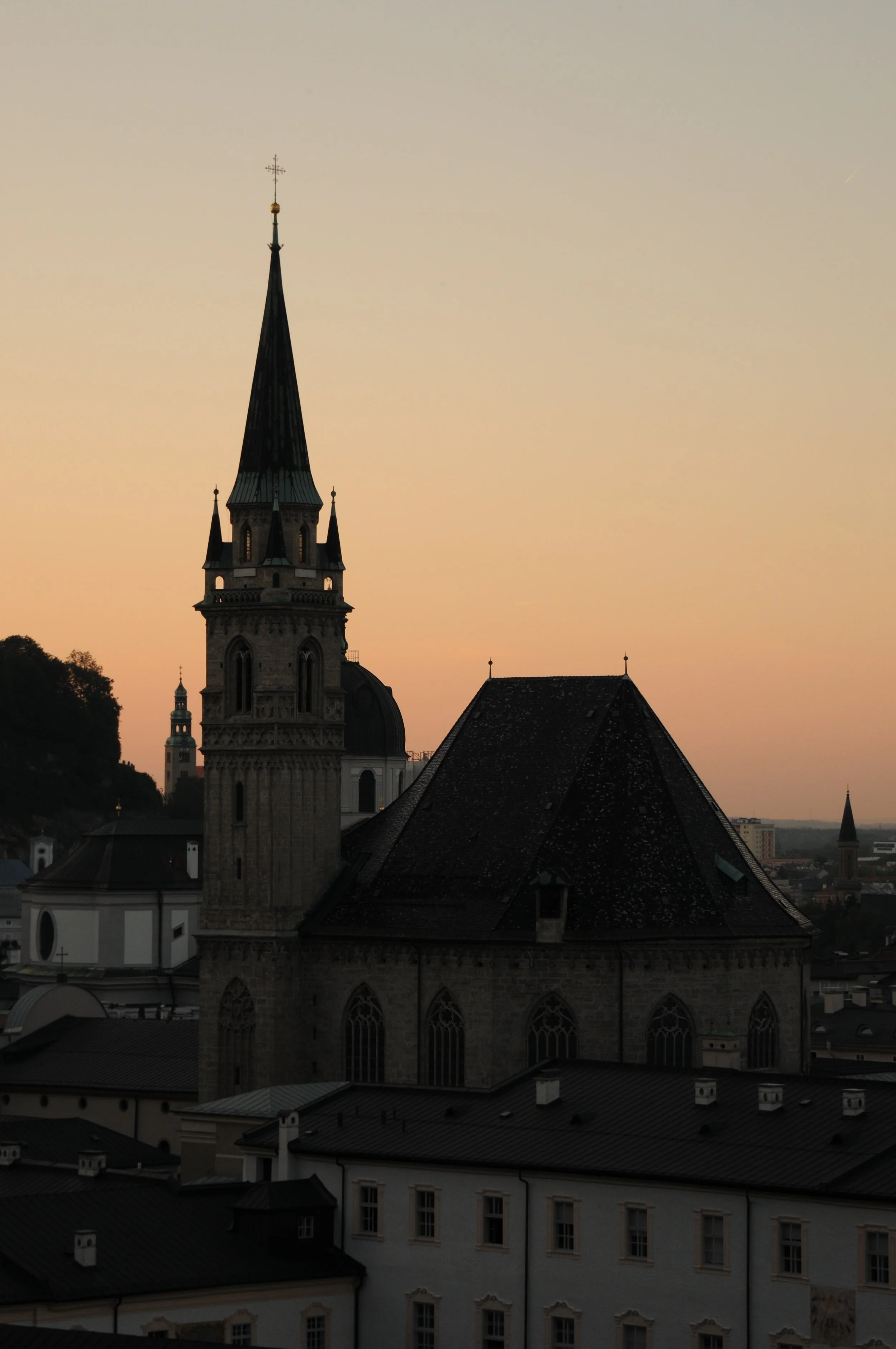
Salzburg is smaller than we expected. Beautiful but compact. The big fortress on the hill dates to the 1400s and offers views that justify the climb. We found a small outdoor cafe at the top with apple strudel and a view of the Austrian countryside that made the steep climb worthwhile.
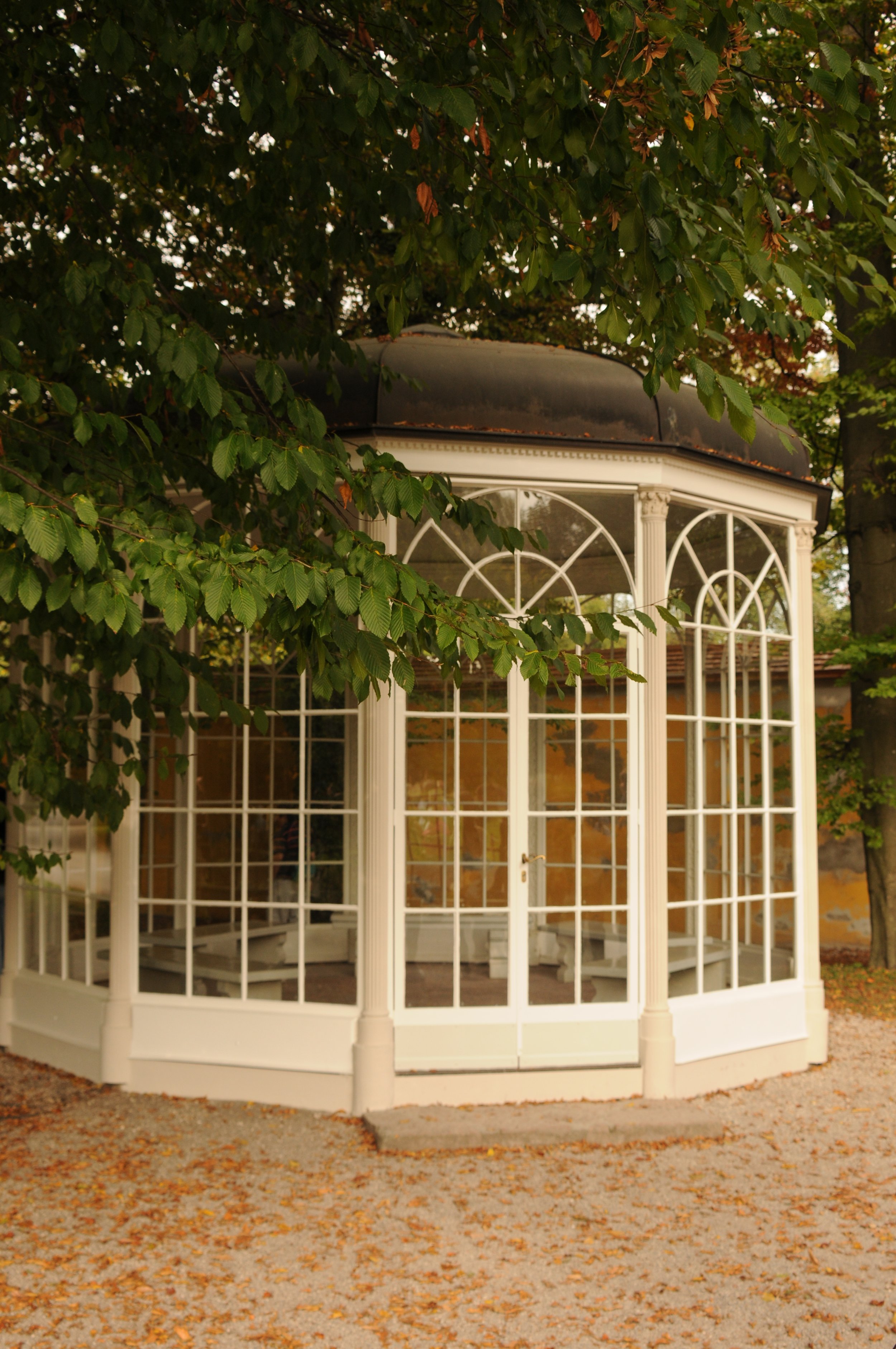
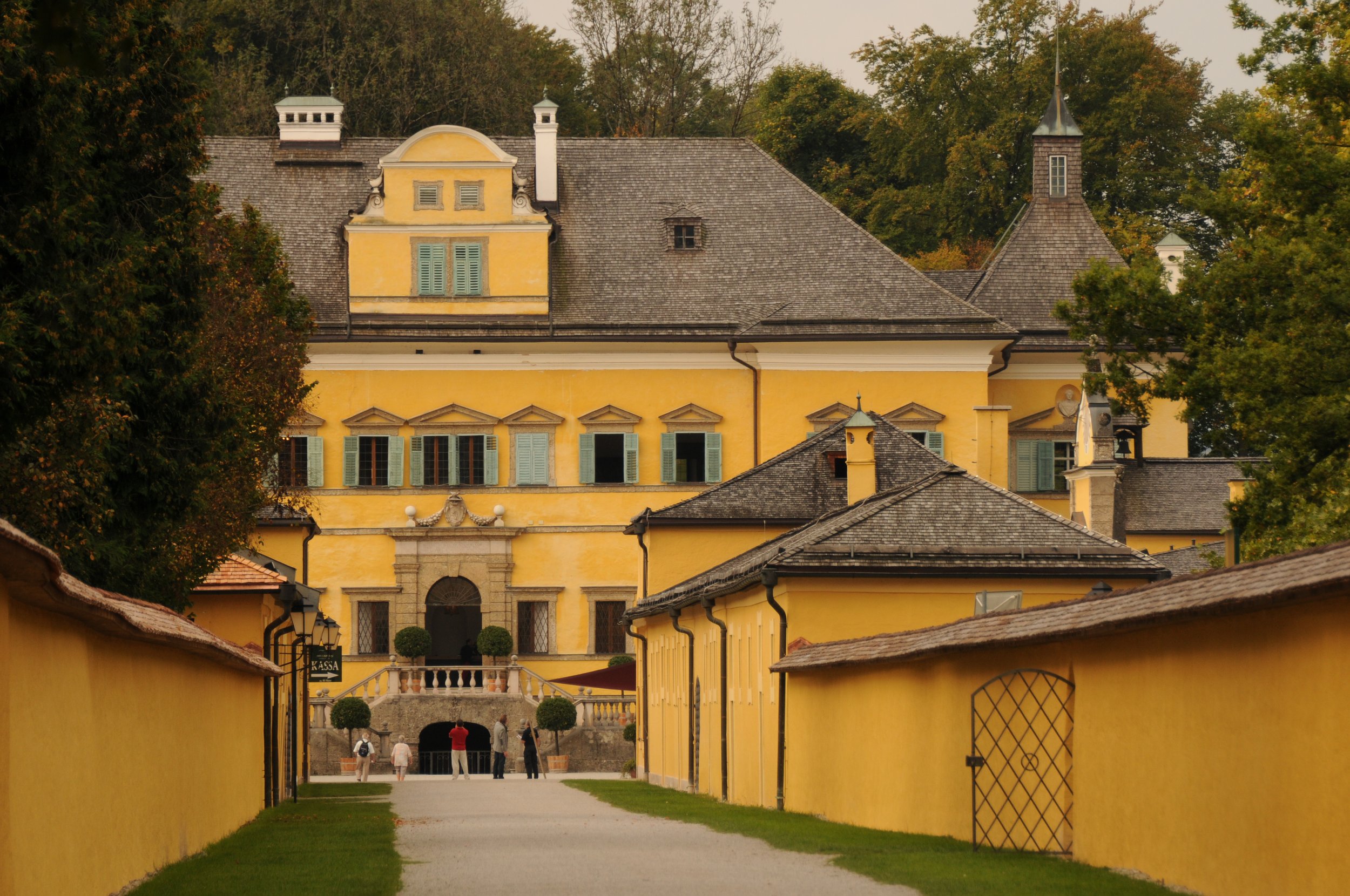
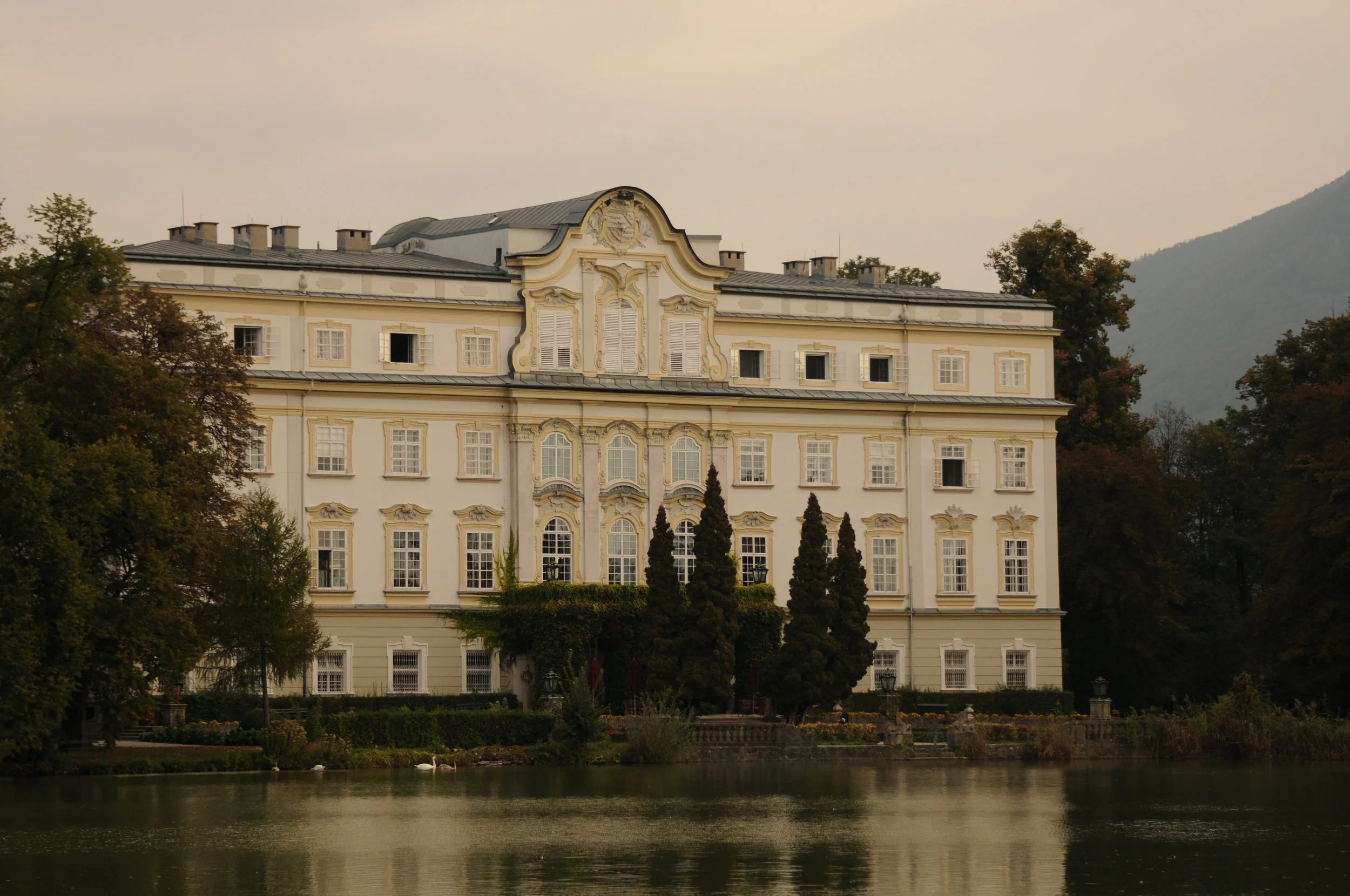
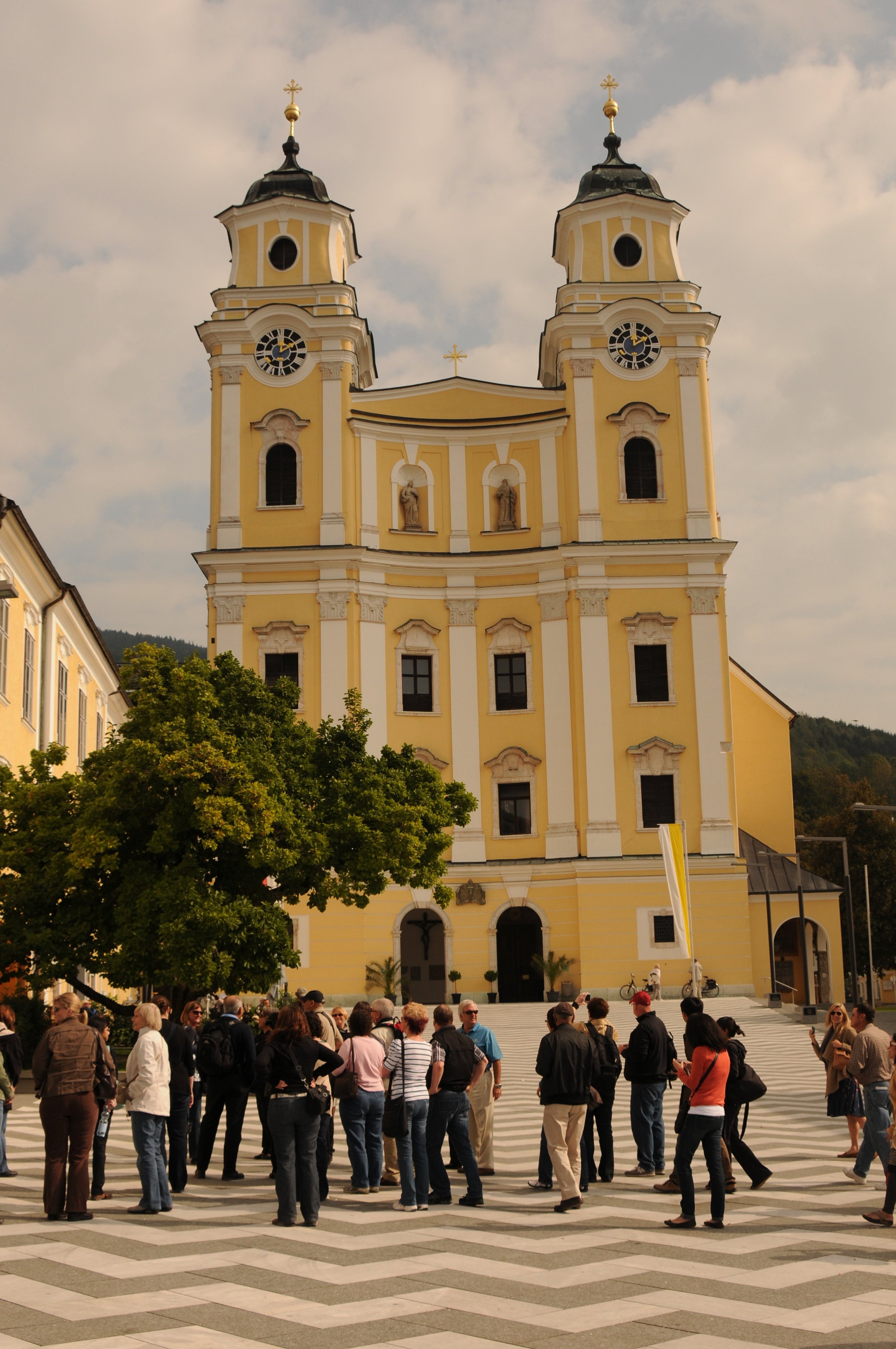
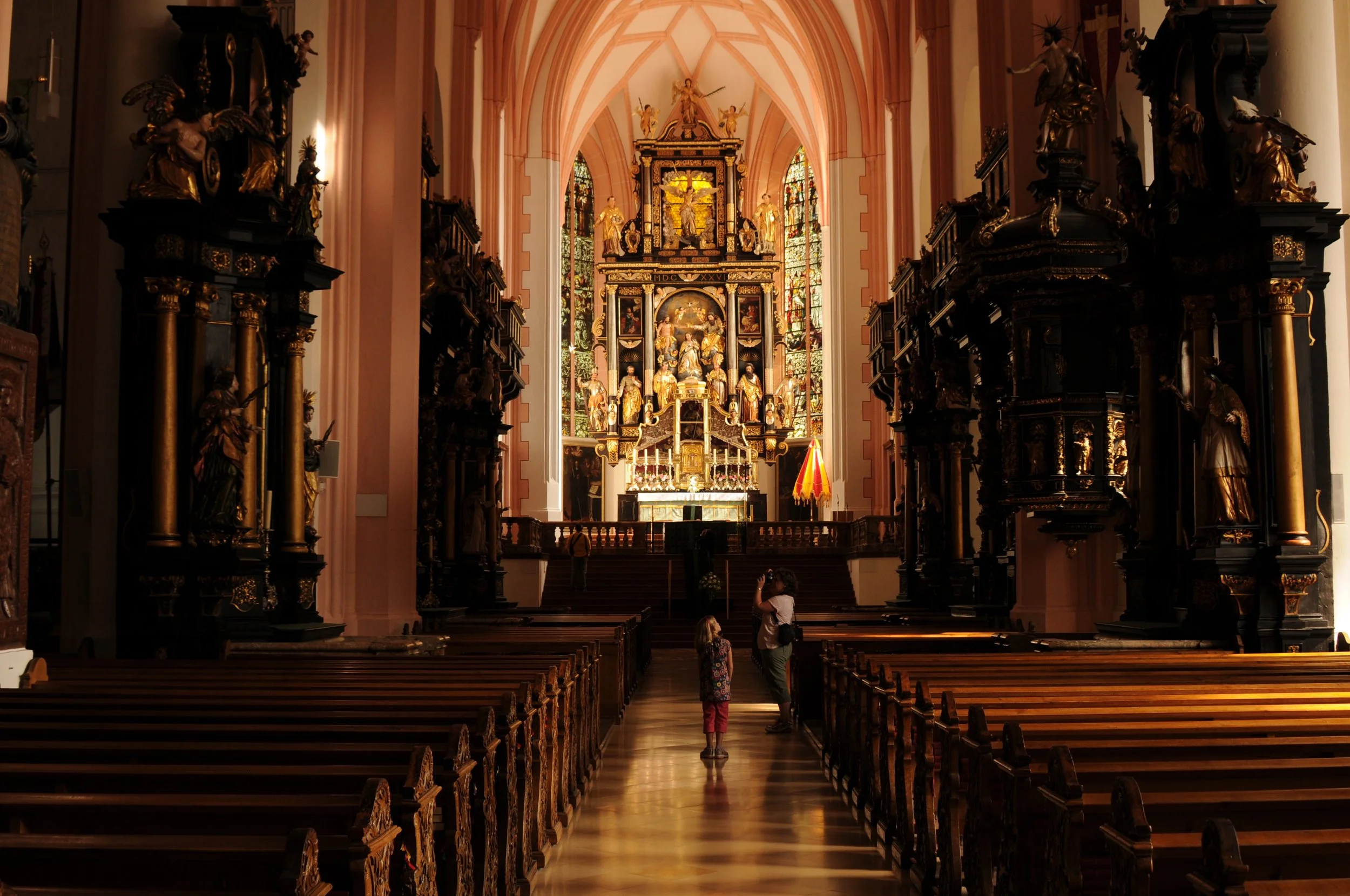
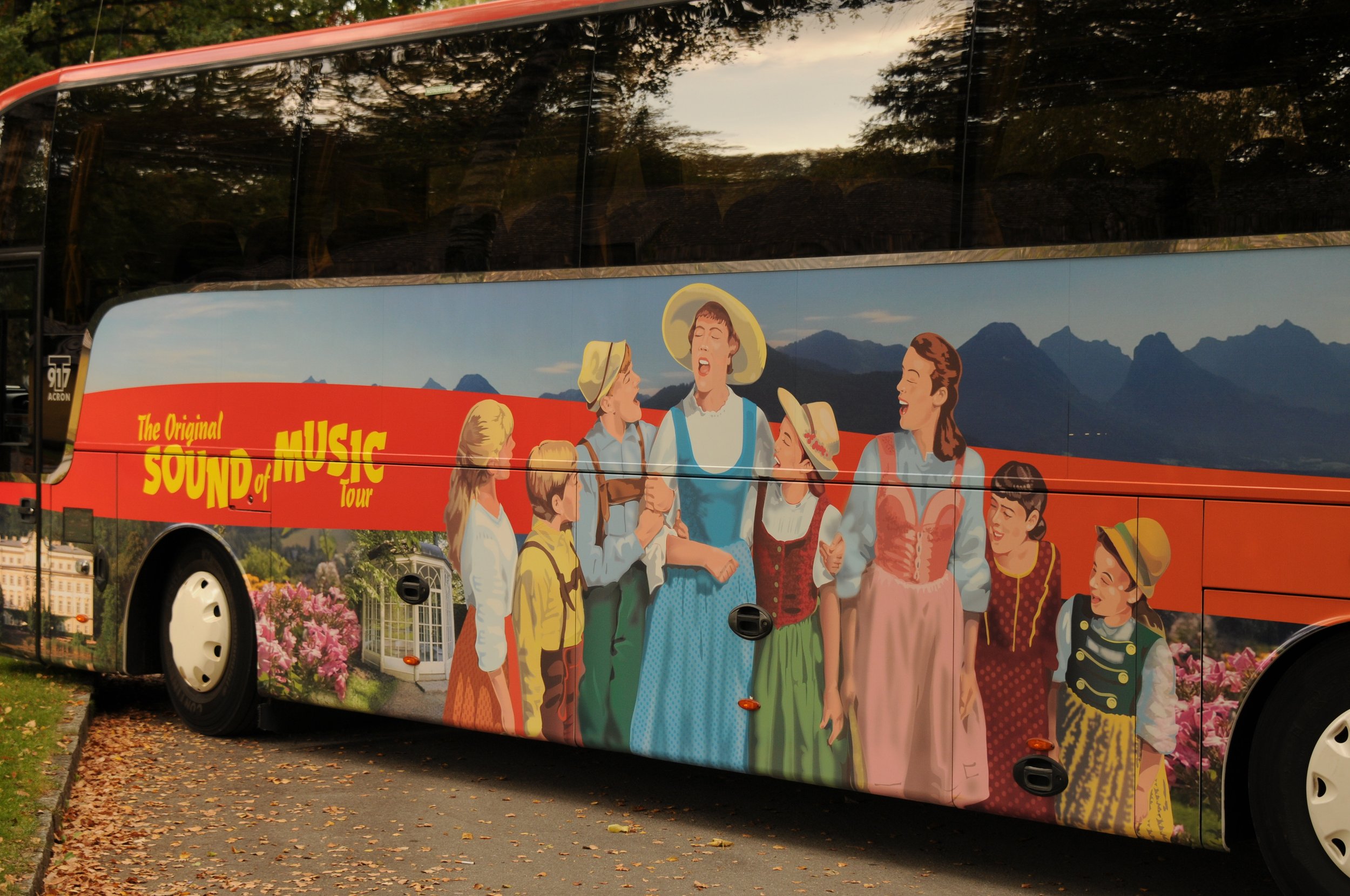
Day two in Salzburg was the Sound of Music tour, which I will defend to anyone. We rewatched the movie before leaving so we'd have context, and on the bus our guide was a genuinely wonderful older man who'd lived in Boston for ten years, which explained his impeccable English. He had a radio broadcaster's voice and a laugh that made you laugh too. We saw the mansion used as the grounds, drove past the lake where Captain Von Trapp finds the children in the trees, visited the gazebo where "I am sixteen going on seventeen" was filmed, and drove out through the Lake District to the church in Mondsee where the wedding scene was filmed. The bus played the soundtrack the whole way and yes, everyone sang. Every person on that bus sang. Including Matt.
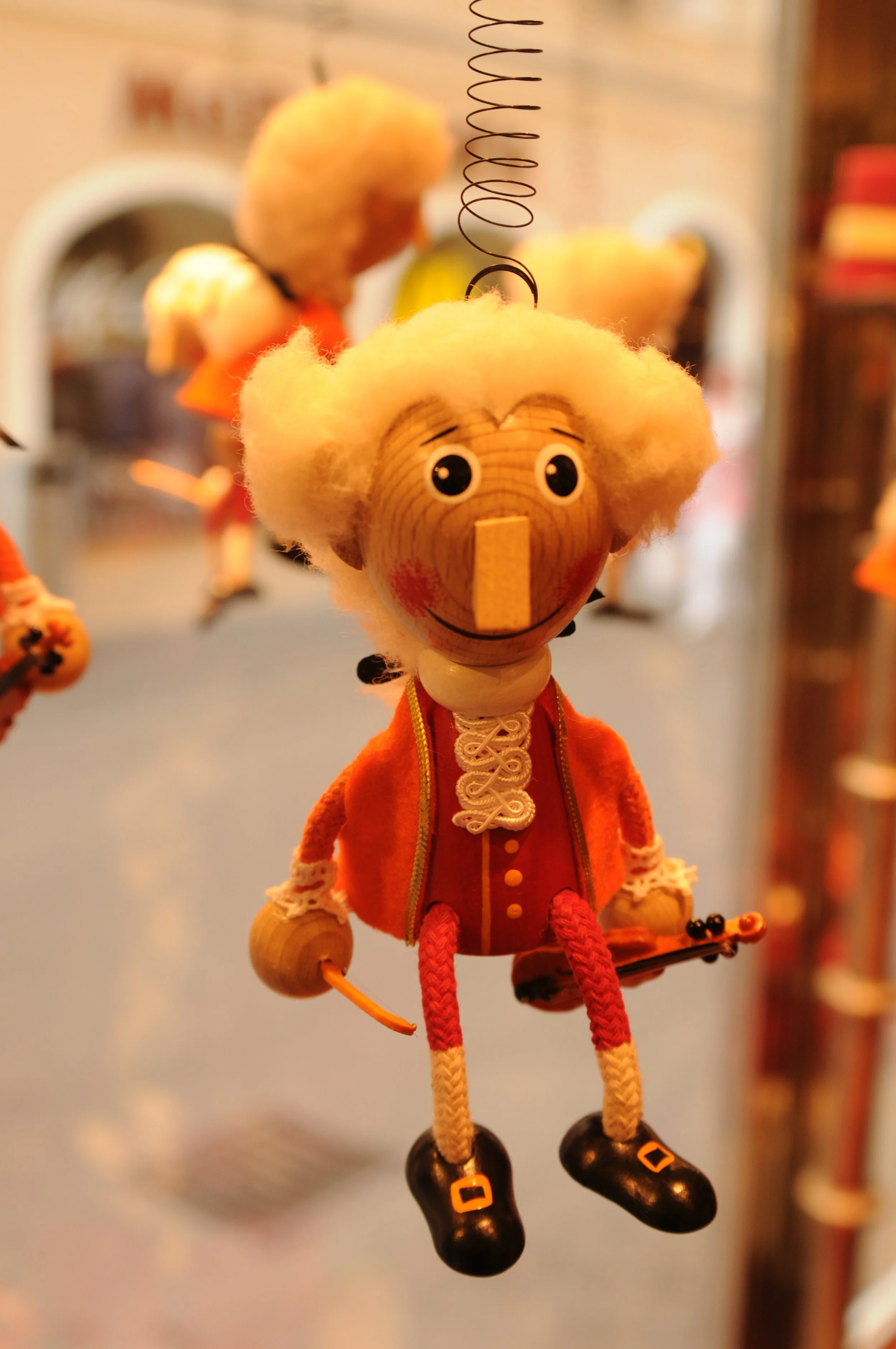
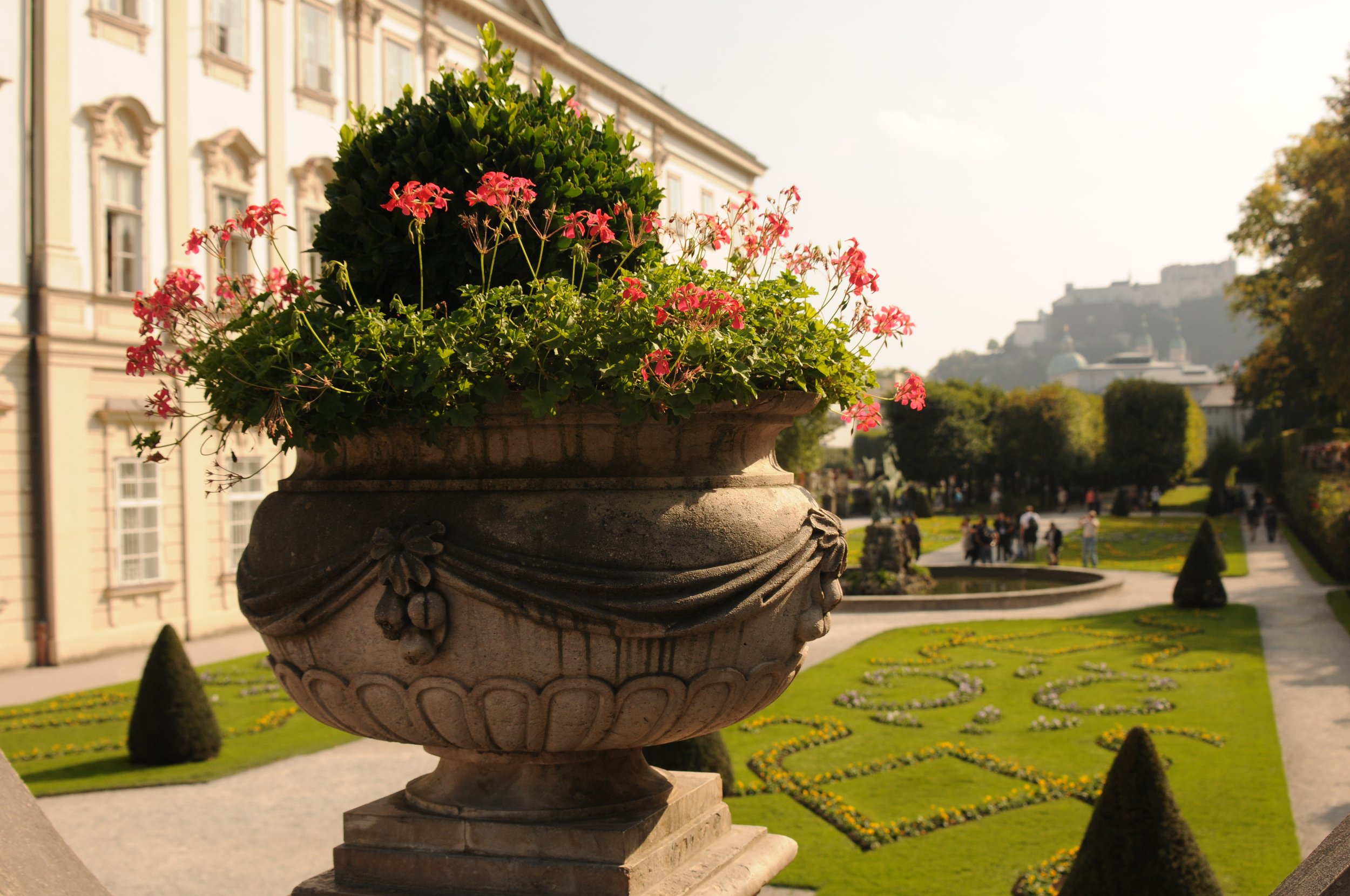
The Mirabelle Gardens where the Do Re Mi scene was filmed are just across the street from old town. Very pretty gardens, very much what they look like in the movie. We felt obligated to also visit the Mozart museum nearby since Salzburg is his birthplace and all. We were pretty disappointed for the twenty dollars. The only thing worth seeing was an original Mozart piano, which was astonishingly, amusingly tiny.
We ended the Salzburg evenings at the Augustiner Braustubul, a beer garden with indoor food stalls selling rotisserie chickens and traditional Bavarian fare. You pick what you want from the stalls, carry your tray outside, and rinse your ceramic stein with water at the tap before they fill it. We had bratwurst, two kinds of kielbasa including one filled with cheese, and a giant pretzel. Cold beer, outdoor seating, the day cooling off around us. This is exactly what we wanted Germany and Austria to feel like.
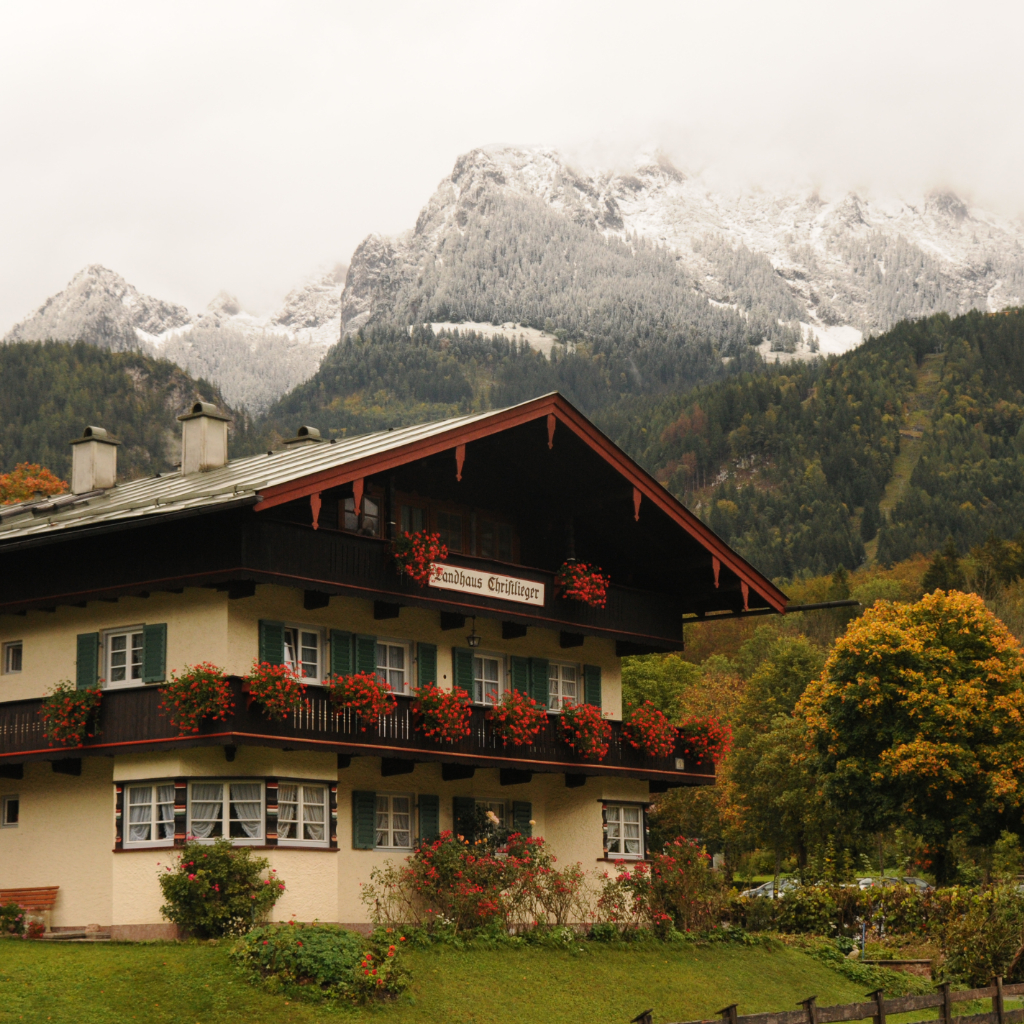
After Salzburg: Berchtesgaden, thirty minutes away and a completely different world. The Alps arrive immediately as you leave the city and they do not stop.
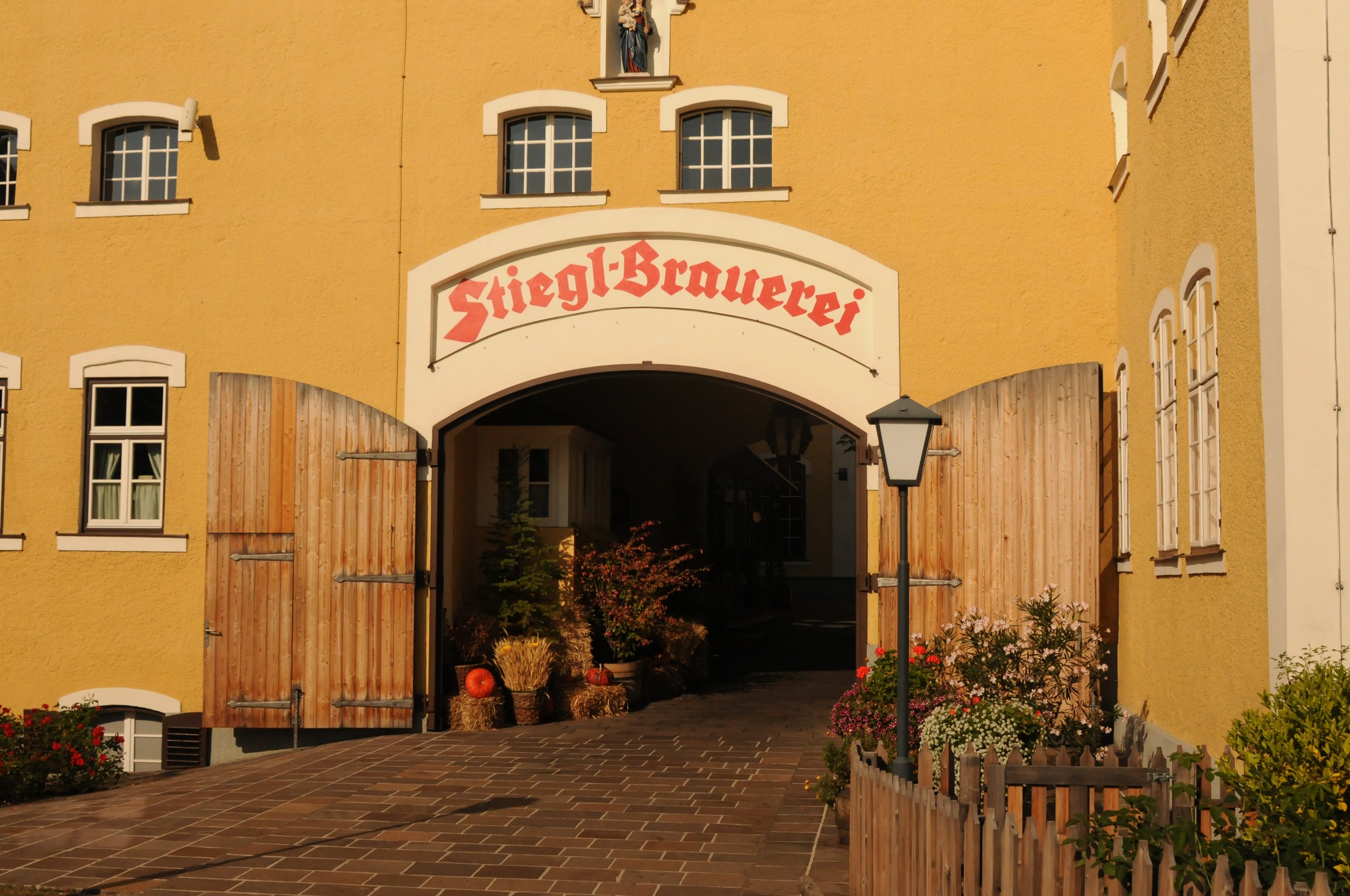
We had planned to stop at the Steigl Brewery on the way out of Salzburg, and we did. They opened at ten and we were there eager and waiting. Outdoor seating, gift shop, a hundred dollars on souvenirs because we love zee beer and felt no shame about it. We sat outside with a wheat beer for Matt and a grapefruit Radler for me at ten-thirty in the morning. I say, “When in Germany…”
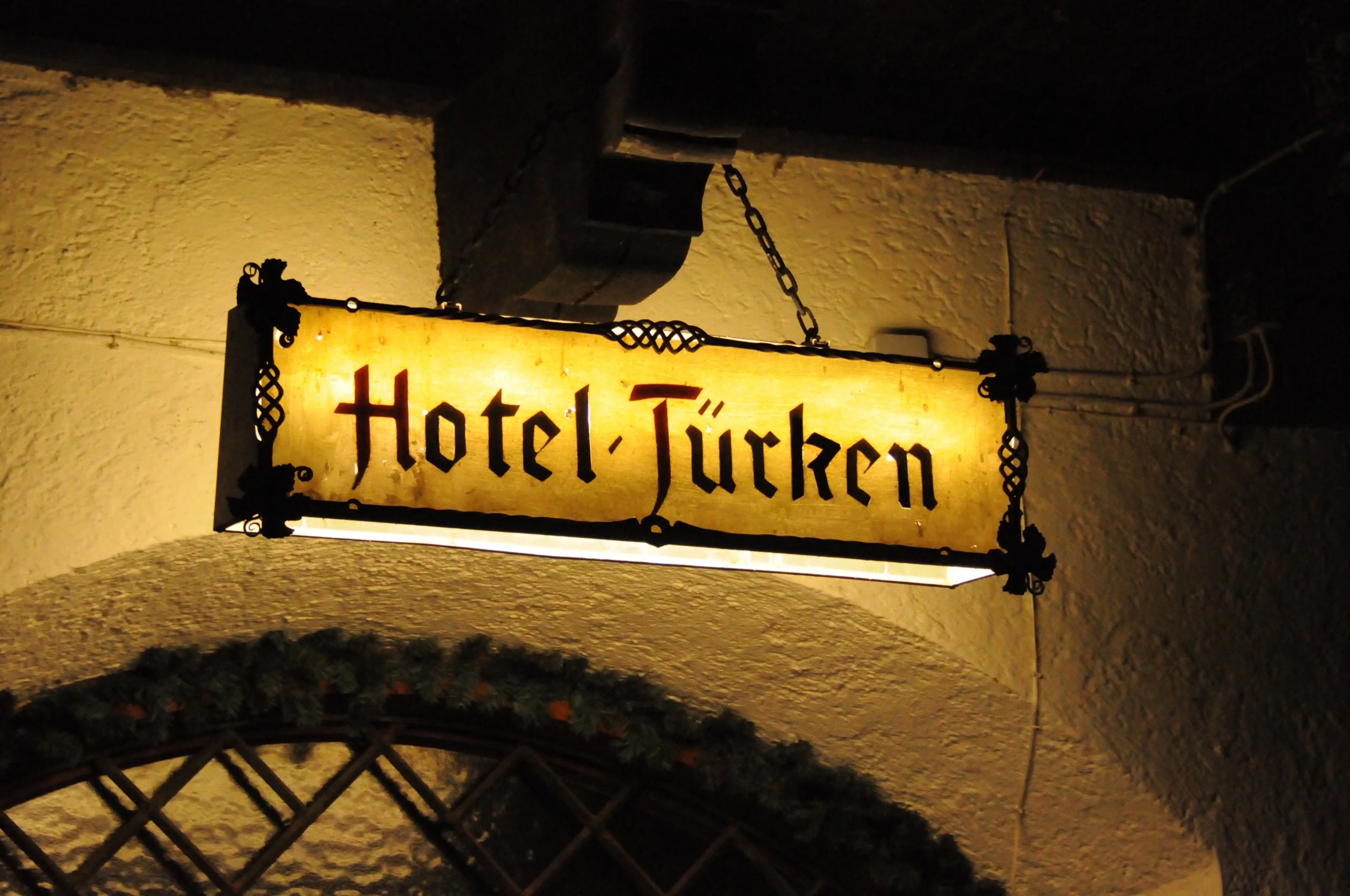
Hotel Zum Turken in Obersalzberg. This is a hotel with a history. An 80-year-old woman named Ingrid Scharfenberg runs it, the same family that has owned it since her grandfather purchased it in 1911. The guesthouse was well-known and had famous guests. In 1933, Martin Bormann, Hitler's third-in-command, visited repeatedly trying to purchase it. Her grandfather declined. So the Nazis did what the Nazis did: forced the sale at an insultingly low price and sent her grandfather to Dachau, where he died a year later. The SS used it as their Obersalzberg headquarters. In 1945, American bombs hit the property. The Allied Forces held it until 1947. In 1951, the decision was made to demolish all Third Reich structures in the area, including Hitler's Berghof home next door. At the last moment, Zum Turken was spared and sold back to Ingrid's mother.
Walking in is a time warp. Large skeleton keys. Matt noted it was the first place he'd ever stayed where you can genuinely peep through the keyhole of your room. Ingrid is five feet tall at best, with perfect English, and greeted us warmly and told us to treat the place like home.
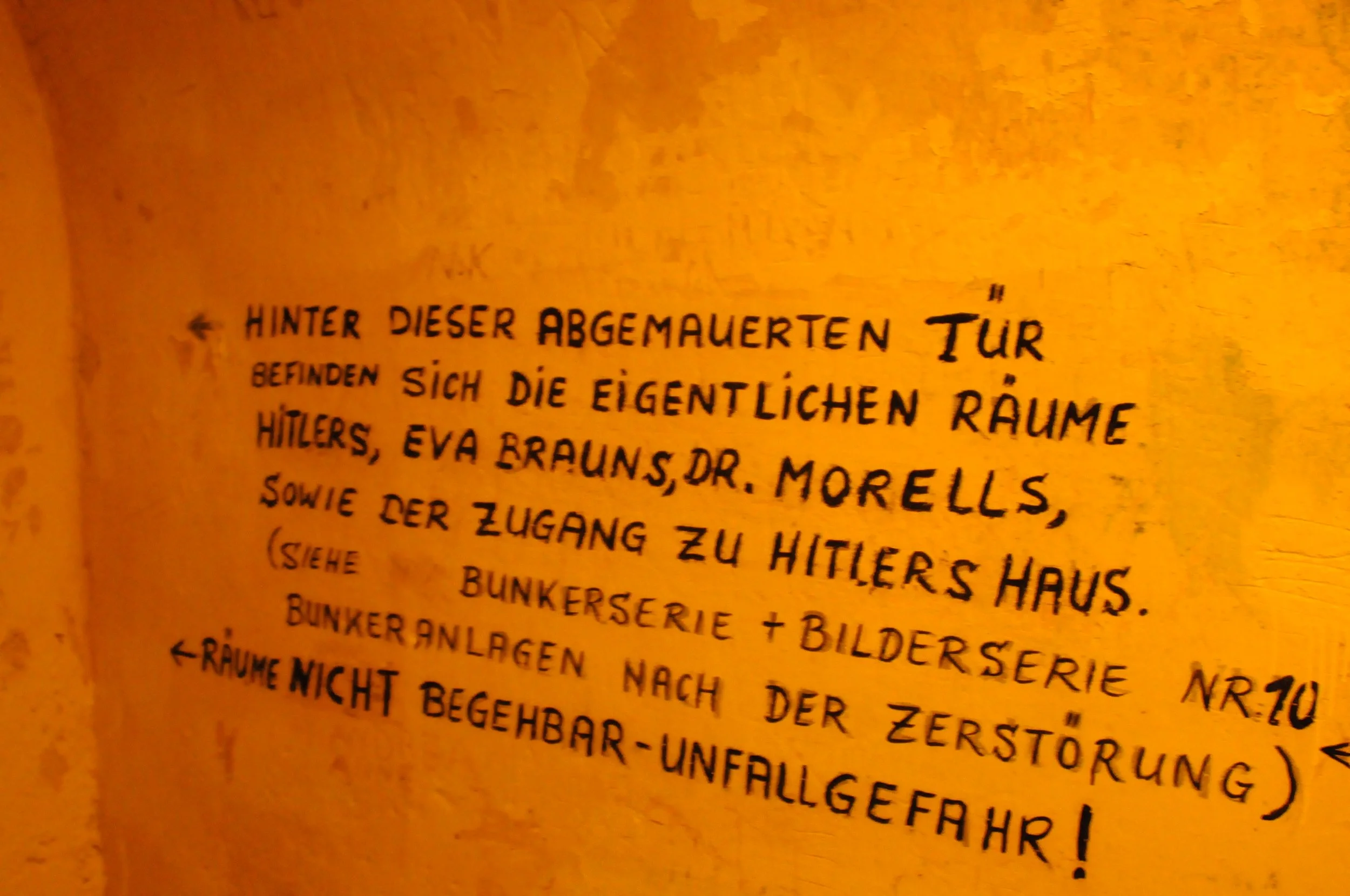
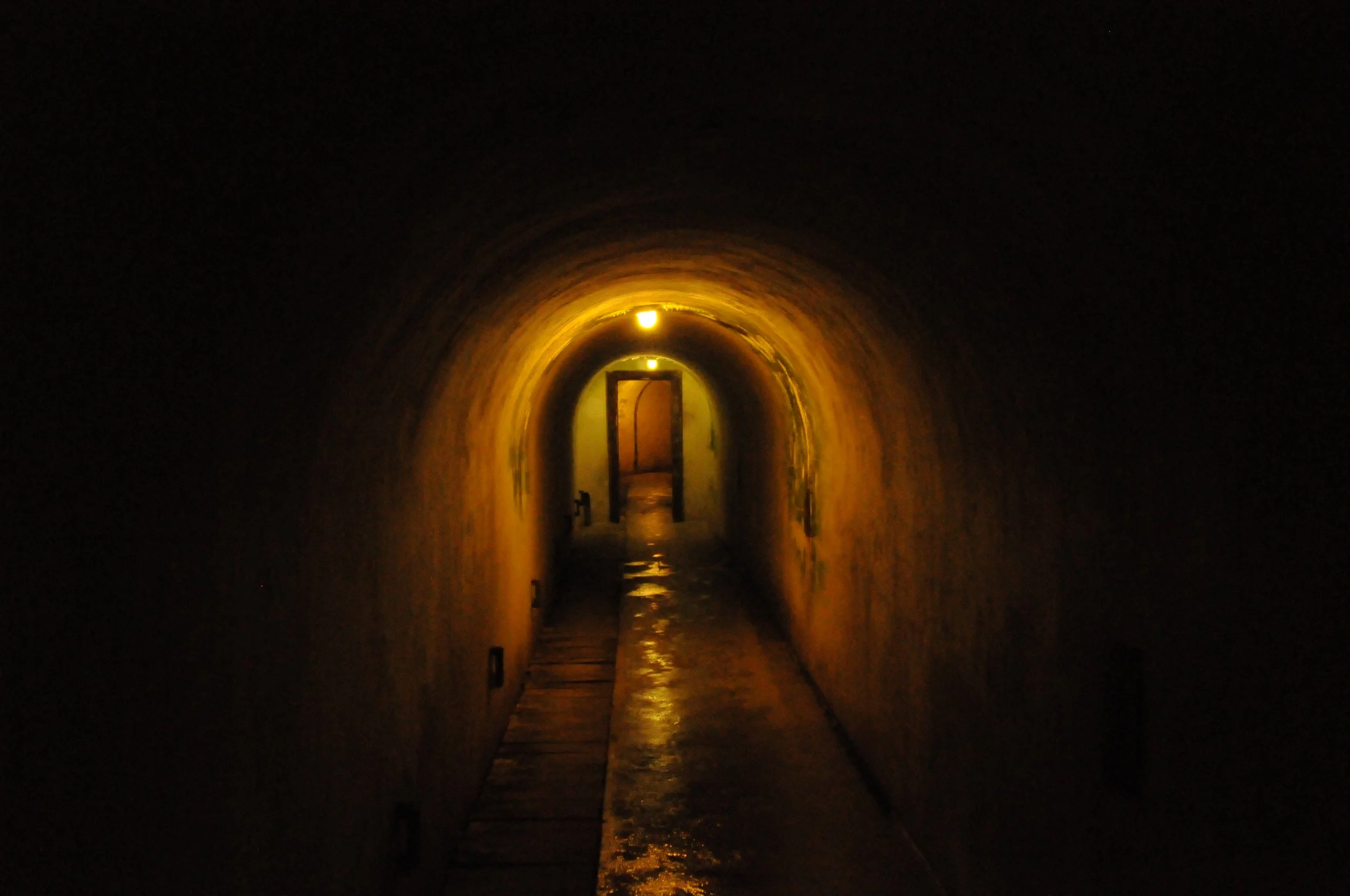
The hotel sits above part of the Nazi bunker system, and Ingrid still mans the entrance herself. She gave us maps, oriented us to the area, and we descended a spiral staircase into the bunkers. Long concrete corridors, metal clips on the walls where electrical wiring was run, machine gun shelters. The tunnel that once led to Hitler's Berghof has been bricked off, but you can see where it went. It is simultaneously fascinating and deeply strange and you feel both things at once the entire time you're down there.
We walked to where the Berghof once stood. Only the foundation wall remains, built into the hillside. The views from that spot are extraordinary. This is why Hitler spent a third of his time here: the position, the seclusion, the mountains. Our room balcony had the exact same view as the Berghof and looked down on the old driveway. Matt noted that at least we both had good taste in views. I am choosing to take this at face value.
A short trail leads to the Documentation Center, which is probably the only museum in Germany dedicated to the full Nazi history: Hitler's rise, the war, the defeat, all of it with a comprehensive audio guide. It sits above an additional set of bunkers, much larger than the ones under Zum Turken. You could drive a vehicle through most of these tunnels.
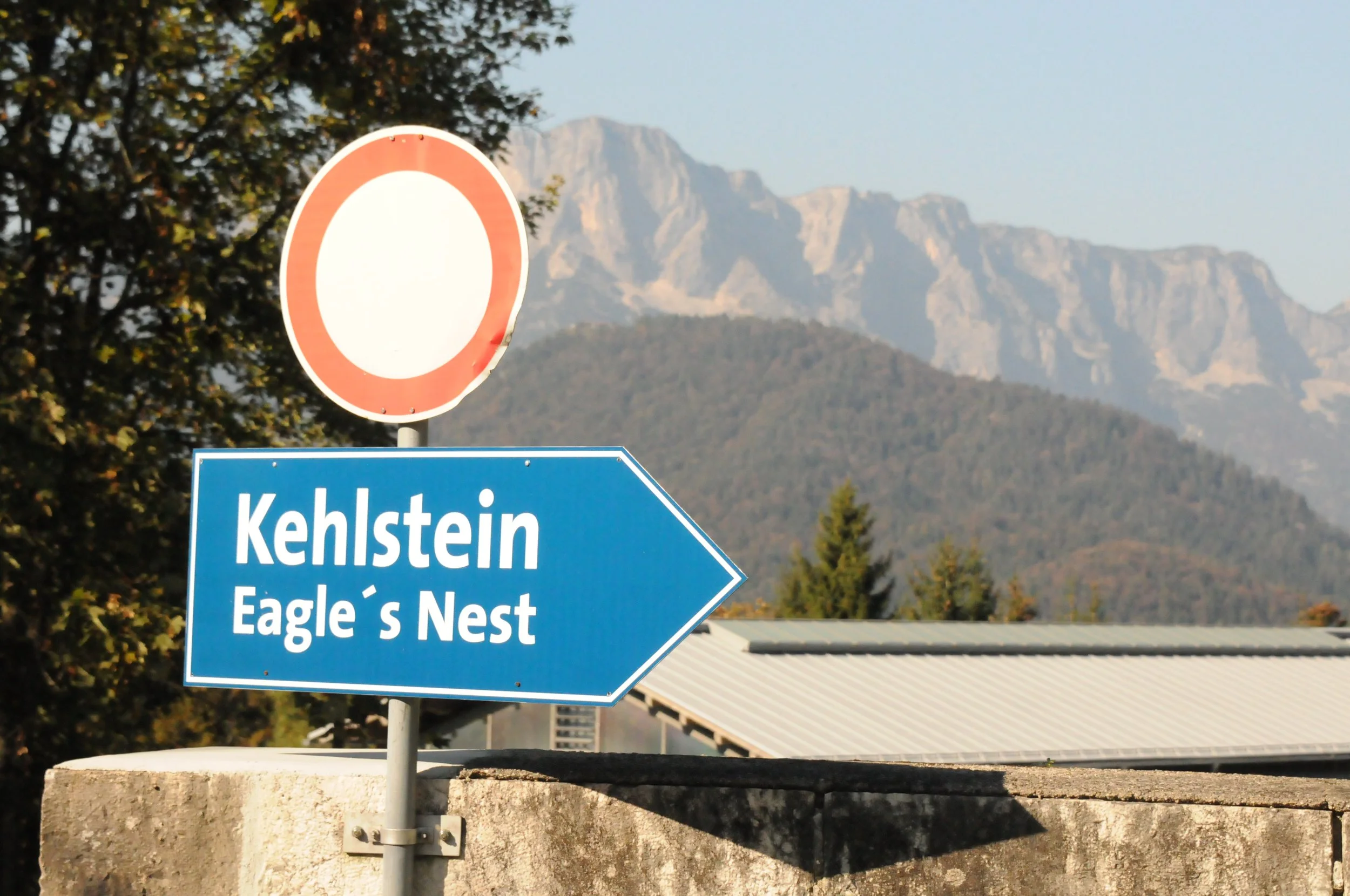
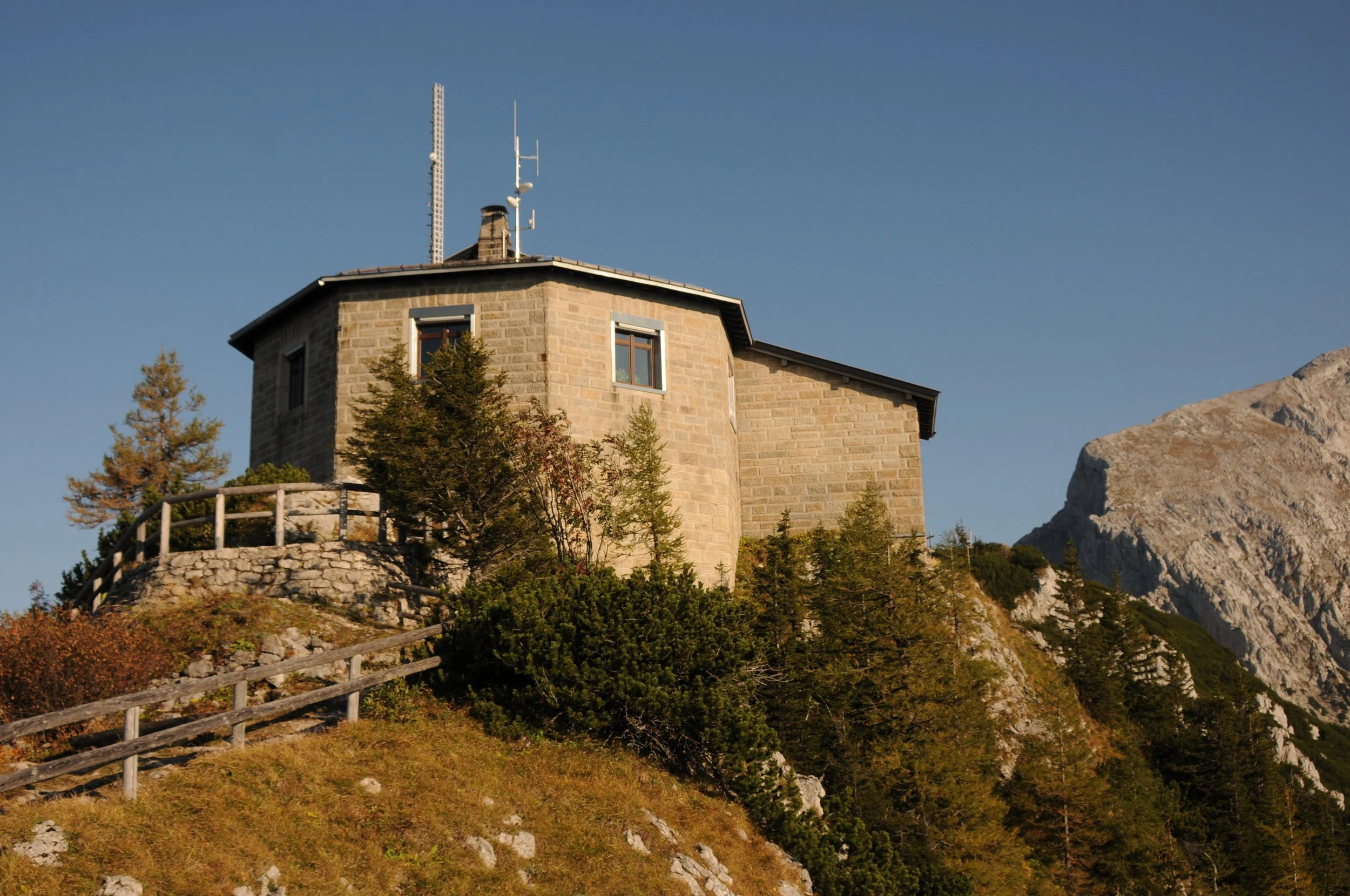
We asked at the bus ticket station about the employee bus up to the Eagle's Nest that Ingrid had mentioned. The ticket agent seemed to be saying "no no," which turned out to be "snow snow" because there was snow forecast and NO buses would run the next day. The Eagle's Nest sits at 6,000 feet and it was 72 degrees in town at that moment. We caught the last bus up that afternoon.
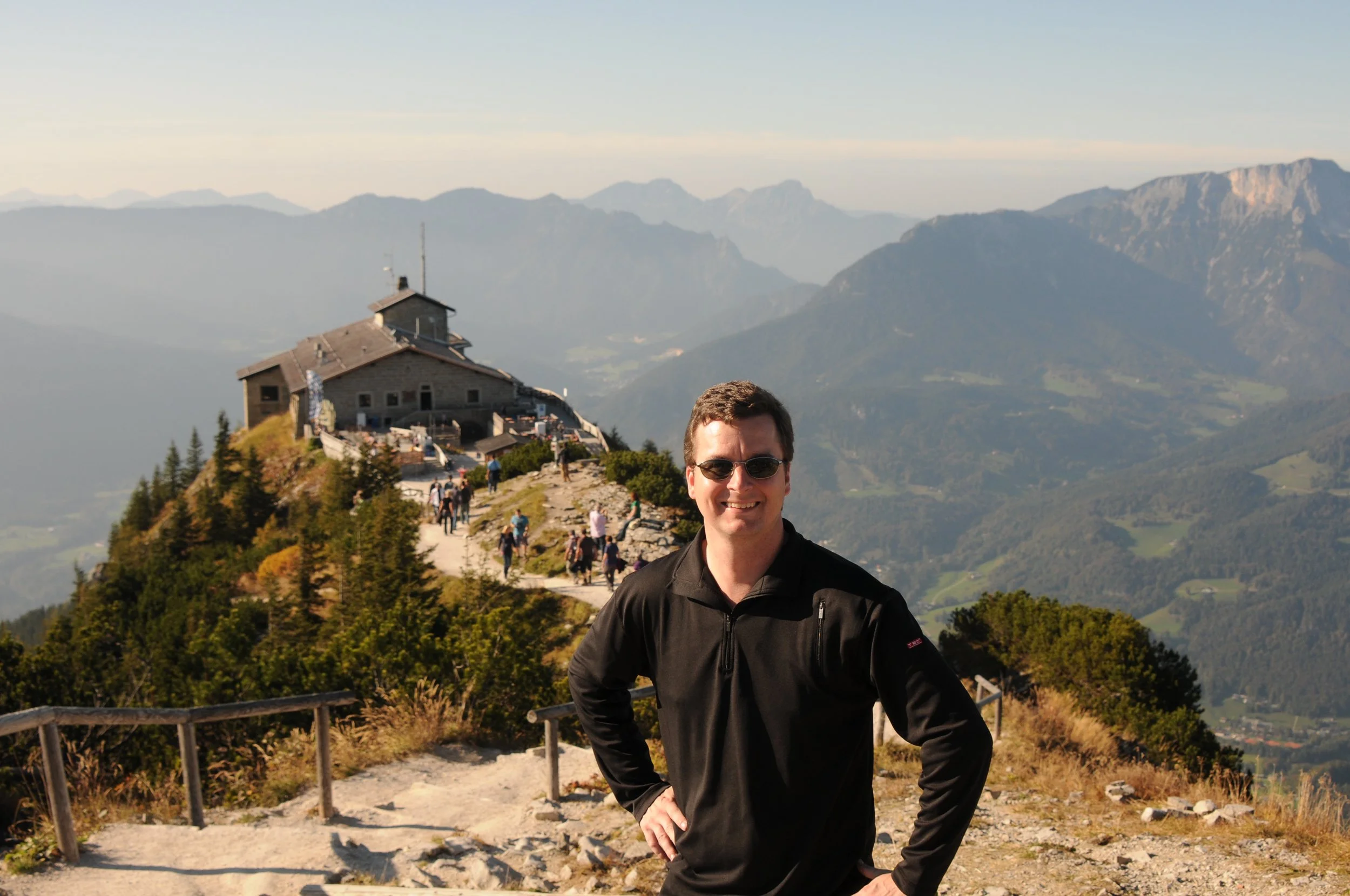
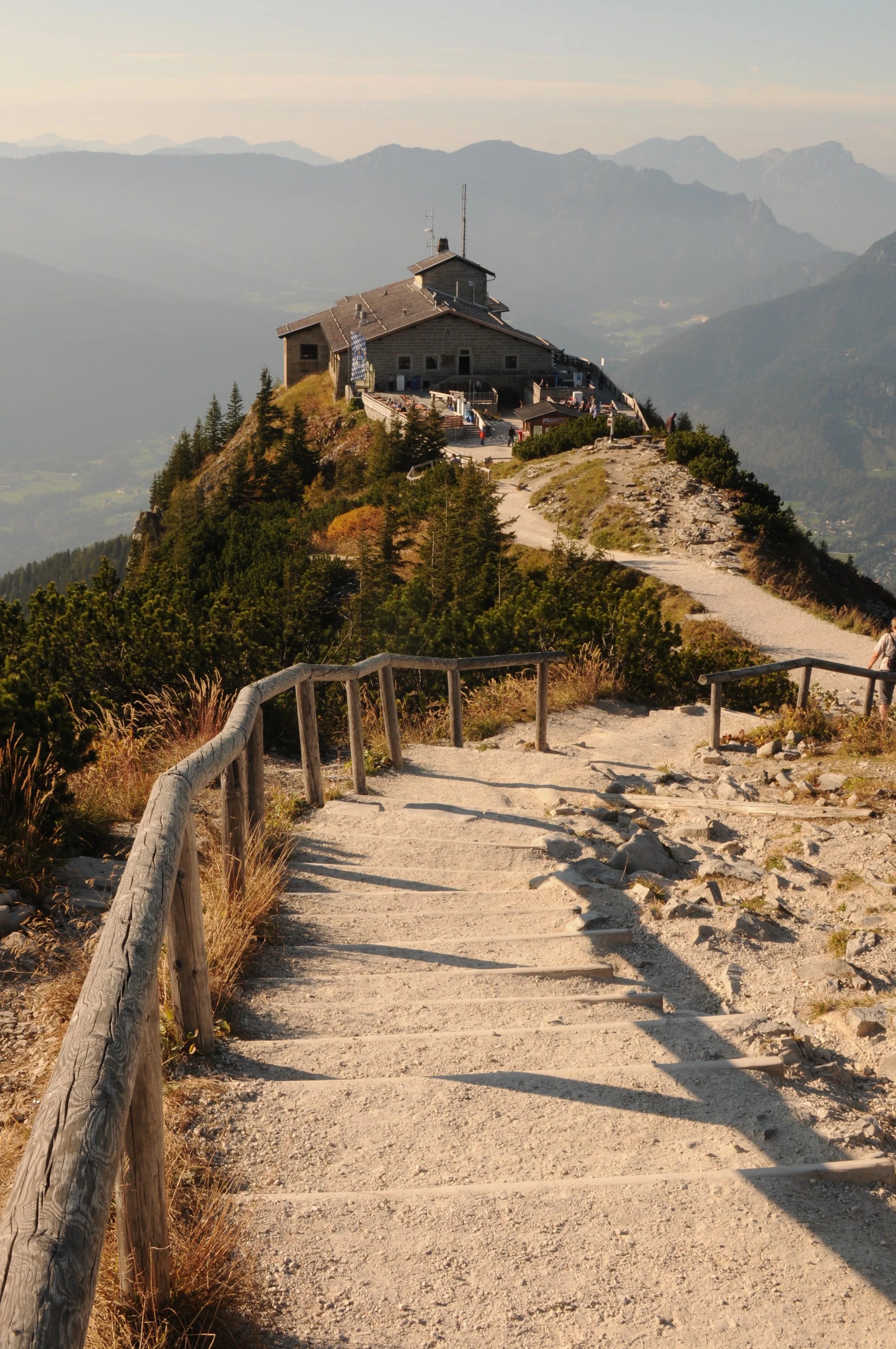
The Eagle's Nest was a gift from the Nazi state to Hitler for his fiftieth birthday, reached by a four-mile road that goes virtually straight up with your ears popping the entire way, then an elevator lined in brass to the very top. It's a restaurant now but completely original inside, old photographs showing it looking almost identical to today. Standing in that space with the Alps spread out in every direction below you and knowing its history is a specific and strange experience.
That evening on our little balcony at Zum Turken: cold Steigl beers, the sun going down behind the most magnificent mountains I'd ever seen, the valley and town below, the green hills. Most people's paradise is a beach, or somewhere tropical. Mine is this: an Alpine view at dusk with good beer and the person you love most. We will never forget it.
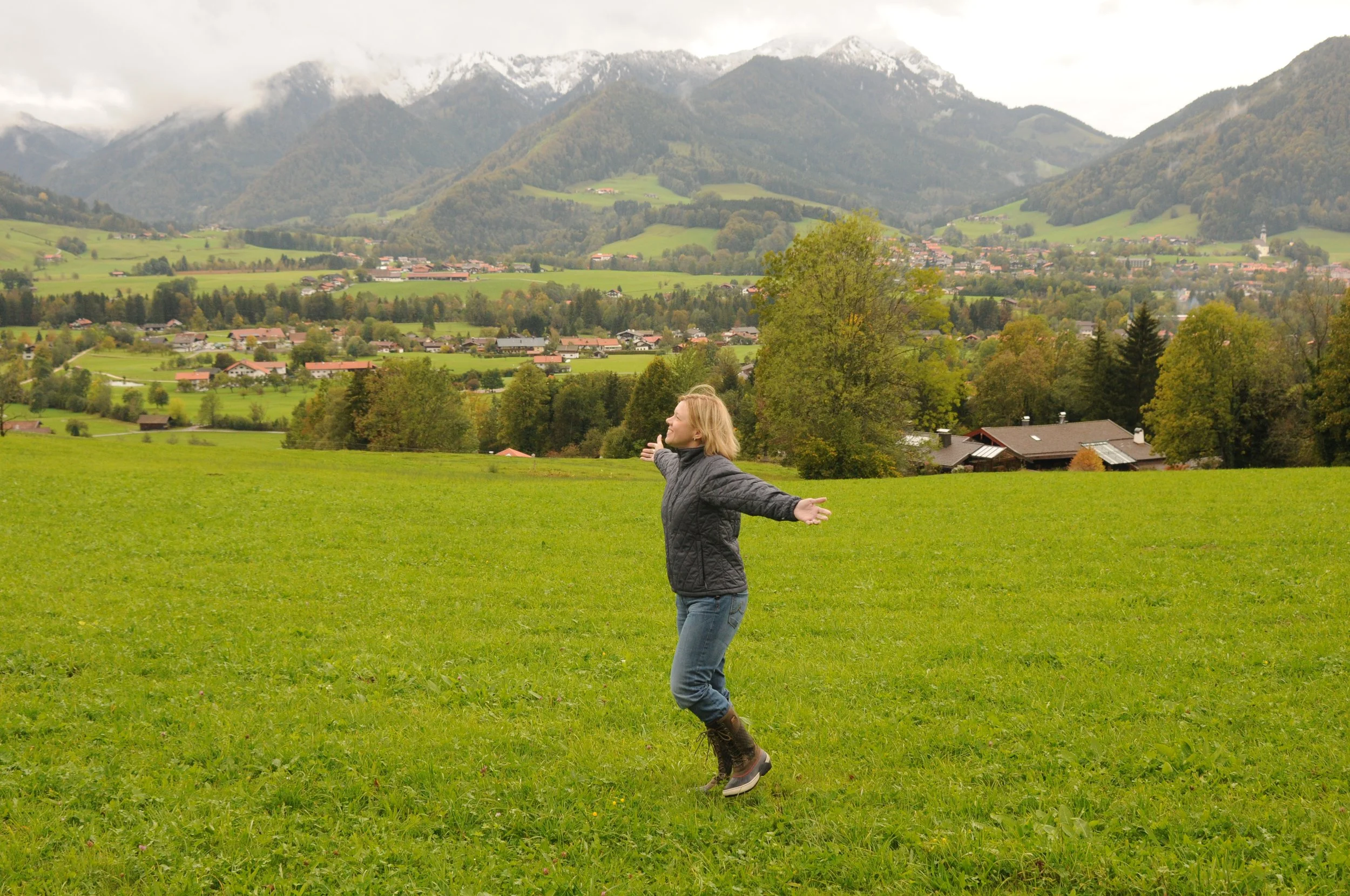
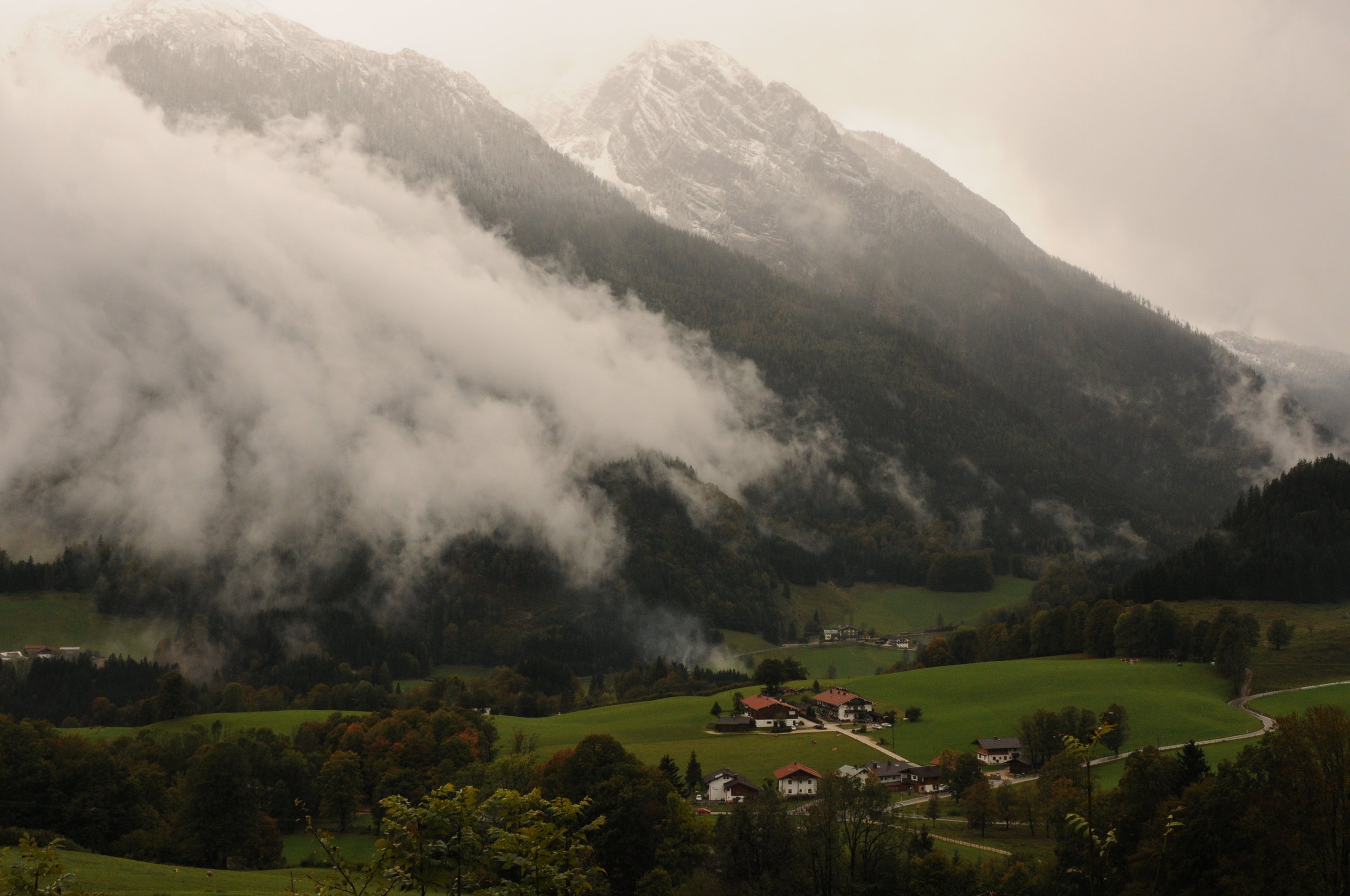
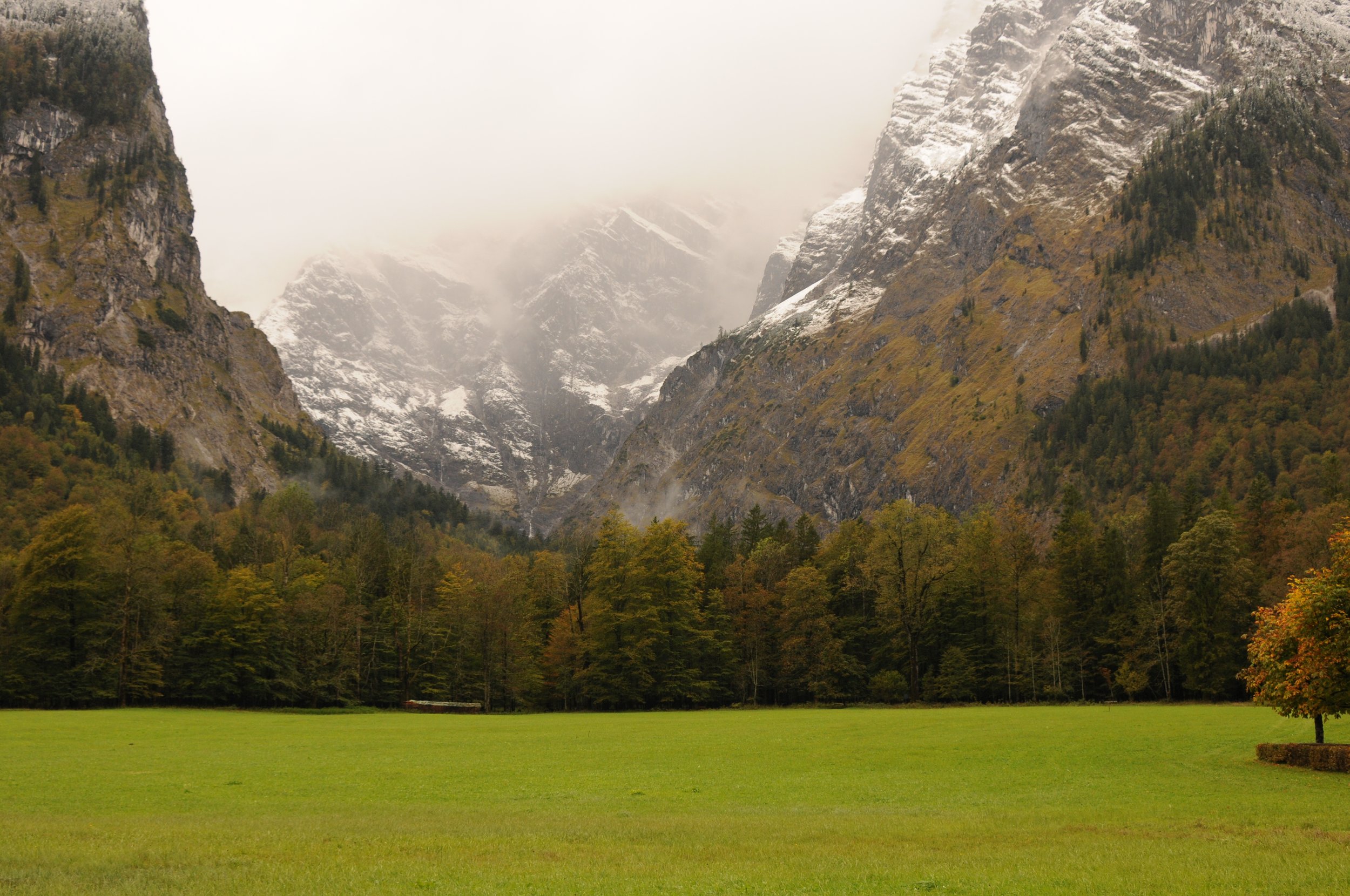
Rain and snow on the mountains the next day, which meant the Eagle's Nest was indeed closed, and we were glad we'd gone up the evening before. We drove through Berchtesgaden National Park, stopped at adorable little towns, and Matt extracted a Sound of Music twirl from me on a mountain despite the cold. The highlight was a short boat cruise on Konigsee Lake, a mountain lake surrounded by walls of rock. The boat captain cut the engine halfway up and played trumpet so you could hear the echo against the rock walls come back across the water. That was pretty special.
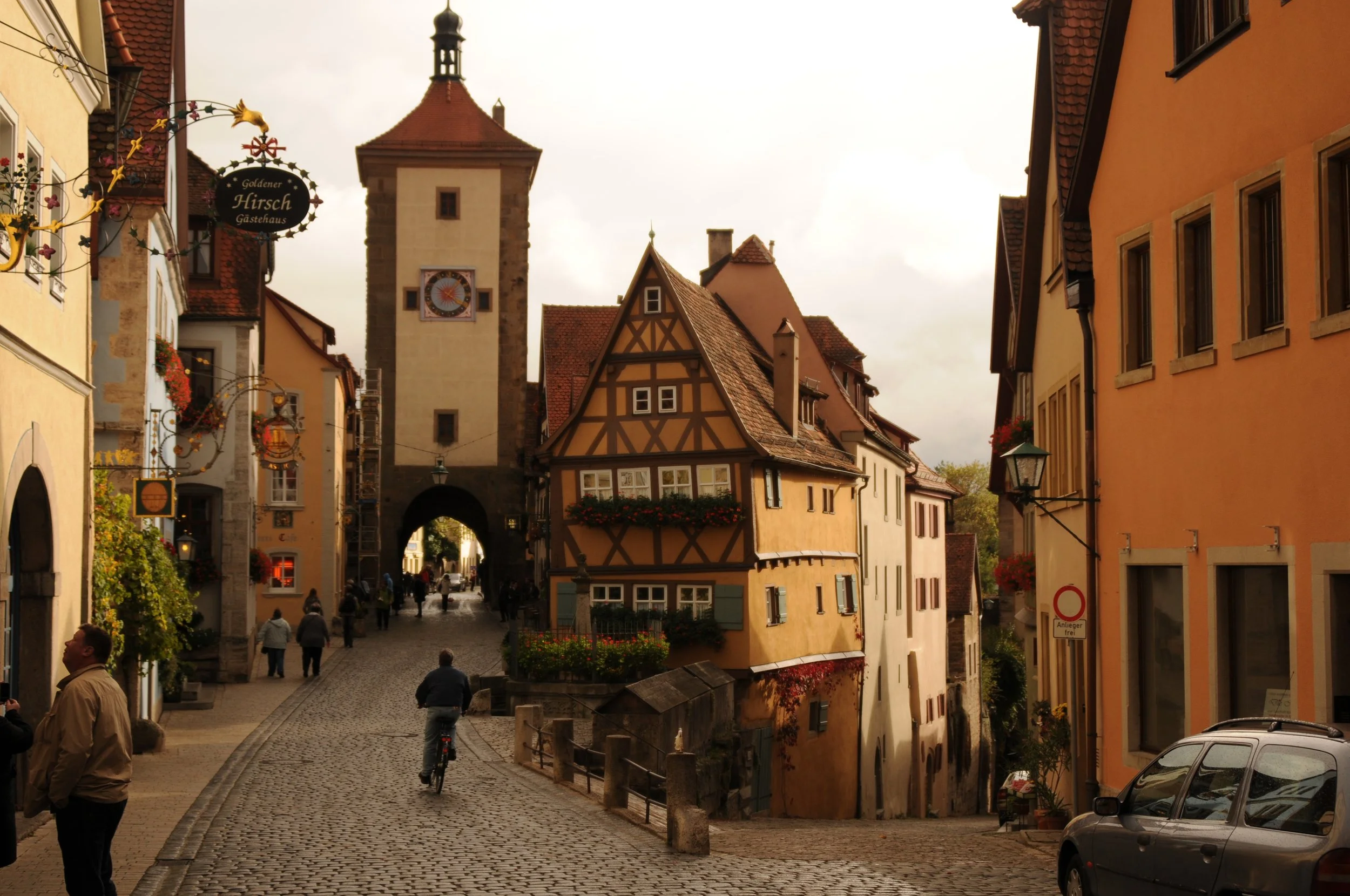
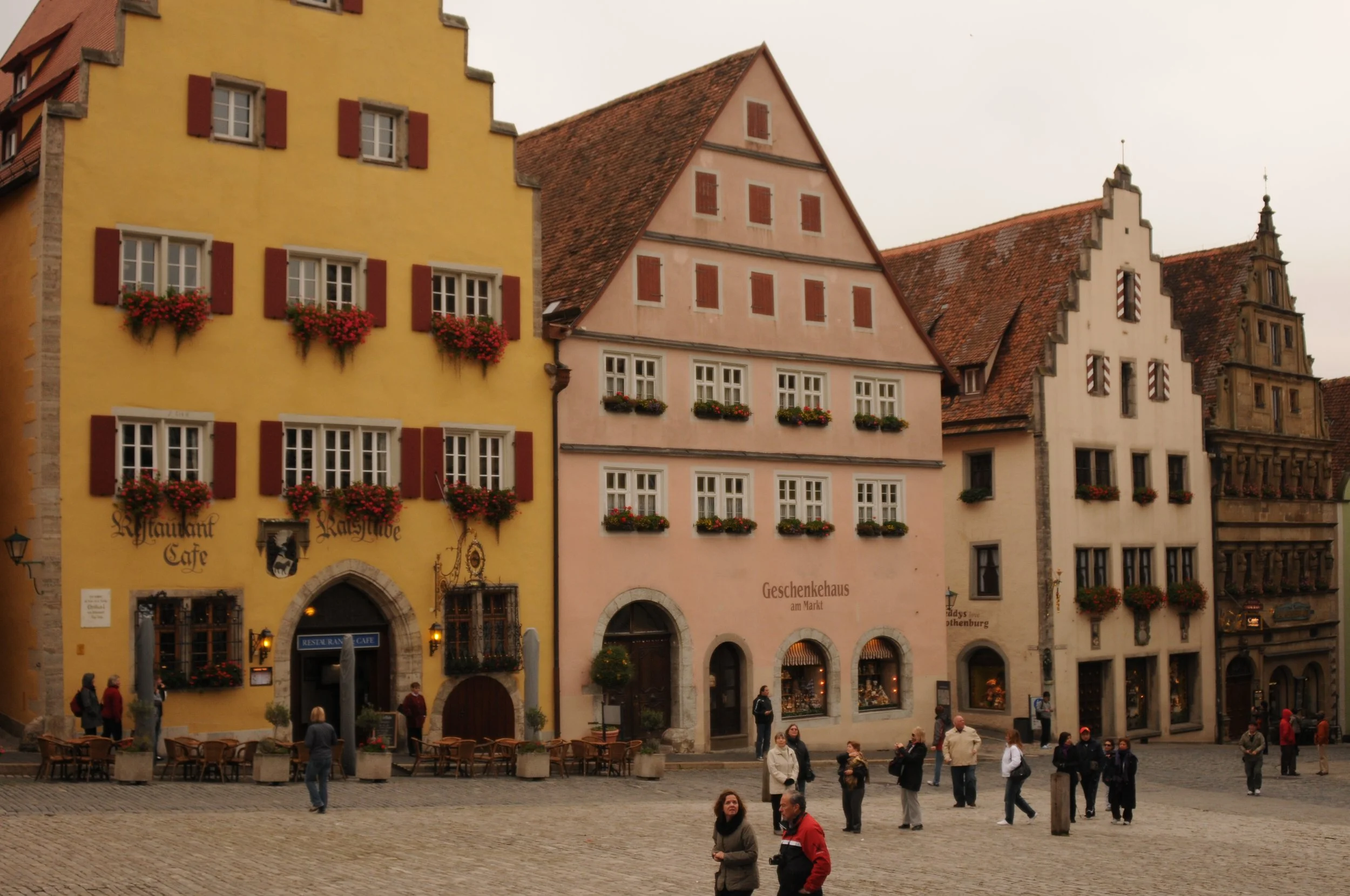
From Berchtesgaden we drove four hours through a mix of heavy wet snow and construction to Rothenburg ob der Tauber. We arrived at one-thirty, checked into our hotel directly across from the main square, walked outside for twenty minutes, and immediately cancelled our Munich hotel reservation for the following night.
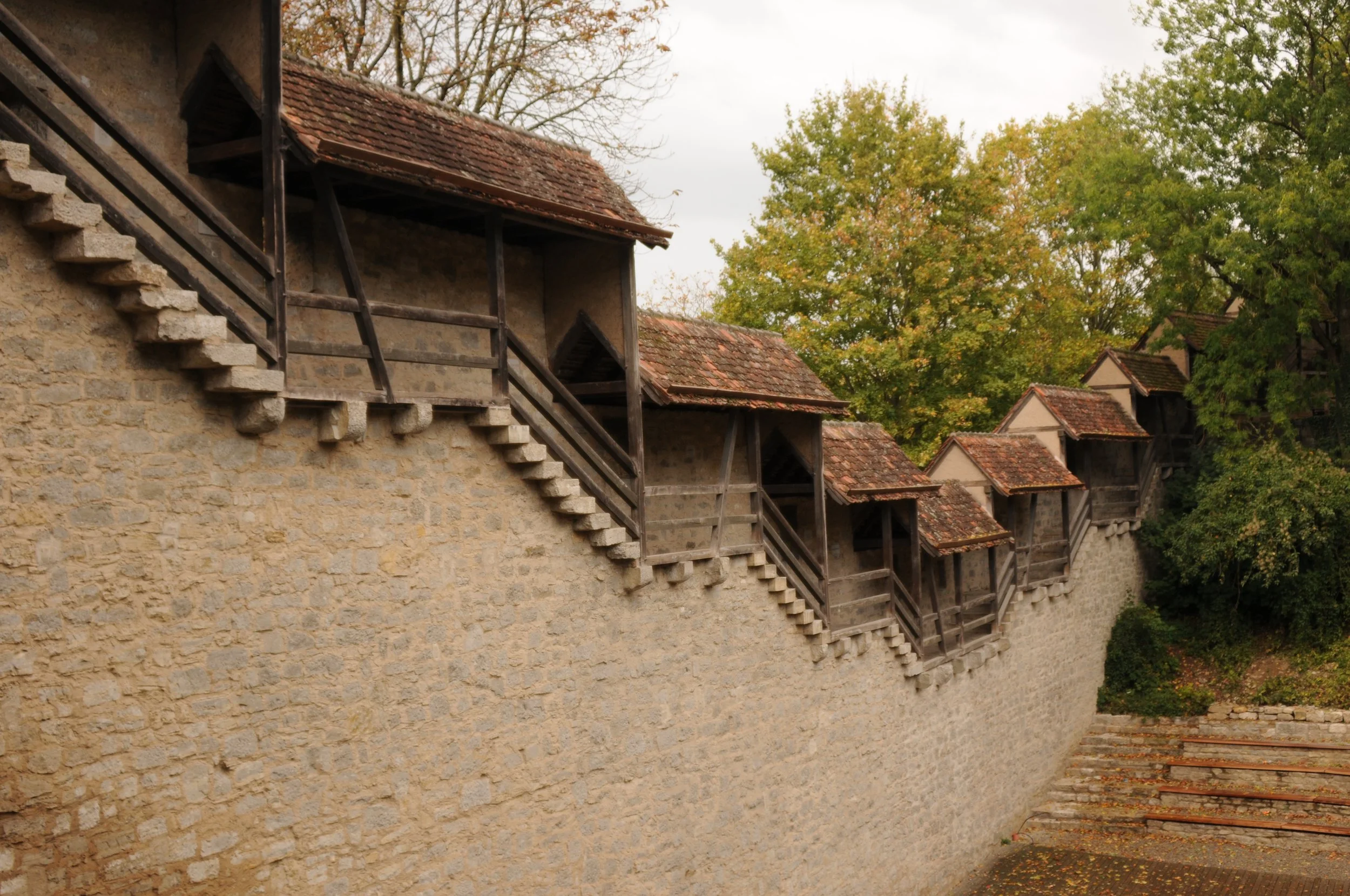
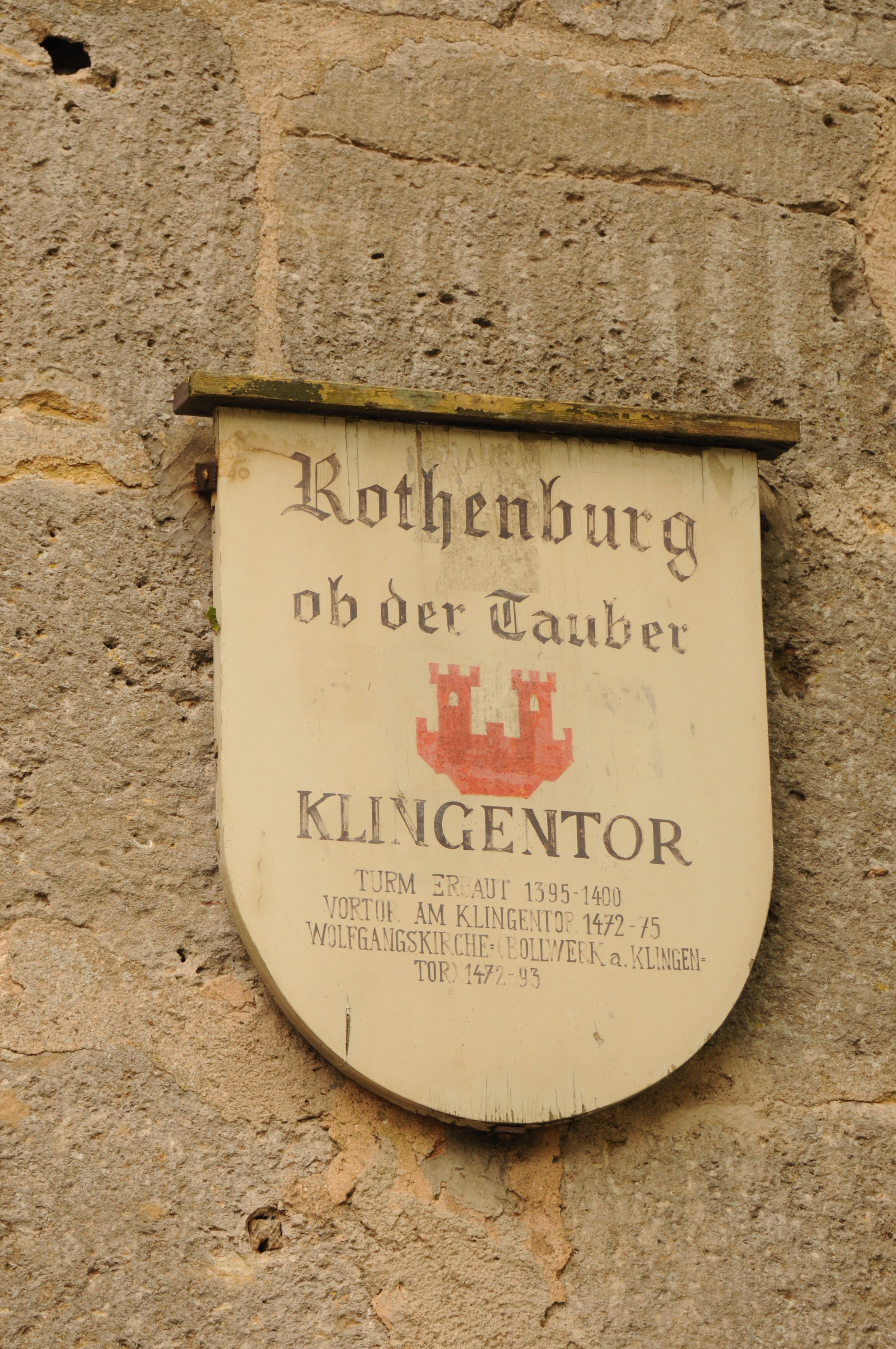
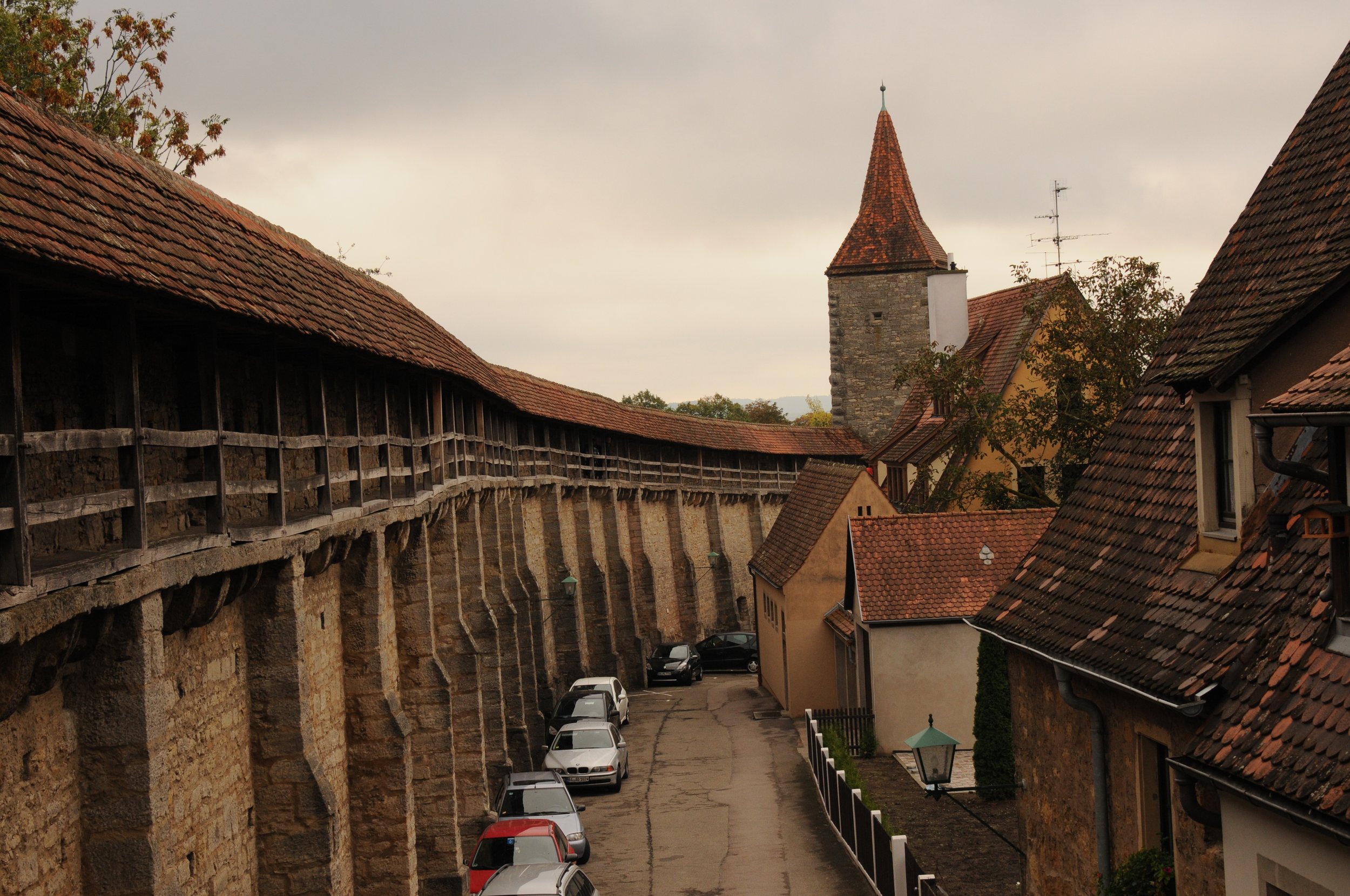
Rothenburg is a completely walled medieval city dating to the 1100s. Many buildings from the 1400s. Some wooden city gates still original from the 1500s. Cobblestone streets in every direction. You can walk anywhere and eventually find your way back because the wall means there's a limit to how lost you can get. It is storybook in the most literal sense of the word, and we spent two full days just wandering and exploring and eating and walking the top of the wall.
The Night Watchman tour on our first evening was perfect. The guide sounded like he had walked directly out of Monty Python, was both informative and consistently funny, and did a dramatic reading of local medieval history that made a genuinely hilarious evening out of plague mortality statistics. This is not easy to do.
Munich was our last stop before the airport. Hofbrauhaus for lunch, founded in 1589 by the Duke of Bavaria: huge wooden tables you share with strangers, years of carved names in the wood, liter beers, pretzels the size of your head, and a band playing traditional music. We swayed and bobbed our heads and ate our last sausages and sauerkraut and didn't want to leave. Then old town, a brief hop-on hop-off bus until it made us too sleepy to continue, then Hofbrauhaus again for dinner. Germany was everything we hoped it would be and we already want to go back.
A few German observations that belong on the record: Germans take walking sticks seriously. Not just for hiking. In towns. On flat roads. Both hands. Everywhere. The Autobahn left-lane etiquette is miraculous: people actually move over when faster cars approach and the whole thing flows like it was choreographed. Beds in Germany have no top sheets, just an enormous poofy duvet, which is wonderful except when your feet poke out the bottom. Beer is always the local variety wherever you are. There is no national brand loyalty. You drink whatever is made near where you're sitting. This is an excellent system.
The best moments were Matt and I breaking spontaneously into Edelweiss or a Sound of Music number at random moments in the car. This happened more times than I can count and I regret nothing.