Middle east Asiya Rehman Middle east Asiya Rehman

Eat Everything. (No, Really. Everything.)

Turkey  •  Istanbul  •  October 2015 

Day two started much earlier than anyone wanted: we had a food tour booked at 9am through Culinary Backstreets, a small-group experience that turned out to be one of the best decisions we made on this entire trip. Six people total, two other couples and us. First official piece of information from our guide: no decent restrooms until the tour ends at 3pm. The old city has almost nothing for women except mosque squat toilets. Body: noted, preparing.

Our guide was born in Turkey, raised in Germany, and returned with her family years later. She knew this city the way only someone who loves a place can know it. She led us first to a building near the bustling Spice Market where a traditional Turkish breakfast was spread out for us: sesame-crusted bread rings, multiple cheeses, dried fruits, a spicy tomato-based spread. The item I'm still thinking about was a clotted cream made from water buffalo milk, roughly 60% fat, drizzled with honey. That's it. That's the whole description. I could have eaten an entire bowl of it. Turkish cheeses are also seriously wonderful, and two of them at this breakfast were aged inside goat and cow skin, which I will let you visualize on your own. We sampled Turkish coffee, which I was excited about. Verdict: too gritty. This was my one Istanbul disappointment. Moving on.

From the Spice Market we wound our way into the trading district, where our guide took us into the Rustem Pasha Mosque, and I have to say this was one of the most visually stunning things I've seen anywhere. The whole interior, and even the outside walls, are covered in Iznik tiles — the kind that were exclusively reserved for sultans in their day. Our guide explained that blue was actually the easiest color for the artisans to produce (thanks to indigo), while red was nearly impossible to perfect. This mosque has both, and the red is rare. When the master's recipe for that particular red dye was lost, it took years and years to replicate. Standing there looking at it, you feel the significance of that.

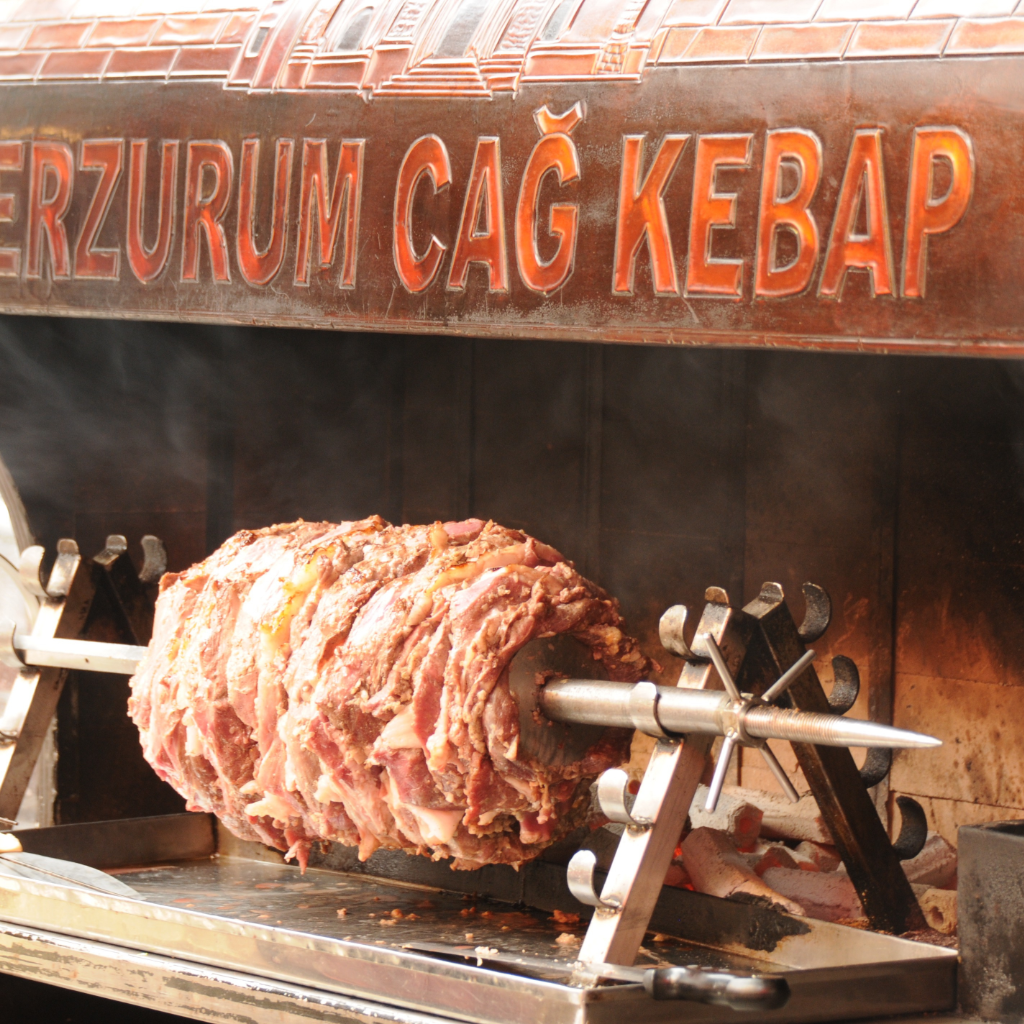
Then: Cag Kebob. I want to be very clear about Cag Kebob because it deserves full attention. Unlike most kebobs, this one uses a horizontal rotisserie of all lamb. They slice it off onto skewers, crisp it up quickly, and serve it with thin lavash bread, cucumber, tomato, and onion. No sauce needed. None. The flavor and moisture are completely sufficient on their own. The correct way to eat your first bite of Cag Kebob is to close your eyes, chew slowly, and then make a sound. We went back to this place twice more before we left Istanbul and I have zero regrets about that.

We sampled Turkish pizza next, oblong dough shaped by a dough master and topped in our case with cheese, vegetables, mincemeat, and egg…very good. Then a traditional drink called Kopukuayran, which is salted yogurt thinned with water. The pizza: outstanding. The drink: a firm pass from both of us.

The candy shop we stopped at next was one of those places that makes you feel like you've stumbled into something rare. Four generations of the same family making candy in this shop. Turkish delights, hard candy, special sesame paste candy, all made on site for hundreds of years. While we were sampling, a little boy of about five years old reached over and patted my leg several times. His mother and grandmother were apologizing frantically and I just crouched down to his level and smiled until they relaxed. He was adorable and the whole moment made the shop feel even more alive.

Next was a Turkish street food called Kokorec, which is sweetbreads wrapped in fat and then intestine, fried up with tomato and peppers and served on bread. I genuinely thought we were going to love this. Half the tour group wouldn't even try it. Matt and I took one bite each and looked at each other and said "nope" at the same time. Just slightly too funky for us. I was surprised honestly. Still am a little.

We walked through what our guide called the refugee area, where many Syrian immigrants live, noting the phone card shops and barbershops and cheap hotels that form the essential infrastructure of men trying to build a foothold to bring their families over. And then: the doner place. This is not a regular doner. This is a family-owned place that makes a version layered with lamb only, with tomatoes and peppers, and it takes three hours to assemble the vertical stack before it even starts rotating. We ate it on the sidewalk with families and children around us, people our guide would describe as having very little, eating something that quite honestly the wealthiest people in the world should want for dinner every night. A delicacy on a paper wrapper on a sidewalk in Istanbul.

Then came the chicken pudding. Our guide set down small dishes in front of us before asking what we thought it was. Very thick, slightly tacky texture, covered in cinnamon. I guessed tapioca. It was chicken. Specifically: chicken breasts boiled and stirred until the protein breaks down completely into a smooth pudding, then sweetened. You can actually taste and see the faint strands of the chicken if you look. It is somehow genuinely delicious. Matt could not stop eating it. I'm still a little amazed.

The final stop of the official tour was the Boza shop, which has been open since the 1890s and has not changed a single thing since: the decor, the tile, all of it completely intact. Boza is a drink made from fermented bulgur wheat, about 1% alcohol, thick and tasting something like fermented applesauce. It was used to keep soldiers energized and warm during wartime. Today people from every part of the city and every social class come here for it. The divot in the marble entrance is proof enough of how popular it's been for over a century, worn down the same way very old church marble gets worn down. Worth it just for that.

We closed out the tour stuffed beyond all reason, but lunch still happened because the tour saved its best for last: a neighborhood that is purely from southeastern Turkey, meaning the ingredients, the techniques, everything is from that region. The restaurant hung whole lambs on hooks and cooked them underground in a barbecue pit for at least three hours. The result is the most tender, flavorful lamb I've ever eaten. We had it with curtain rice, rice cooked inside pastry dough with pine nuts and raisins, and a tomato-pepper sauce I kept putting on everything. That night we had a remarkable rooftop conversation with a fellow from Boston on a government fellowship studying Turkish water conservation, who spent about an hour very calmly explaining how we're running out of drinking water faster than anyone will admit and how "round-up" is in essentially every non-organic vegetable we eat. I have thought about this conversation constantly since.

Day three was the Grand Bazaar, which is over 500 years old and contains approximately 4,400 shops inside. It's immediately different from every market we've experienced elsewhere in the world: it's fully indoors, organized into actual storefronts rather than stalls, and the shopkeepers are noticeably less aggressive than what we've encountered in Egypt or Asia. There's still haggling, but it has a different energy entirely.

About two minutes in, Matt noticed a rug in a carpet shop window and the fourth-generation shop owner spotted us and invited us in for a lesson with absolutely zero pressure. "We leave with friendship," he said, "and if we do business we do business and that is good." Once inside and into the lesson, the conversation took a turn that made us stay much longer than we planned. He found out we were from New Jersey and lit up completely, telling us about his trip to visit a friend in Secaucus during the Super Bowl. He watched it at a sports bar. He described not understanding why everyone kept running in different directions. He described having buffalo wings for the first time with his face absolutely glowing like he was recounting something sacred. He told us about his own nervousness visiting America, not knowing how he'd be treated as a Muslim man. "Everyone was so nice, even the police," he said. "We were driving 95 on I-95 when we got pulled over and the police were so kind." He thought 95 was the speed limit. We bought a rug.

From the Bazaar we spent the better part of 30 minutes hunting for a tiny shop I'd seen mentioned more than a year before we even planned this trip: Nick's Calligraphy, an artist who does intricate work on dried leaves representing the three great religions and all of Istanbul's history: Greek Orthodox, Christianity, and Islam. We finally found it. Walking in you see photos of Nick with Hillary Clinton, Laura Bush, world leaders, all holding their pieces. His nephew was working that day and had tea brought for us. We ended up with a piece of Islamic calligraphy I'm completely in love with. The translation: "Do not be anxious, do not give up. If you believe, you will be successful." We've had it framed and I look at it all the time.

Day four was Topkapi Palace, the administrative center of the Ottoman sultans for more than 400 years. The Iznik tile work here rivals anything we'd seen. The treasury room features an 86-carat diamond and a literal bowl full of emeralds. The Holy Relics room supposedly holds the staff of Moses and both the footprint and beard hair of Mohammed. The lines to get into both rooms were genuinely cattle-herding intense, and our museum pass saved us significantly in both time and money throughout this whole trip.

We also took the ferry across to the Asian side of the city, to a neighborhood called Kadikoy. It felt slower and more local, less tourist-facing, more like where people actually live. We had lunch at the famous Ciya restaurant, which we'd read about extensively. Honestly, not as great as some of the other meals we'd had. But then dinner that night brought us Kunefe, and everything changed.

Kunefe is very finely shredded dough pressed into a special metal dish, layered with a mozzarella-style cheese, covered with more dough, pressed down, then cooked over a flame until crispy and starting to char on both sides. Sugar syrup poured over the top, finished with chopped pistachios. I know some of you just made a face at "cheese and sugar syrup." Ignore that instinct. It is one of the best desserts I have ever eaten in my life. It's rich and a little crispy and the cheese cuts through the sweetness perfectly. We went back for it multiple times.

Our last day was about revisiting favorites, starting with the Chora Church, which we'd saved and which absolutely earned its spot on the itinerary. Built around 400 AD, it contains what are considered the finest examples of late Byzantine mosaics anywhere in the world. Most of what we see today dates from around 1315 after part of the church collapsed. The artists remain unknown. Remarkable in both quality and condition.

After the Chora Church we went straight to Siirt Seref, the underground lamb pit restaurant from the food tour, and had lamb for breakfast. At 10am. With audible sounds of pleasure on every bite. The curtain rice was even better than the day before, and there was a smoky tomato salad so good that we were literally scooping it up with bread until the bowl was empty. We were stuffed. We went back to the hotel for our one and only siesta of the trip, which was heavenly.

The afternoon was for revisiting the places that had lodged themselves in our hearts: the candy shop, where the owner wrapped everything in paper and ribbon and kept bringing out samples of things we hadn't tried yet, the same magical warmth as before. The Boza shop again, just to sit in that 1890s tile room and drink the fermented applesauce drink that all of Istanbul agrees is good for you. More Cag Kebob. Obviously.

And then, at Hagia Sofia, I learned the best tourist tip I've ever discovered anywhere: visit 1.5 hours before closing time. We paid to go back in and found approximately five percent of the visitors we'd seen on our first visit. The fading afternoon sunlight comes through those high windows and lights up the gold tones of the whole interior in a way that morning light simply doesn't. It is magnificent. Just you and her and the quiet. That's the way to see Hagia Sofia.

Here is what surprised me most about Istanbul overall: how safe it felt. I'd read warnings about pickpockets, about being a woman, about scams, about getting pulled into carpet shops and not being able to leave without buying something. Almost none of that happened to us. We felt welcomed. Prices were fair, haggling was gentle, taxi drivers who tried to quote inflated prices were easy enough to walk away from (if they quote a price and won't use the meter, that's your signal). As a woman I felt genuinely comfortable here and would have no hesitation coming back alone.

There's one more thing I want to mention: the street animals. Istanbul does not really have a culture of keeping pets indoors. Instead the cats and dogs of the city simply live outside, and the people of the city have chosen to care for them. You see piles of pet food left on sidewalks, bowls of water, people throwing scraps of meat to dogs, makeshift cat shelters built into corners of buildings. They look well-fed and healthy. They sleep everywhere: on bookshelves, on warm pavement, on cafe chairs. The city spays, neuters, and vaccinates them, and most are tagged to show it's been done. I found this genuinely moving in a way I didn't expect. There's something about a city that collectively decides to take care of its most vulnerable residents, even the four-legged ones, that tells you something important about the place.

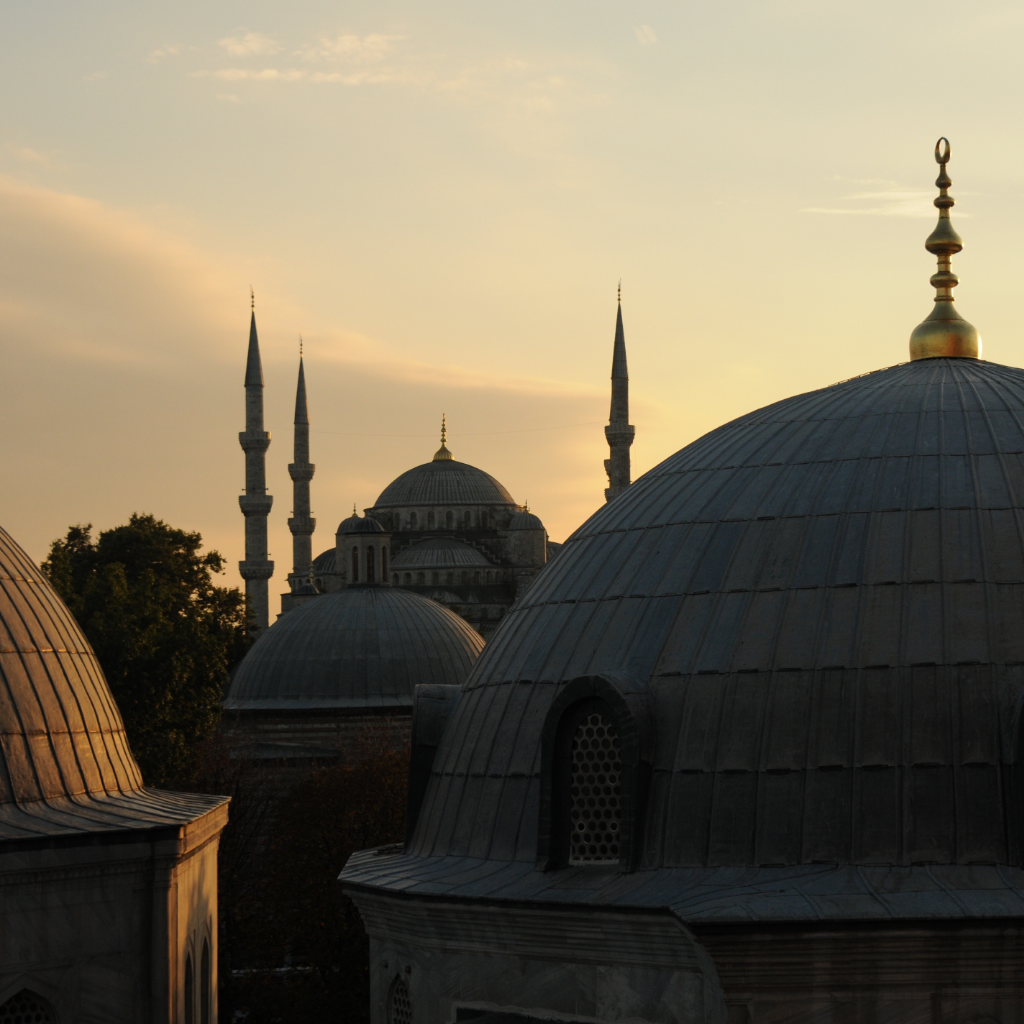
Istanbul is the clash of tradition and modern done better than anywhere I've ever seen. Old and new, East and West, mosque and market, all of it sitting together without friction, like the city has figured out something the rest of the world is still working on. Go. Go for the food. Go for the history. Go for the afternoon call to prayer with the Blue Mosque in your sightline. Go for the Kunefe. And visit Hagia Sofia 1.5 hours before closing.

Read More
Middle east Asiya Rehman Middle east Asiya Rehman

Dan Brown Made Us Do It

Turkey  •  Istanbul  •  October 2015 

We owe this entire trip to Dan Brown. Specifically to his book Inferno, which is set largely in Istanbul and which when we read, we immediately said: we have to go. Istanbul is the only city in the world that physically spans two continents, Europe and Asia, and it carries the layered history of the Byzantine, Ottoman, and Roman empires, all still visible today. It's home to more than 20 million people. I

Getting there, however, was its own adventure. We had a stressful rainy drive to JFK, found our 12:30am flight delayed, and then spent the better part of an overnight on Ukrainian Air, which I have since renamed the International Spirit Airlines. We got an incredible deal on these tickets… $500 round trip, and I will say: you get exactly what you pay for. The seats were the tightest I have ever experienced in my life. We were in the middle of a four-seat row, fully shoulder-to-shoulder and leg-to-leg with the strangers on either side of us. You could not cross your legs. You could not change positions in any meaningful way. The sleep was terrible. We survived. We landed in Kiev for a two-hour layover and then continued on to Istanbul.

Arrival in Istanbul was a breeze, which helped considerably after the Ukrainian Air situation. I'd done my research and found a company called All Day Wifi that rents hotspot devices with unlimited data. After our Sim card adventures in Thailand this felt like a revelation: pick up your device at the airport, stay connected the entire trip, done. Highly recommend. We also arranged airport transport through them, so we were whisked to our hotel in a spacious van feeling significantly more human than we had about an hour earlier.

Our hotel was in the Beyoglu neighborhood, in an old renovated French apartment building that was spacious, posh, and just generally delightful. Beyoglu is trendy and directly adjacent to Istiklal Caddesi Street, which is essentially Times Square, alive around the clock, buzzing with people and music and food. This turned out to be perfect timing because we arrived close to midnight, hadn't really eaten, and were completely confused about what time our bodies thought it was. We started wandering toward Istiklal and found a restaurant called Ficcan that had outdoor seating. Our waiter turned out to be from Paris, only 24 days into a stint in Istanbul, and about to go back home because he missed it too much. The moment Matt and I told him Paris was our favorite city, he became what I can only describe as a French chipmunk: speaking entirely too fast for us to follow, eyes lit up, arms moving. We caught about 40% of it but the joy was completely contagious. We ate Turkish ravioli made with meat and topped with yogurt sauce (I could eat this every single day), stuffed grape leaves, and a puff pastry filled with mushrooms and cheese. All wonderful. Great start.

We woke up the next morning to the city and our hotel's breakfast area on the top floor, which gave us our first real aerial view of Istanbul. Then we started our 2.5-mile walk to the old city, stopping at the Bosphorus to watch the fishermen before crossing the bridge, which is its own little world of restaurants and bars serving fresh fish right there on the water.

First stop was Hagia Sofia, and it's remarkable. Built in 537 AD, it has served as a place of worship for three different religions: Greek Orthodox, Roman Catholic, and Muslim, before becoming a museum. It looks predominantly Muslim now, with only two small sections of Christian iconography still visible. Everything else was covered or removed when it became a mosque, because Muslim belief holds that only God can create life, meaning painting a person or animal is considered an act of "creating life." This is why all mosques contain only calligraphy, never figurative art. The minarets were added during the Muslim period. For more than 1,000 years it was the largest cathedral in the world, until the cathedral in Seville was completed in 1520. It is genuinely the kind of place you wish you could come back to multiple times on a single trip, because one visit doesn't feel like enough. You want to just sit there and absorb it.

After Hagia Sofia we were hungry and Yelped the nearest highly-rated lunch spot. We found it, sat down, looked at the menu…six items, none of them interesting  so we decided we'd rather keep walking. Which led us to a guy on a busy street who pointed us toward his restaurant's terrace. Sold immediately. The view was the entire Blue Mosque. We sat there through an afternoon call to prayer, which in Istanbul is something close to transcendent. The sound floats across the city in layers, each minaret slightly offset from the others, and you just close your eyes. We've heard it in Egypt too but something about hearing it with the Blue Mosque right in front of you makes it land differently.

The Blue Mosque itself was next. It's a fully functioning mosque, which means it's closed to visitors during all five daily prayer times, so you need to plan your visit around that. I was very proud of myself for dressing appropriately and remembering to bring a scarf to cover my head. Then the attendant informed me I was too shapely for the mosque as-is and handed me a skirt to wear over my tights. Well. I tried. I put on the skirt, went in, and it is beautiful.

The Basilica Cistern was the moment the Dan Brown fan in me absolutely lost it. This is a sixth-century underground water supply for the city, essentially a massive subterranean cathedral with hundreds of marble columns rising out of still water, lit by warm light. In Inferno it's where the plot reaches its climax. Descending down into it felt exactly like stepping into the book. We couldn't get enough and ended up sitting down there for a while with fresh-squeezed pomegranate juice, just not wanting to leave.

We ended the day at the Galata Bridge for sunset drinks looking out over the Golden Horn. Beautiful. Then came the hike back up to our neighborhood, which I should mention is on what feels like a vertical cliff. My shoes, which I had irrationally believed would be fine, had given me blisters in three places by this point. We stopped for a bandaid on the way up and a German woman appeared and held out her own blistered foot asking if she could have one too. Universal language of bad shoe decisions. I bought new shoes on Istiklal Caddesi. No regrets.

We grabbed a Doner sandwich and then had dinner outside under trees at a restaurant near our hotel: fried cheese with hot pepper jelly, scorpion fish done ceviche-style with bright lemon, and lamb chops. The evening ended on the rooftop looking at photos, windows open to the night sounds of the city below.

A few things I noticed right away about Istanbul: corn on the cob carts everywhere (not hot dogs), approximately 75 cents each; roasted chestnuts on every corner; the city is remarkably clean for 20 million people; and selfie sticks are sold absolutely everywhere for about $1.50. I almost lost an eye several times. I refuse to say more about the selfie sticks.

Read More
Middle east Asiya Rehman Middle east Asiya Rehman

The Lowest Place on Earth

Jordan  •  Dead Sea, Shobak Castle & Mount Nebo  •  March 2006

Our last full day in Jordan, and we weren't about to spend it resting. We'd already done Petra, one long, very full day covered everything, even with our two-hour mountain hike, and had the whole day free before Petra by Night that evening. We popped into a travel agency the night before and arranged a car to the Dead Sea for $65. Our driver picked us up at 7:30am and his name was Ferris.

Ferris was not entirely pleased that all we'd seen of Jordan was Petra and the King's Highway, which is essentially a desert freeway clogged with oil trucks. He asked if he could take us the longer way and show us some things. Of course we said yes.

First stop was Shobak Castle, more than 1,300 years old, sitting out in the landscape with this quiet, ancient confidence. From there Ferris took us on a scenic route that revealed something I genuinely hadn't expected: Jordan is not just desert. There's a canyon that honestly reminded us of the Grand Canyon. Rolling green hills. Completely different landscapes bleeding into each other. If you only take the highway between Petra and Amman you miss all of this. Jordan is much more beautiful and varied than its reputation suggests.

We arrived at the Dead Sea mid-afternoon having made no plan to swim, which meant no swimsuits. Fortunately, there are vendor stalls right near the beach. Unfortunately, every single swimsuit available appeared to have been designed in 1987 featuring colors that should not exist on fabric. I eventually found one vendor with a one-piece for 7 Jordanian dinars and that was that. Wearing a swimsuit when you've already been stared at for days as a white woman in Egypt and Jordan is a whole different level of being stared at. I just want to acknowledge that out loud.

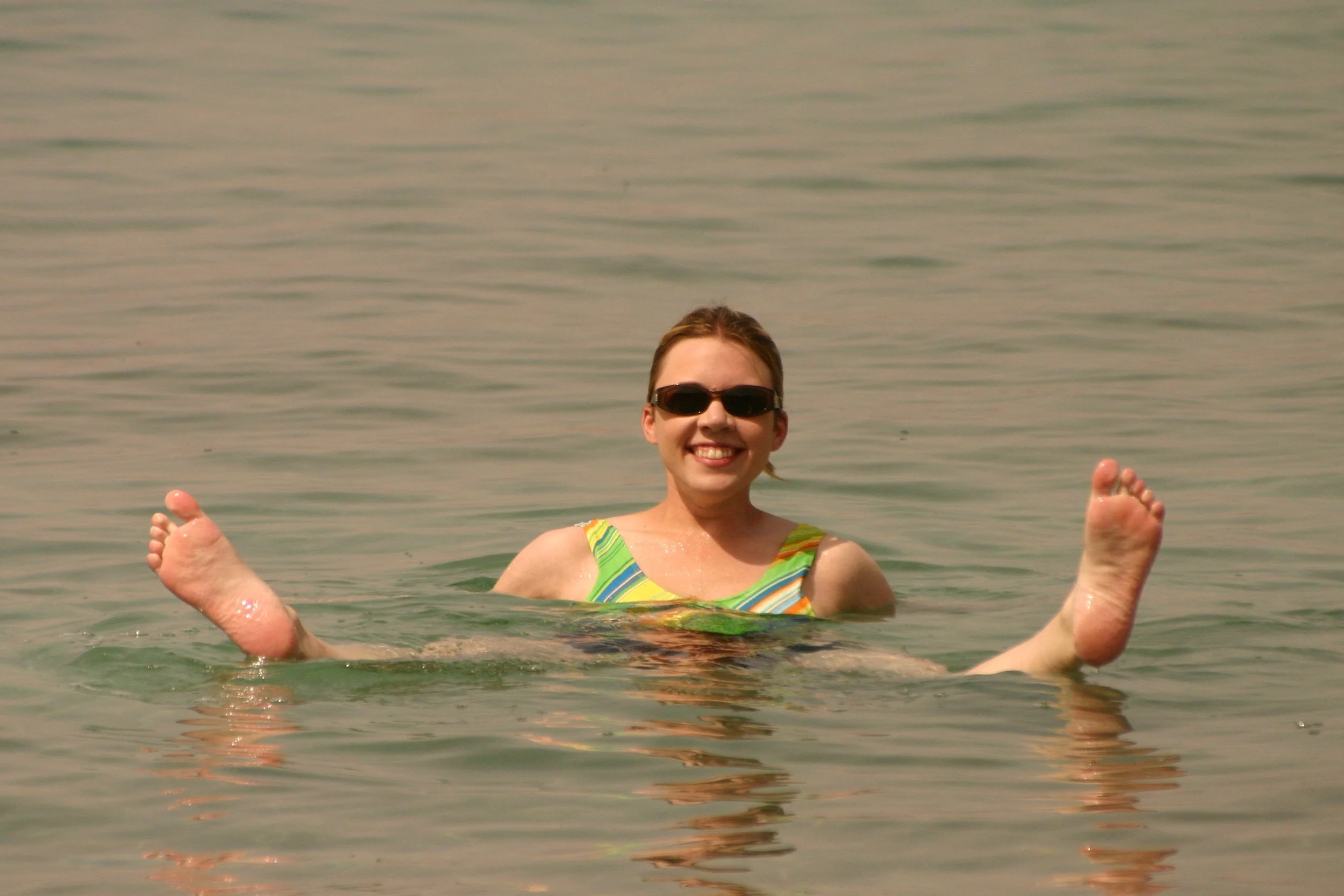
But the Dead Sea. It's 30% salt. Nothing lives in it. It's the lowest place on earth at 1,300 feet below sea level. And the floating is unlike anything I've ever experienced. We'd heard about it. We were not prepared. You literally cannot sink. Getting your feet back to the ground to stand up is an actual physical challenge because you just keep bobbing back up like a cork. We did what everyone does and grabbed handfuls of that mineral-rich mud from the bottom and slathered it all over ourselves. There's a gift shop on site selling it in bags for $10. You're standing in the free version. It's a funny world.

I kept my hair dry. Matt, less successfully, emerged from the water and got saltier by the hour as his hair dried. Salt appearing on his face, his neck, his ears. Every time we wiped it off, more salt appeared from somewhere new. Endlessly salted. Highly entertaining from where I was sitting.

We had four military checkpoints on the drive. Israel is right across the water, less than 20 miles away, and Jordan takes this seriously. Four soldiers in full gear, Hummers with mounted machine guns. Each stop, the soldiers seemed genuinely pleased we were American. One wanted to see our passports almost as if to double-check our driver wasn't making it up. Jordan hadn't felt particularly intense up to this point. This was a reminder of exactly where we were.

We finished the day at Mount Nebo, which is where the Bible says Moses climbed to see the Holy Land before he died. There's a monument and a beautiful church with mosaic floors. I stood there looking out toward what would be Israel in the distance and tried to feel the weight of that history. It's everywhere in this part of the world, unavoidable in the best way.

That evening we had Petra by Night. And then we flew home.

Walking away from this trip, if there's one thing I want anyone reading this to take away: don't be afraid of this part of the world. What you find is a country that is cleaner and calmer than you expect, and people who are SO genuinely excited to see Americans and tell you so. "Americans in Jordan is very good!" We heard that constantly. What you find is Ferris, who went out of his way to show us the Jordan that tourists don't see because he was proud of it. You find connection. You find history that makes your own life feel like a footnote in the very best way.

Read More
Middle east Asiya Rehman Middle east Asiya Rehman

Indiana Jones Had It Right

Jordan  •  Petra  •  March 2006  

There are places you've imagined your whole life. And then there are places that, when you finally arrive, are somehow better. Petra is one of those places.

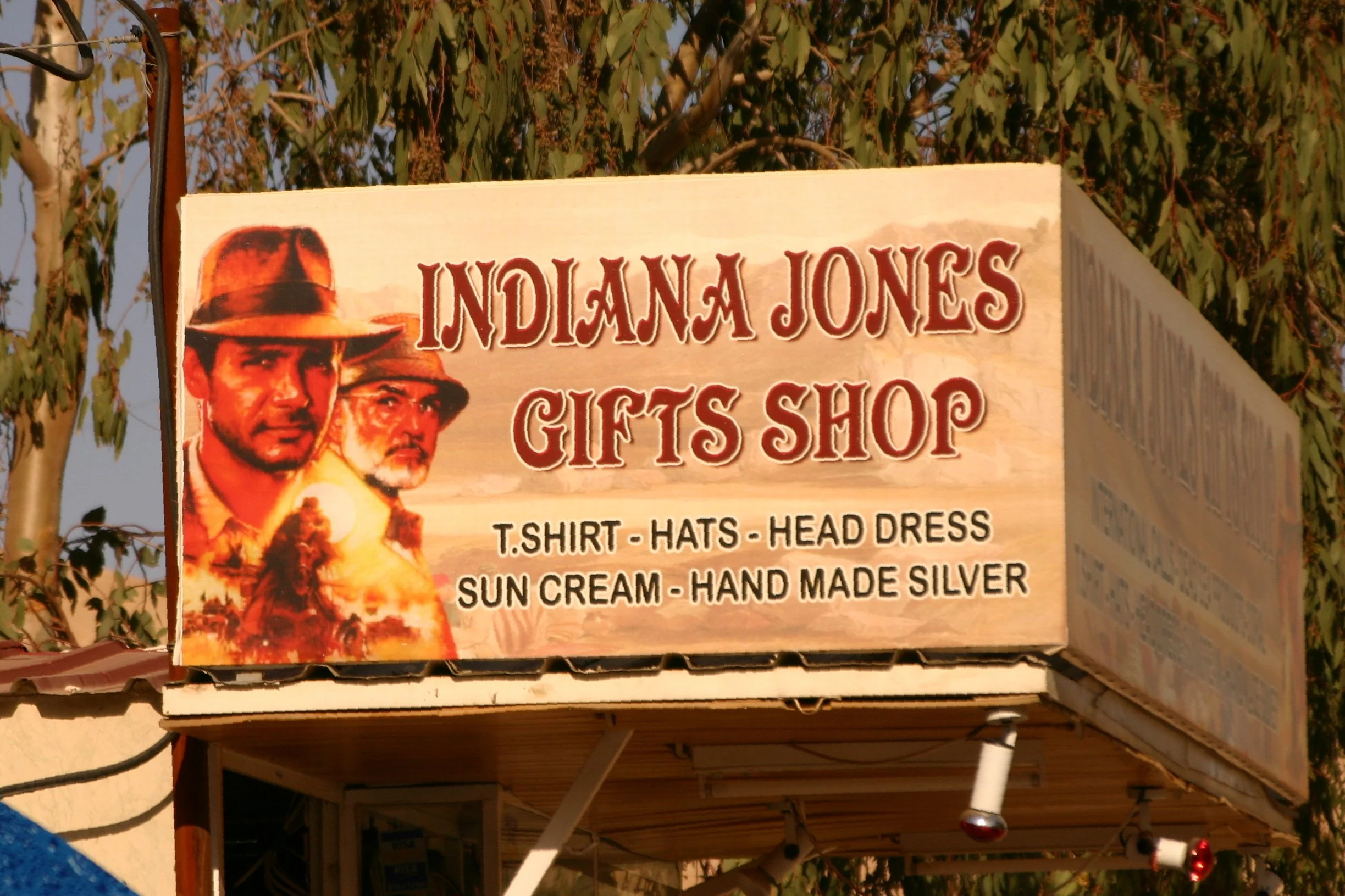
You instantly feel like a kid again. A kid who wants to be an explorer. Indiana Jones and the Last Crusade didn't help with this, it's where the Holy Grail scene was filmed…and I will tell you honestly that we walked through Petra with a small part of our brains genuinely expecting to find a room with invisible steps and a Crusader. We did not find that room. We found something better.

We started at 7am, making our way down the As-Siq: the one-kilometer corridor that winds through a narrow gorge carved by water over centuries. In places it's barely wide enough for two people side by side. The walls tower above you in red and orange layered rock. It looks like Zion National Park decided to go somewhere even more dramatic. We'd seen pictures. Completely irrelevant. Nothing you see in a photo prepares you for the moment you round that last corner and the Treasury appears through the crack in the rock. Just peeking out at first. Then more of it. Then all of it.

Absolutely beautiful. In that quiet, slightly unreal way where you stop walking and just stand there.

Fair warning though: the inside of the Treasury is one room and three smaller rooms. There is no deep chasm. There is no Holy Grail. There is no Crusader. I was fine with this.

Walking away from the Treasury you start noticing the dwellings carved into the cliff faces on either side — this Southwestern US look in the design that makes you want to poke your head into every single one. Then the theater, carved directly from the rock, built to hold 7,000 people, the bleacher-style seating still visible.

We found a small trail leading upward. We followed it. The stairs kept coming. We stopped for a snack halfway up and assessed the situation. We had already come this far. Would Indiana Jones have stopped? Hell no. One hour of hiking later we were standing at the top of the mountain looking DOWN at the entire city of Petra spread out below us. I am still proud of that. Look at the photos from the ground and you'll understand just how far "way the heck up there" actually is.

We had a surprisingly excellent lunch at the restaurant inside the park: saffron rice with lamb, the best falafel of the whole trip, hummus, tabbouleh, pita. Simple and wonderful in the way that food after a significant hike always is.

For the Monastery, 800-plus steps, we hired donkeys. This sounds more relaxing than it is. It's mostly an upper body workout trying to hold on as your donkey launches himself down broken stairs at a speed he finds completely appropriate and you absolutely do not. My donkey in particular liked to go fast and seemed genuinely interested in how far he could launch me. The Monastery was worth every second of the donkey drama: as breathtaking as the Treasury, much larger, with a small café where you can sit and just look at it.

We were tired and covered in Petra dust heading back. The bath that evening was the best bath I have ever taken in my entire life.

The next day we took a day trip to the Dead Sea, more on that in its own post, and then that final evening, Petra by Night.

Petra by Night happens only three nights a week. We were lucky enough to have one of those nights fall on our last night in Jordan. They take 1,500 candles and line the entire As-Siq and the Treasury with them. You walk down in complete silence. The sky was clear and full of stars. The rock walls glowed warm orange in the candlelight. Every so often you'd catch the smell of the wax.

When you reach the Treasury you sit on mats on the ground. Bedouin musicians play traditional music: first a stringed instrument that's a flat rectangle of goat skin with a single string. And then, from somewhere inside the dark Treasury, flute music starts playing. A musician appears in the entrance and walks through the candlelight to stand before you. They serve you tea.

I cannot adequately describe this experience. I can just say: seeing Petra lit by candlelight at night is a completely different experience from seeing it during the day, and both are absolutely necessary.

This trip left us with a lot to process. So much history, so much that is ancient and beyond comprehension in its scale. We walked away from Egypt and Jordan genuinely moved in a way we hadn't quite anticipated. We'd seen poverty that most Americans truly can't comprehend, and people extending hospitality anyway. We'd touched things 3,500 years old. We'd floated in a sea that doesn't support life. And we'd ended with 1,500 candles lighting our way through a lost city in the dark.

If you've been thinking about going to Egypt or Jordan and talking yourself out of it: go. It's not for the faint-hearted traveler, especially if you go independently. But walking the streets instead of being bussed from sight to sight means you get the real version of these places. You get Fahti. You get the restaurant owner asking you to write a love letter. Those are the things you don't forget.

Read More