Africa | Europe | Middle East | South Asia | China | Latin America | Nordic
Floating Over the Serengeti (And Why I'll Never Be the Same)
Tanzania • Serengeti National Park • September 2016
The drive from Ngorongoro to the Serengeti was five hours of constant vibration, deep crater-like dips that dropped the car like an elevator, giant rocks to dodge, and windows slamming shut every time a passing vehicle created a cloud of dust that would fill the interior in approximately half a second. The roads that had felt rough in Tarangire were smooth highways in comparison. We saw three broken Land Rovers with snapped axles in one stretch. Babenga drives either very fast or very slow over washboard roads because either extreme is safer than the middle speed, which causes the car to start skating sideways. He chose fast.
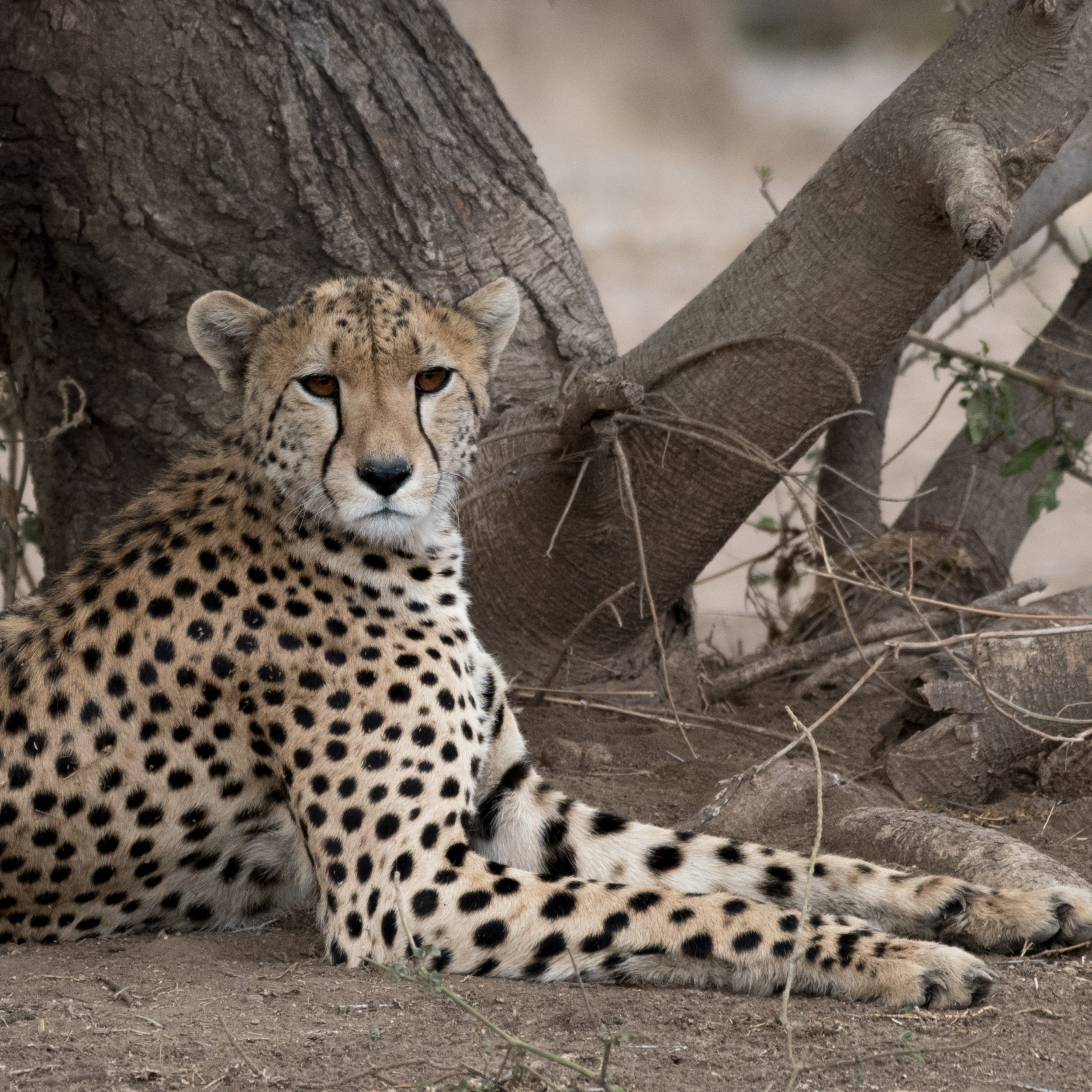
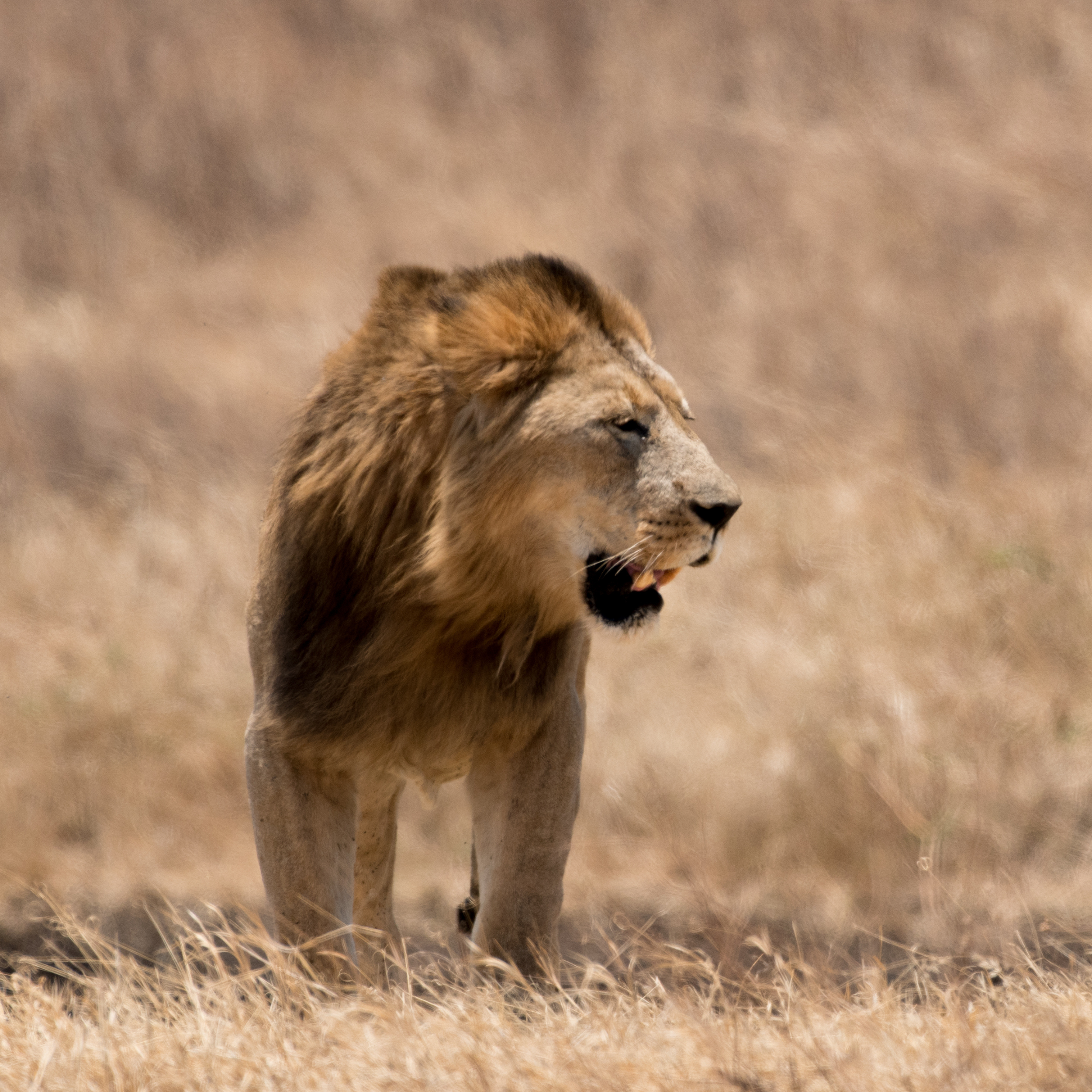
We entered the Serengeti and started a game drive. In the first hour: a cheetah under a tree, two leopards (one with a fresh kill up in the branches), and a male and female lion lying in the grass. We drove the road right past them. As we rolled by, the male turned his head and let out this enormous roar that neither Matt nor I was remotely prepared for. We both physically jumped. He then went back to lying in the grass, completely unbothered. The lion is boss out here and he wanted us to know it.
Rain came in that afternoon, first in months, so we shut the roof and headed to our lodge on top of a hill with a spectacular view. The buffet dinner was one of the better meals of the trip. Early night. We needed it.
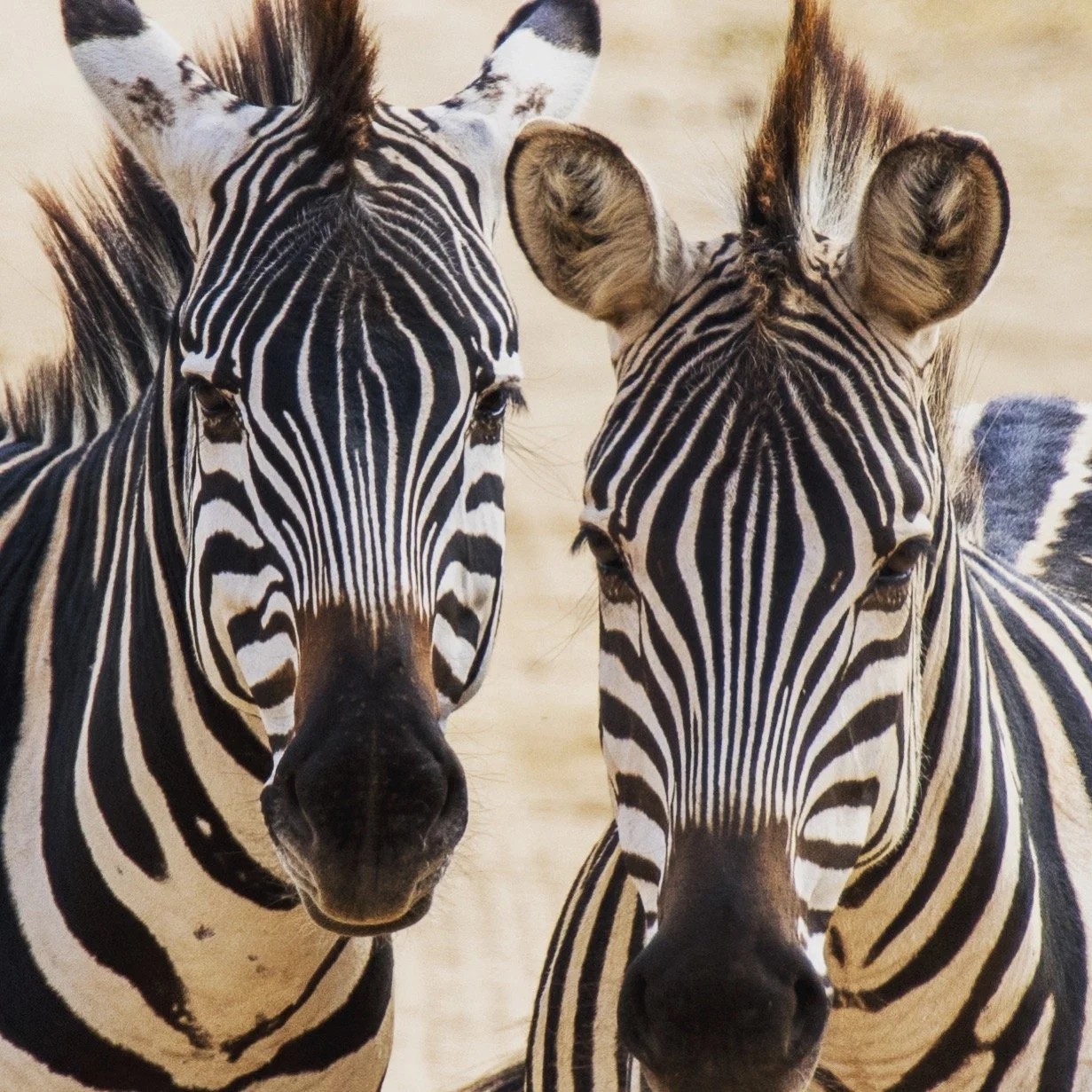
4am wake-up for the balloon ride. The drive to the launch site was dark except for full moonlight. I was half asleep staring out the window when I registered zebras on the road running right alongside the car headlights. Just running, not getting out of the way. My brain briefly forgot where I was, then remembered. That keeps happening here and it never gets old.
Captain Frank was our pilot. Canadian. We climbed into the balloon basket astronaut-style, lying down to swing your legs over, which is its own adventure. And then we were lifting.
I'm going to struggle to describe this adequately. Floating silently over the Serengeti at dawn, watching the light change the landscape from grey to gold, understanding for the first time just how vast and untouched this place actually is... it felt like the answer to a question I didn't know I'd been asking. "Life at its best," I wrote in my notes. "This is why I live. This is why I travel." That sounds dramatic and I mean it exactly.
The landing was not elegant: we hit the ground, dragged, lifted back up, several more bumps. Then we drove to meet the other two balloon groups for a champagne toast, a tradition with a history Captain Frank explained and which I've since forgotten but which was interesting in the moment. Breakfast followed in the open bush, sitting outside in the morning sun. Well executed from start to finish.
That afternoon Babenga found the same two leopards from the day before and then a full lion pride on the move: females and three cubs impossibly small and adorable, just trotting along with the group. We watched them for a long time.
For the last two nights we moved to Kirowira camp in the western corridor. This is what I'd imagined when I first pictured going on safari. Glamping in the proper sense: large canvas tents on elevated wooden decks, closets that look like old travel trunks, floor-to-ceiling wooden vanity in the bathroom, a lounge tent with a phonograph and upholstered chairs and a telescope and a fire pit. 1930s and 40s aesthetic. The kind of place where you keep half-expecting Robert Redford and Meryl Streep to appear over the next hill. We arrived to cold champagne and the best fresh-squeezed orange juice any of us had ever tasted.
The western corridor had been hit hard by drought, so wildlife was sparse. What we did have was the tsetse flies of the western corridor, which were somehow worse than Tarangire. Babenga was trying to outrun them and they were chasing us in his side mirrors. From the back seat I could see Matt and Tom swatting and stomping up front while Babenga sprayed and smashed. I had to pause and laugh. There is literally nothing you can do about tsetse flies except accept them and use some words you'd rather not. They do bring out some very unladylike language though, for the record.
That evening the staff surprised Tom with a birthday cake and serenaded him in Swahili. A wonderful way to celebrate 70 years on this earth.
Our second-to-last day: we exited the park and drove to a fishing village on Lake Victoria. Very poor, representative of how much of Tanzania lives and how much of the world lives. I've said on other trips that I wish everyone with a life of privilege would find a way to spend time in a place like this. Not to gawk, but to walk through, to watch the daily life. Women collecting water from the lake. People bathing and washing. Kids just being kids.
The children ran up to hold my hand almost immediately. Big bright smiles walking me through their village. Tom made his own little group of friends. Matt was too busy taking pictures to hold hands with anyone and I think the kids instinctively knew they wouldn't make it into a photo if they grabbed his hand.
We walked to Zariki School, started by a foreign family who paid to build three classrooms and which has since grown to five through visitor donations. Teaches only in English so the children have a better chance at employment and a higher quality of life. We brought school supplies. We watched classrooms of kids greet us, ask us thoughtful questions, and sing their school song.
The last morning. I'd asked for an early wake-up call because I wanted the deck before anything else. Matt and I sat there with our coffees in the dark and waited for the light to find the Serengeti. Slowly, softly, the gold appeared. Birds started. The smell of the grasses and the fire from the night before. I tried very deliberately to stamp all of it into my permanent memory. I'd been emotional the last few mornings. Standing there I understood this was going to stay one of the most significant experiences of my life.
The last game drive. Two female lions taking down a fresh wildebeest. The last time our heads stuck out of the roof with the wind making our hair into something structurally unsound. The last warthog butts scurrying away with their little tails up. The last of the hippo grunts.
Serengeti International Airport is a dirt runway where a chase car has to drive circuits to scare the animals off before a plane can land. Sit with that image for a moment. We said goodbye to Babenga, who'd been with us for ten days and had become genuinely important to the experience. He says "for example..." as a verbal tic the way Tarek said "OK" in Egypt years before, and I know I'm going to miss it.
Back at Lake Duluti Lodge. The same place we'd started. Full circle.
Africa accounts for only five percent of the world's tourists. Five percent. For what it offers. The amount of wildlife we saw in the first fifteen minutes of our first game drive was more than all three of us had seen collectively in our entire lives. No Hilton Serengeti at the park entrance. No fast food chains. Unpaved roads not just for lack of funds but because paved roads mean faster driving and more animals killed. They've chosen the animals. This continent feels genuinely preserved in a way very few places on earth still are.
I'll be honest: this is not a trip for someone who needs to be comfortable. You will be dirty constantly. The roads will bounce you so hard you'll have bruises. The bugs are relentless. The heat is real. But take all of that in stride and what you get in return is one of the best experiences a human being can have. One of the best of my life. I'd put money on that.
Everything in Africa bites, but the safari bug is the worst of all. Kwaheri, Africa. Asante. Goodbye, and thank you.
White Men Can't Jump: The Maasai, the Market, and the Volcano We Descended Into
Tanzania • Maasai Villages + Ngorongoro Crater • September 2016
On departure day from Camp Kikoti we drove through the park one last time to exit, which nobody was sad about. Warthogs running with their little tails straight up in the air will never stop making me smile. Never. We also stopped at the Day 1 watering hole to find the zebra carcass reduced to bare bones in three days. The circle of life, right there in front of you.
Before the Maasai village we stopped at a workshop specializing in ebony and rosewood carvings. Matt was "hired" as a helper for the demonstration portion of the visit, which he took very seriously. Ebony is remarkable: so heavy, so dark, so different from anything you expect wood to be.
Now. The Maasai.
I want to give you the real version because it's not all picturesque. Babenga had been telling us about the Maasai on our drives and some of the traditions are genuinely difficult for western ears. Women are responsible for everything in the home, including building it. Women build the houses, cook all the meals, collect firewood every day. We saw several women walking with enormous bundles of branches strapped to their backs on the road. Female circumcision still happens. When men are circumcised (every seven years, establishing their "generation" within the tribe), the number of cattle you own determines your wealth and how many wives you can have…up to seven. And here's where it gets truly mind-bending: the first wife is essentially shared within a man's generation. If a man from your same generation wanders into your village, the chief sends him to your home, and he can sleep with wife number one. Wives two through seven are off-limits for this particular tradition, which somehow doesn't make it better. I had to hear Babenga explain it twice.
The village itself is real but set up for tourism: the Maasai rotate families in and out to share the income fairly. We were greeted with a welcome song and then Tom and Matt were invited to join the men in their jumping dance. The highest jumper gets the most girlfriends, they said. I will just say "White Men Can't Jump" and leave it there. They're both lovely and neither is getting any Maasai girlfriends. They showed us how to make fire the old-fashioned way, which was genuinely impressive. We were invited into the chief's son's tiny round home, about the size of an American bathroom, with two sleeping areas and a small fire pit for cooking.
Next was Mto wa Mbu, which translates to "Mosquito River" and is a village where people from over 120 tribes live together. They grow more than 30 varieties of bananas, avocados, and papaya. A young man gave us a tour and then the women of the town had prepared a buffet of traditional Tanzanian dishes while other community members played music and performed. It was unanimously the best food of the entire trip. So many wonderful flavors. Matt went back for thirds. At least.
Tom's exit from Mto wa Mbu deserves documentation. On the way back to the car, a couple of "hawkers" as Babenga called them were showing him bracelets and necklaces. Tom was emphatically saying "No, no, no" all the way back. We were loading up. We looked around. Tom wasn't there. Matt went back and found him buying three bracelets and ten necklaces. Swindled?
We drove to our lodge for the next two nights, watching the landscape transform completely from dry and brown to lush and green, like crossing into a different country. Plantation Lodge was a gated oasis with internet and good food, and we slept.
Ngorongoro Crater day. Early in the trip I'd asked Babenga what to expect. He said he had no words for it. That we'd have to experience it for ourselves. He was right.
Ngorongoro was formed when a large volcano exploded and collapsed two to three million years ago. It is the largest intact volcanic caldera in the world, a UNESCO World Heritage Site, 2,000 feet deep, with a floor covering 100 square miles home to approximately 30,000 animals. Because of the enclosed geography it has formed its own complete ecosystem.
We ate breakfast at 6am and left at 6:30. Babenga renewed his baboon warning: these are not friendly, curious baboons. These baboons know every safari car carries a picnic lunch and they have a plan. Stories of baboons racing inside vehicles the moment a door opens, with passengers still sitting in them. We stayed alert.
We climbed to the rim at 9,000 feet, which has this surprising rainforest quality…green and misty and completely unexpected. When we were close to the top, Babenga told us to close our eyes. "I'll tell you when to open." When he said open, there it was: the crater. Clear morning. The full bowl of it below us, the lakes, the different landscapes compressed into this perfect ancient circle. Then we descended to the floor at 2,600 feet.
The floor is flat and open and full of zebra, wildebeest, buffalo, and gazelle…the tall grasses sustain them here, but no trees means no giraffes. We'd been driving maybe 15 minutes when we found our first male lion sleeping on a stream bank. He eventually got up and revealed his brother sleeping invisible in the grass beside him.
The Hippo Pool. I was not prepared for how objectively funny hippos are. They crowd together in a tight circle in the water and they grunt, grunt, grunt, then roll over, then grunt some more. It is ridiculous and I loved every second of it.
And then Babenga got a radio call: the black rhino had been spotted.
The Big 5 is the traditional list: lion, elephant, cape buffalo, leopard, rhino. We'd seen four. The only chance for the rhino was here in Ngorongoro, one of the very few places they still exist in Tanzania. Very endangered, heavily poached. Babenga picked up speed and we could see the line of other safari cars arriving from every direction, the whole convergence creating enormous walls of red dust rising out of the crater like signals. The rhino was far in the distance but through Matt's camera and Tom's binoculars we could see it. Big 5 complete.
Two female lions were our next sighting, lying in the shade. We were the second car there. Then they decided they needed more shade and walked toward the cars and then right underneath them. One just plopped herself down under ours, paws visible beneath the chassis. Babenga revved the engine. She didn't move. Matt calmly directed Babenga to inch forward and back until we could ease away. I think she just moved on to the next parked car.
The mating lions on the way out were our final sighting. When female lions are in heat the male stays for 24 hours and they mate every twenty minutes. We didn't need to wait long. Over in about two seconds. Babenga explained this in the same tone he explains everything, which is informative and completely matter-of-fact.
Coming out of the crater I took off my sunglasses and found two perfect white ovals where my face had been protected and every other inch covered in red-orange dirt. We were all some version of this. The showers that evening were, as I wrote in my notes, "a million bucks."
Ten Minutes In, a Lion Kill. Welcome to Africa.
Tanzania • Tarangire National Park • September 2016
We woke up on our first real safari morning to the sound of laughter. Not human laughter: this was a bird whose call sounded exactly like someone cackling in the dark. We tried to figure out what it was, which led to the laughing, which was honestly a perfect way to start.
After breakfast, Babenga joined us for an overview of expectations and the rules. Babenga is from Bukoba, Tanzania, has been guiding safaris for 22 years, and is known in the industry as "the wise one." He would earn that title repeatedly. We loaded the Land Cruiser and headed out through Arusha, past a small monument marking the exact halfway point between Cape Town and Cairo, into Maasai territory.
I'd read somewhere that you shouldn't imagine what a place will be like before you arrive, that expectations only set you up for disappointment. I would like to formally disagree with that advice for the specific case of a Tanzania safari, because everything we had imagined is exactly what we experienced. (I'll contrast this with the Great Pyramids of Giza, which I imagined out in a vast empty desert and arrived to find a strip mall with a Pizza Hut 200 yards away. Safari: 1. Pyramids: complicated.)
We arrived at Tarangire National Park around noon. It has the second-highest wildlife concentration of any park in Tanzania, the largest elephant concentration in the world, and is dominated by enormous baobab trees that can live 600 to 900 years. Babenga opened the roof of the Land Cruiser and we all stood up with our heads out. And then we started driving.
We thought we'd be peering far into the distance, squinting for shapes on the horizon. Nope. The animals were immediately, very much right there. Zebras and wildebeest in hundreds. Babenga explained that they travel together because zebras have excellent hearing while wildebeest have a strong sense of smell, so together they detect predators much more effectively. Nature is so much smarter than us.
Not ten minutes into our first game drive, we came upon a watering hole. A fresh lion kill. The lions had just taken down a zebra and we sat there for ten to fifteen minutes watching them drag it out of the sun and start working on it, a couple of cubs having a playful tussle nearby. Then some warthogs arrived because they just wanted a drink of water, and the youngest cub decided it was his spot and chased them off. We sat there with our mouths open. We had been inside the park for ten minutes.
The next three hours took us 52 kilometers through the park and we saw: elephants, giraffes, gazelles, mongoose, baboons, more warthogs, ostriches, incredible birds. All three of us were just in sustained awe. I keep coming back to this image: standing up through the roof of the Land Cruiser, looking out across the vast flat landscape and seeing elephant silhouettes everywhere I looked. Not one. Not three. Everywhere. The Africa you dreamed about as a child, actually happening in front of you.
Our camp for the next three nights was Camp Kikoti, reached by driving through increasingly dramatic terrain after leaving the park. The camp sits at elevation with a beautiful view of the park below. The rooms are cabins on stilts, completely open except for screens, full power and operational bathrooms, 80% solar powered. We had the whole camp to ourselves that first night. After dark we couldn't walk unescorted due to the possibility of wildlife wandering in. If we wanted to leave our cabins we'd wave our flashlights and armed rangers would come get us. I want to be fully transparent: I found this extremely exciting. Disproportionately exciting. This is camping in actual wild Africa.
Day two started with a Jambo and hot tea and coffee delivered to our porch at 6am. We headed to the swamp area of the park, overcast and chilly with the roof open, all of us layered up and happy about it. Then fifteen elephants came across the road.
A herd moving fast. Babenga pulled us up ahead so they'd cross right in front of us. As they got closer, the matriarch turned and came toward our car, ears flared, trumpeting a warning. The young bulls followed her lead. She stopped halfway across, turned back once more, one more unmistakable "stay right there." Then the herd continued.
That moment. We'd read enough about elephant behavior to know she was likely bluffing, that it was a warning charge. That knowledge does almost nothing when a matriarch elephant is coming at your car. Your body does not care about what you've read. Time did something strange and I felt completely, entirely awake. Unquestionably the highlight of the trip for me.
Later that morning a stopped Range Rover tipped us off to a leopard sleeping in a tree, arm draped over a branch, profoundly unbothered. I genuinely cannot explain how these guides spot a sleeping leopard from a moving vehicle. She had no interest in waking up for us. We had coffee and muffins in the middle of wild Africa with a tablecloth. Babenga is extraordinary.
Day three he announced Training Day. Matt had come to get me before I'd even finished getting dressed: "Stop getting around and come outside for a minute." From the porch the valley was just beginning to catch the first light. Golden and wide. We sat there with our coffees in silence and I felt very, very lucky. Then we went out and the roads got dramatically, dramatically worse. We were flying off the ground, slamming into the sides, making involuntary hippo-grunts trying to brace ourselves. Babenga called from the driver's seat: "You need to get used to this. It's worse in Ngorongoro and Serengeti." All three of us just looked at each other. He said it's like riding a three-legged horse. We were about to find out.
Two cubs in a tree turned out to be our afternoon lions, almost posing. On the way back to camp, Babenga warned us about an incoming tsetse fly area and tried to outrun them at 30km/h. They kept up. They were chasing us in his side mirrors. You kill them by smashing their wings between your fingers, which is every bit as unpleasant as it sounds. I was extremely grateful we were visiting in the low season.
The nighttime game drive in the open-sided South African safari car, with a Maasai guide on a chair mounted to the hood looking exactly like E.T., brought us a Bush Baby with the most impossibly bright eyes I've ever seen and a brand new understanding of the phrase "lean in" when Acacia thorns are brushing you with no car walls in the way. The sundowner walk and climb up Kikoti Rock gave us sunset views across the whole Tarangire area, followed by cold beers Babenga had waiting at the bottom.
There are things photos can't capture out here: the way a place looks at night by moon and lantern light, the smell of burning acacia wood, the feeling of being somewhere that makes you genuinely connected to the earth in a way you've never felt before. I've never felt it quite like this. Not until Africa.
The Trip of a Lifetime Officially Has a Departure Gate
Tanzania • Amsterdam + Arusha Arrival • September 2016
This trip had a name before we even packed: The Trip of a Lifetime. We said it out loud constantly in the months leading up to it, partly to make it real and partly because nothing else quite captured what a ten-day Tanzania safari was going to be. We were also celebrating Matt’s Dad’s 70th birthday, which added a whole layer of joy and intention to the whole thing. This wasn't just a vacation. It was a milestone.
Our first stop was Amsterdam for a 23-hour layover, which I fully support as a concept. We got through customs quickly, hopped on the train from Schipol, and were in the city within minutes on a beautiful, breezy, sunny day. We'd found a loft apartment on Airbnb right off one of the canals. "Loft" sounds romantic, and it was. "Loft" also meant six flights of stairs with full duffle bags. I'm fairly certain the stairs nearly killed my Father-in-Law. The view from the rooftop terrace made it immediately, completely worth it.
I'd go back to Amsterdam just for that rooftop terrace honestly. Boats drifting down the canal. Droves of people moving through the streets below. Those enormous willow trees with their branches dipping into the water. People in the parks with their faces turned up to the sun. Friends and couples dangling their feet over the canal edge, eating, drinking, completely unbothered. And yes, the aroma of marijuana drifting through the air on basically every street corner, because Amsterdam…
After settling in we found a small café around the corner for bar nuts and cold drinks by the water, then took a canal cruise. I will not pretend we stayed fully awake. The warm sun and gentle movement had all of us closing our eyes at regular intervals. We found a Dutch pancake house for a late-afternoon snack: one traditional with ham and cheese, one sweet with sautéed apples, calvados, and cinnamon. Chewier and thicker than a crepe, really tasty, exactly what the tired and slightly jetlagged need. Walking back we discovered that Amsterdam is full of Calliopes, those old-fashioned fairground music machines that sound exactly like a merry-go-round. We'd seen one earlier and thought nothing of it. They were everywhere, each with a different theme and scene. Completely delightful.
We made a unanimous group decision not to nap (debatable call) and instead sat on the rooftop terrace until it was time to head to Bord'eau for dinner. One of the best meals any of us had ever eaten. We started with champagne to toast the trip, then everyone had the six-course tasting menu with the optional seventh oyster course added in because why not. Each course came as three smaller dishes, so the variety was incredible. My favorites were the seared foie gras in a broth I genuinely still dream about, and their famous apple dessert: apple sorbet shaped exactly like a core, surrounded by blown sugar in a crystal-clear replica of an apple, set on apple balls and pastry. Almost too beautiful to eat. Then a second dessert appeared: glazed strawberries with elderflower meringue. Michelin starred and completely deserved.
Tom and Matt took a late stroll through the red light district. I chose the warm bed. We had an early flight.
Schipol's security is not fooling around. Full contact pat-downs, double bag scans, the automated bag system that sucks your luggage into an underground two-and-a-half kilometer journey to your plane. We made it through with time for coffee and pastries, which is all you can really ask for.
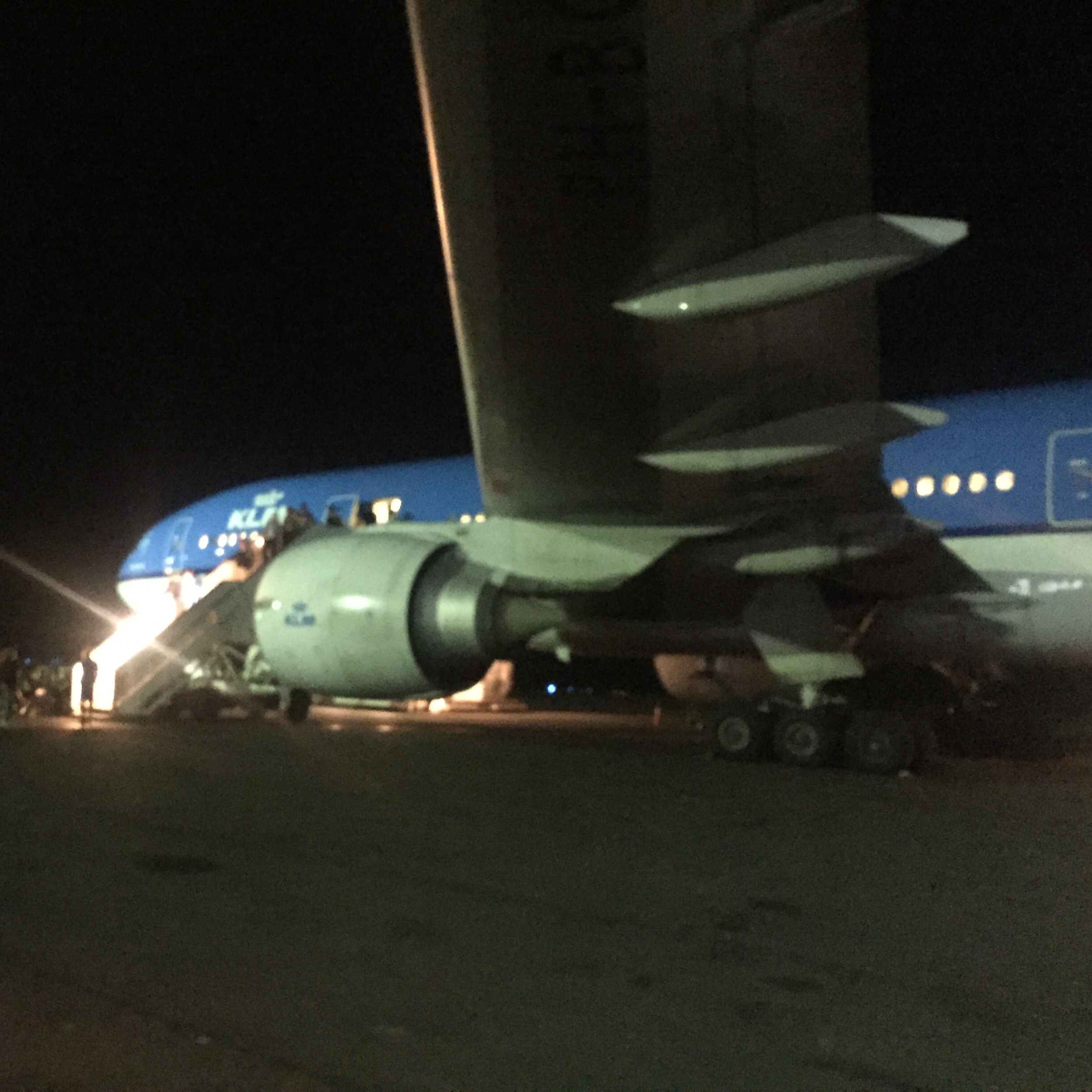
We landed at Kilimanjaro Airport just after 7:30pm. Small airport, exactly as I'd imagined it. We descended the 777 via stairs out onto the tarmac. Getting our visas in advance was one of the better decisions we made: there was ONE window for on-arrival visas and hundreds of passengers queued in a line going absolutely nowhere. We walked past them with our stamped passports. I tried not to look too satisfied about it.
Our guide Babenga was waiting outside. He'd be with us the entire trip. The drive to Lake Duluti Lodge just outside Arusha took 45 minutes, and when we arrived they welcomed us with fresh watermelon juice and then showed us to freestanding cabins in the middle of a working coffee plantation. Tom, Matt, and I had African beers on the porch before turning in and sleeping like absolute babies.
The next day was an intentional rest day and we honored it completely. Breakfast at 9am, nap until early afternoon, four-course lunch, nap again. Every vegetable from the garden, every cup of coffee from the plantation right around us. We spent a perfectly lazy day enjoying the view before calling it an early evening, because tomorrow Babenga was picking us up to begin what we'd been dreaming about.
Jewel of the Nile: Hot Air Balloons, Valley of the Kings, and a Love Letter for a Stranger
Egypt • Luxor • March 2006
The overnight train from Cairo to Luxor is, in theory, brilliant. You don't waste nine hours of daylight traveling. In practice, you arrive having gotten a crappy night's sleep on a crappy train that also loaded your luggage onto a roof rack without tying it down. Our entire ride I had mental images of our bags sailing into oncoming traffic. They didn't, fortunately. We arrived at 5:30 in the morning.
The Sheraton in Luxor made all of it worthwhile. We are not typically five-star hotel people. We tend toward clean and functional. But when the rate is $70 a night and the Nile River is right outside your window, you make exceptions. The Nile looks exactly how you imagine it should look. Ancient and wide and lazy and somehow both very still and very busy at once. Luxor is the Jewel of the Nile. I understood that immediately.
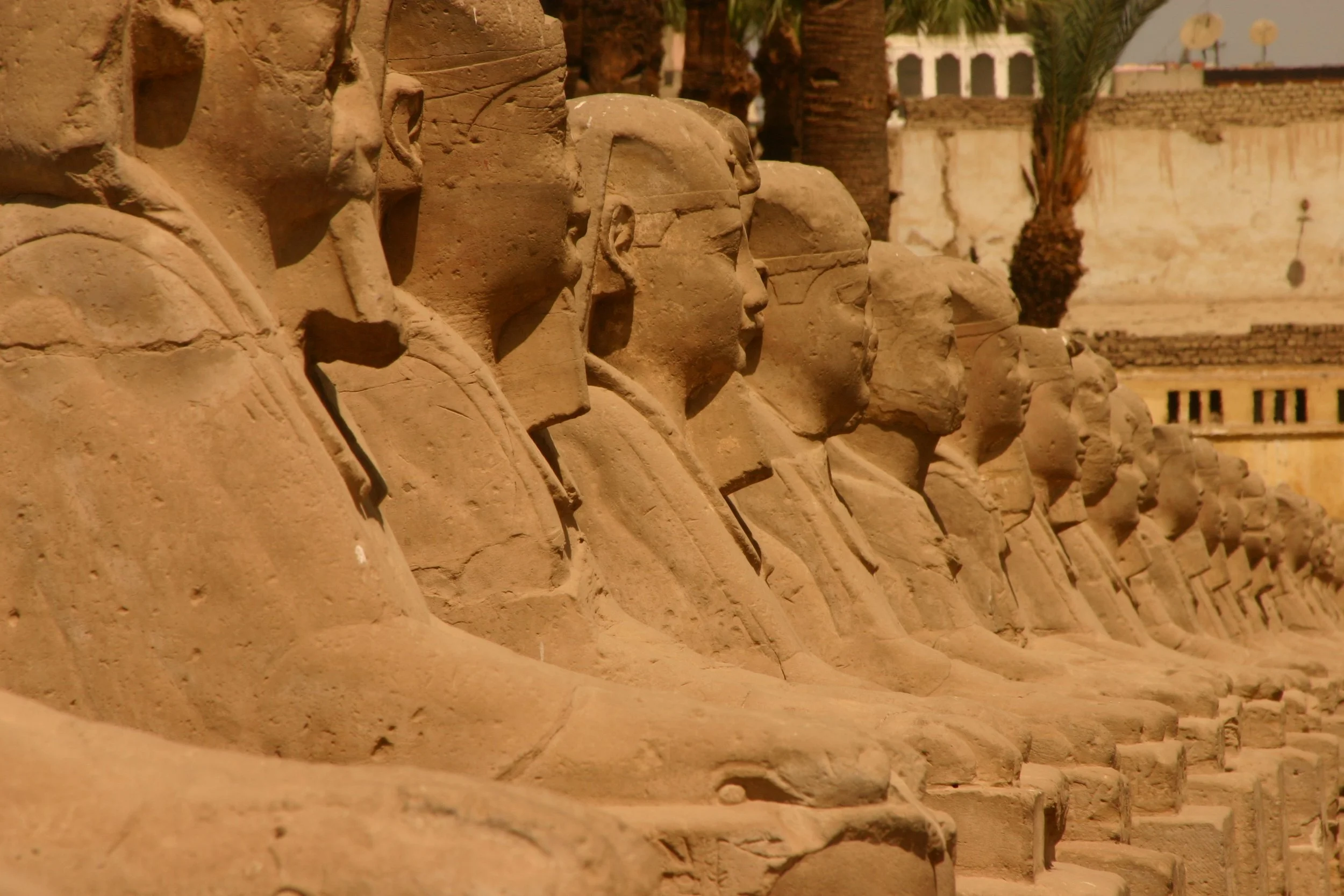
After breakfast we headed to the Temple of Luxor, built between 1387 and 1349 BC and, as with seemingly everything in this country, located smack in the middle of the city. There's a McDonald's across the street. I can't decide if I find this charming or deeply wrong. The temple is in remarkable condition, larger and older than the Forum in Rome, and you can still see color on many of the hieroglyphics. Next to it is the Avenue of Sphinxes, lined on both sides with sphinx statues that once stretched all the way to Karnak Temple three kilometers away. The government is excavating all 700-plus of them, which has involved tearing up streets and homes in the process. Progress.
We found a horse and buggy driver outside the temple who took us to Karnak for about two dollars. It's a lovely way to move around Luxor, and our driver turned out to have a brother with a motorboat and a cousin with a taxi, all very helpfully connected for the rest of the day.
Karnak is the best thing I've seen in all my years of travel. I know that's a statement. I stand by it. 300,000 square meters. 3,500 years old. And you can TOUCH it. You can reach out and put your hand on the actual ancient stone and run your fingers along carvings made thousands of years ago. A Bedouin man took us off to the side to a room most tourists never find, where the hieroglyphics still had full color on them and the only light source was a large piece of aluminum foil reflecting sunlight through a small hole in the ceiling. Just brilliant, literally.
He also performed a marriage blessing for us: touching a particular symbol on the wall, transferring it to your head three times, then doing it to each other, then kissing three times. I'm told there's no divorcing after this. Matt seems fine with the arrangement.
After Karnak we had lunch at a recommended restaurant, lamb tagine and kebabs, excellent! When we finished, the owner came over and asked if I would read him a letter. He handed it to me and it was from a British woman: she loved him, missed him, hugs and kisses, the whole thing. I had no idea if this was a real relationship or what exactly we'd walked into. He looked so proud as I read it. Then he asked if I would write a reply for him. I asked what he wanted to say. He thought about it and said: "Just that I miss you very much, want you to be my wife. Just write nice things from a woman. You are a woman." So I wrote a love letter for an Egyptian restaurant owner to a British woman I've never met, addressed the envelope and everything. He was absolutely delighted. Egypt keeps finding new ways to surprise me.
We ended the day at Luxor Museum, which was a revelation after the Egyptian Museum in Cairo. Proper display cases, working humidity controls, actual lighting, clear labels. The artifacts looked cared for. You wish all of Egypt's treasures were treated this way. At night we went back to Luxor Temple, lit up and breathtaking. One of those places you just want to sit in for hours. Most couples were walking and holding hands. I was holding Matt's tripod, a filter, and two extra lenses. I am the world's most devoted photographic assistant and I want that on record.
The next morning started at 5:20am for our hot air balloon ride over Luxor, which was smooth and quiet and scenic in a way that only floating above a place can give you. We flew over the city and the West Bank and the villages, and the villagers on the rooftops ran out and screamed "Allo!" We landed in farmland near a village and the balloon crew burst into song and dance to celebrate. I got pulled in to dance with them and offered minimal resistance.
Our horse driver's brother met us by motorboat to cross the Nile, because everyone here is connected and it works beautifully. His cousin-driver took us to every site for the day.
Valley of the Kings was extraordinary. King Tut's tomb: one small, beautifully painted room with his actual mummy still in the sarcophagus. The oldest tomb belongs to Tuthmosis III (1429 BC), with hieroglyphics so early they look almost stick-figure compared to what we'd been seeing. The Ramses III tomb had eight rooms and the best color we saw anywhere. In one tomb, Matt shone his flashlight briefly into an empty sarcophagus and a Bedouin attendant came SPRINTING over, yelling "No!" and then proceeded to bang the top of the sarcophagus repeatedly with his hand. I'm fairly confident his banging did more damage than Matt's flashlight.
The Hatshepsut Temple, which our guides told us to pronounce "Hot Chicken Soup," a suggestion we enthusiastically adopted, is one of those places that doesn't photograph the way it looks in real life. Standing at the base looking up the hill at this temple built by a female pharaoh in the 1400s BC is just... it stops you.
At Medinet Habu we got absorbed into a school field trip vortex. One child, then fifty, all cameras out. We were separated into different groups, boys getting handsy in that way that made us want to leave, and just as we were trying to figure out how to escape, a Bedouin man came charging through, physically shoving kids aside and yelling. He then gave us a full private tour. We were extremely grateful. He got a very good tip. The Valley of the Queens came next, where a different Bedouin offered to let Matt take photos inside the tombs (strictly forbidden) in exchange for a larger tip, then zipped his lips and said "Shhh." Rules have a price here. At least it's consistent.
On our last day in Luxor we finally slept in, visited the Mummification Museum (they mummified alligators, monkeys, and fish, which nobody tells you), and then made the classic tourist mistake at the Souq market. I had a gallon ziplock of colored pens specifically for this purpose…I'd read that kids love them. One little boy asked for a "ben" (no P sound in Arabic), I gave him two, and within fifteen seconds there were fifty children converging on me. I handed the bag to Matt over my head. They swarmed him. He tried to make sure everyone got one. He lasted about two minutes before he threw the rest of the pens a few yards away and they all bolted for them like, in his words, chickens after chicken feed. I felt the whole spectrum of things: wanting to do something nice, feeling helpless, frustrated, and laughing despite myself.
The evening on the patio overlooking the Nile, the sunset turning everything copper and gold, made up for every chaotic, confusing, exhausting, wonderful thing that had happened. That's Egypt in a sentence honestly: chaotic, confusing, exhausting, wonderful.
That night we took the overnight train back to Cairo, then flew to Amman. Next stop: Petra.
High Ho Silver Away: Saqqara, Giza, and the Best Pizza Hut View on Earth
Egypt • Saqqara & Cairo • March 2006
We woke up the morning of our Saqqara trip to an overcast sky. In Egypt, overcast doesn't mean rain. Overcast means sandstorm. Perfect timing for our guide Tarek, who works at an outdoor archaeological site full of ancient rock and sand and also happens to be an Egyptian man who is allergic to dust. I cannot adequately explain how funny I found this. How many Eskimos are allergic to snow? We liked Tarek a lot and felt genuinely bad about how his day went with wind gusts up to 30 miles per hour.
Tarek also had a verbal tic. He loved the word "OK." Here is a sample Tarek sentence: "OK, so we are going to Saqqara, OK? It was built by Djoser, OK? And it is very old, OK? We will see the hieroglyphics, OK?" I lost count somewhere around a million. He was wonderful though, and his context made everything we'd see in Luxor later that week feel so much richer.
Saqqara is home to the Step Pyramid, the very first pyramid ever built. 3,500 years ago. Most of the others there are just rubble now because it took them a few tries to perfect the process, which honestly makes me feel a lot better about my own learning curves. The real highlight is descending into the burial chambers through a long, narrow shaft approximately four feet by four feet. You duck-walk down and then you arrive and there they are: hieroglyphics carved into the walls. Stars covering the ceiling, perfect as the day they were made. 2,321 BC. Still surviving.
The mustabas, pre-pyramid tombs with multiple rooms above ground, completely stopped me in my tracks. I never imagine hieroglyphics being as detailed as they actually are. Bas-relief carved out of the stone, hunting and fishing and daily life scenes, color still intact on many of them after all this time. Some things deserve to survive.
On the drive out through nearby villages we saw things that only exist in pictures for most Americans: a man leading two camels loaded with palm tree leaves, villagers on donkeys with baskets of vegetables, mud brick homes with grass roofs and no water, no electricity. You realize very quickly how small a corner of the world you've been living in.
And then. THE PYRAMIDS.
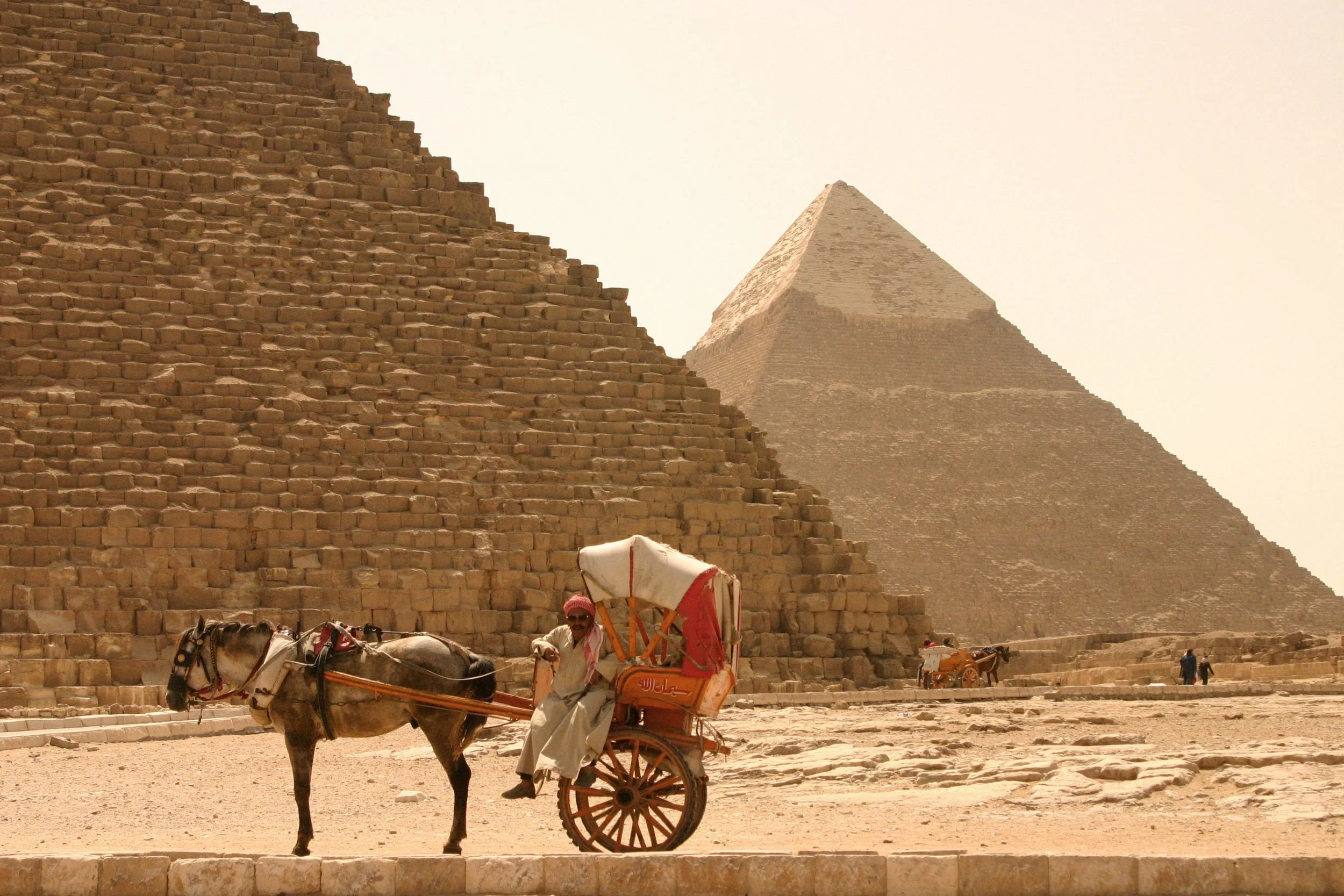
Everybody says they're smaller than you expect. We thought they were bigger. Way bigger. And as we came around the corner in the taxi and caught that first glimpse, I don't think either of us said anything for a full minute. You've waited your whole life to see them with your own eyes and there they are, just sitting there like it's no big deal, and it is absolutely a very big deal.
What I wasn't prepared for was the neighborhood directly next door. In America, if something like the Great Pyramids existed it would be surrounded by a Ritz-Carlton and valet parking. Here? Dilapidated buildings literally next door. A Pizza Hut approximately 200 yards from the Sphinx with what are, I will admit, excellent views. A tour bus parking lot plunked down directly between the pyramids, which I found genuinely upsetting. Also worth noting: there are actually nine pyramids, not three. Six are tombs for the queens and get no mention in any photo. The queens get no respect.
The Egyptian teenagers at the pyramids were enthusiastic to say the least. They came running from every direction wanting photos, mostly with me, which poor Matt found somewhat deflating. These kids had barely-working cameras and they were so earnest about it, pushing each other out of the way, trying to hold my hand, looping arms. Then one boy gave me a set of small wooden pyramids, a souvenir he'd clearly bought for himself, and we tried every way we could think of to refuse it or pay him for it and he simply wouldn't hear it. He just wanted to give it to me. Nothing to his name and still giving…
The camel jockeys deserve their own paragraph. They are an art form. The opening line is always: "Hello my friend, where are you from?" You say America. "America is number one! High Ho Silver Away!" Then: "Meet my camel Charlie Brown. He is my Egyptian Cadillac. Special price for you. Don't break my heart!" I'm laughing writing this. They can be persistent, but they're also hilarious. We watched some Americans getting absolutely swindled by a vendor who kept saying "not enough" even after he'd been paid way too much for a couple of sheik hats. They looked at us helplessly. Matt stepped in with his best stern bartering voice (it really is a specific voice, all confidence and calm firmness) and the vendor walked away immediately. It's about confidence as much as anything else.
The Sphinx is smaller than you expect but has this quality about it that's hard to describe. Standing next to it with the pyramids behind you, you feel something. Like a low hum.
We had tickets to the sound and light show that evening. We didn't end up using them. Matt made friends with the guys inside that Pizza Hut, yes, the one 200 yards from the Sphinx, who let us onto their fourth-floor rooftop terrace to watch the sunset. Matt scalped our show tickets right on the street outside, which I'm not certain was entirely legal but there were no Egyptian jails involved so we consider it a success. Sitting up there as the sun went down and the call to prayer played out over the city, that classic haunting sound of the Middle East echoing over these ancient stones while the pyramids turned gold and then orange and then dark... that was the highlight of the trip. Not any monument or museum. Just that moment. Just us and those pyramids and the sky.
We came back the next morning for one more pass and a camel ride out in the desert. The pyramids in the distance, the silence of the sand. Honestly, what else could you ask for?
Cairo Doesn't Ease You In (And I Wouldn't Have It Any Other Way)
Egypt • Cairo • March 2006
I still can't believe we actually went. Egypt. The country that, when I mentioned it in conversation for an entire month before we left, got me this look…you know the one. Like I'd just announced we were moving to Mars. "Aren't you scared?" "Is it a good time to go?" "Don’t they hate Americans?" They don't hate Americans, by the way. They love the American dollar, which is a different thing entirely.
The truth is, after China, we'd graduated to a different class of traveler. Bolder travel. Adventure travel. The kind where people back home think we've lost our minds not just wanting to go on a cruise or sit on a beach. And honestly? That feels exactly right.
We landed in Cairo around 12:30 in the morning and the city announced itself immediately. No easing in. No gentle introduction. You're just in it. Our hotel was in the Zamalek district, which is considered Cairo's quieter, wealthier neighborhood. We woke up the next morning, had breakfast (lovely croissants, yogurt, something I can only describe as sad refried beans, and rice pudding) and decided to walk to the Egyptian Museum.
Two kilometers doesn't sound far. In Cairo, crossing two kilometers feels like a video game. Have you ever played Frogger? Multiply it by ten. There are technically four lanes on some of these streets. In practice, it's whatever number of cars can physically fit side by side. No crosswalks. No pauses in traffic. You just step off the curb and go. A few steps, stop, car, swerve, go again. I looked back at one point and couldn't believe we'd made it across. But here's the thing: once you've done it, you're fine. It's like a squat toilet. First time is terrifying. After that, honestly kind of convenient.
The Egyptian Museum is a one-of-a-kind experience, and I mean that in both the best and most heartbreaking sense. Step through the doors and you've basically traveled back to 1920. It's enormous. a kind of organized-chaos warehouse stuffed floor to ceiling with Egyptian treasures. The display cases are streaky and foggy. Labels are handwritten, faded, or just missing entirely. It should be criminal how these things are stored.
But then there's King Tut's death mask in the middle of that room. Every complaint I had dissolved in about three seconds. It genuinely seemed to glow. All that gold and detail, the craftsmanship of something made thousands of years ago. His sarcophagi, the miniature gold ones that held his organs, the jewelry, the gold fingertip and toecaps. I got a little emotional, if I'm being honest. The Royal Mummy Room is a separate ticket and worth every penny: nine pharaohs lying right in front of you. You can see their hair, their fingernails, their battle wounds. I kept trying to wrap my brain around the fact that I was looking at actual human beings from 4,500 years ago. Some things are just too big.
After the museum we were thoroughly zombiefied and grabbed lunch at the Nile Hilton (yes, we played it a little safe on day one) and went back to the hotel. Our first real taxi ride that afternoon taught us something important: watching traffic ahead of you is deeply alarming. Looking out the side window, watching the city go by? Completely relaxing. We just look sideways now. We've decided we fully trust these drivers. They're the most skilled we've ever seen.
The evening started with dinner in Khan-al-Khalili market, an ancient winding maze of vendor stalls. We ate falafel and Koshari, ground meat, pasta, rice, onions, tomatoes…and I won't lie, I was quietly interrogating every bite wondering if this was going to be the one that got me sick. I reminded myself for the first of many times that we're taking Pepto at every meal as a preventative measure, and the food was absolutely delicious.
It was when we were wandering away from the market toward a show we'd planned to see that we met Fahti. And Fahti is the reason Egypt is one of our favorite travel stories.
He was an older man who simply said "Welcome" as we passed, which in Cairo everyone says. Hello. Welcome. Welcome to Cairo. They're remarkably friendly here. But Fahti was different. He asked where we were from and just started showing us around, weaving us through fruit and vegetable markets, pointing out sultan's old homes, Turkish baths, tiny stalls, explaining everything with such obvious pride. You could see how much he loved his city. He'd spent forty years making those famous inlaid decorative boxes, he told us, but his eyesight was giving out and now his son did the work. He took us to the son's workshop to watch the whole process, then to his own little closet-sized shop where every inch of the walls was covered in photographs: him with tourists, business cards, people from every corner of the world. A guest book with entries in dozens of languages. He handed it to us proudly, this newer one, mentioning he'd filled up several others.
Then came tea and sheesha. We sat with Fahti in that tiny spot, drinking the most wonderful tea, and he taught us to smoke the hookah. I tried a cigarette once at fifteen and spent the rest of the day feeling like I was dying. This was nothing like that. Very mild. (Matt says I wasn't inhaling enough though) We bought a few things from him because…of course we did. He felt like a friend by then.
He kept going after that, taking us through completely dark streets and into markets that were nothing like the tourist spots. Neighborhood markets, butchers, spice sellers, coal makers. He called it "real Cairo." We never did make it to that show and we don't regret it for even one second.
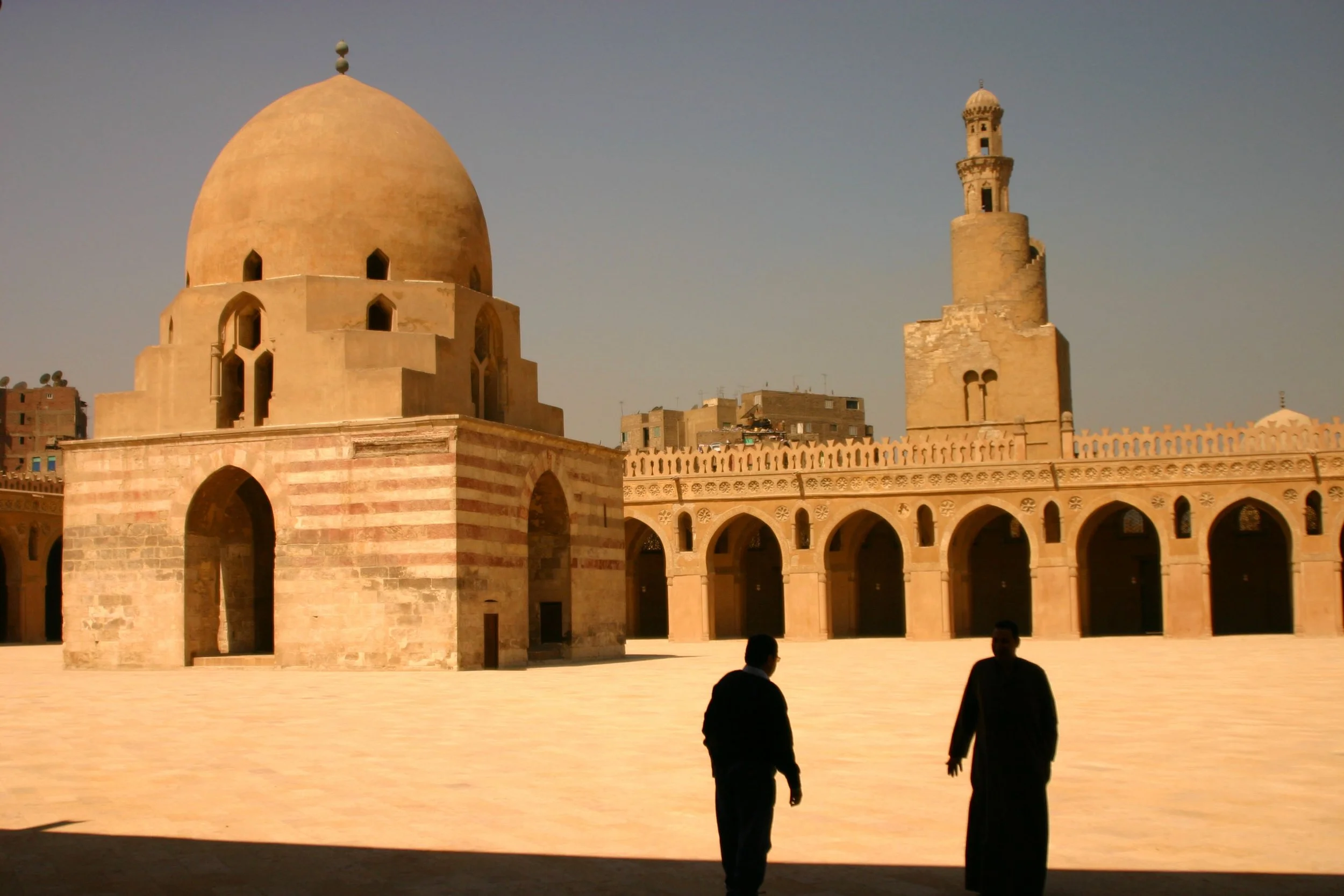
The next day we did the Citadel and the Muhammad Ali Mosque (and I have to tell you, the sheer delight of announcing we were then going to "the George Foreman Mosque" never got old). We tried to walk to the Ibn Tulan Mosque to save a couple of dollars in taxi fare and ended up following a local man through alleys we'd never have found on our own, somehow arriving at the Northern Cemetery instead, where families live inside old mausoleums because they have nowhere else to go. Our guide connected us with someone who put us on a microbus - one of those packed mini-Scooby-Doo vans with the sliding door wide open, people hopping on and off while it's still moving. I didn't want to get on. Matt was thrilled. Our new friend paid our fare, communicated for us, and walked us right to the entrance. Never asked for anything beyond a small tip and he left with a genuine smile on his face.
We ended the day back at the market, got some more great food and photos, and Matt captured a girl who stopped to say the handful of English words she knew and then smiled for a photo with these incredible, intense eyes. You don't forget faces like that.
Cairo is dirty, genuinely filthy, and crowded in a way that's almost hard to describe. But walking its streets and watching people live, having them invite you into their food stalls and offer you tea, watching their pride in their home and their community even when what they have is very little... that's the part that stays with you.
Oh, and apparently Matt was offered 45 camels for one year with me. I'm choosing to feel very flattered.